Food-Grade Timing Belts: FDA-Compliant Drive Belts for Food Processing Lines
- Share
- publisher
- GOODLY Belts
- Issue Time
- Oct 22,2026
Summary
What actually makes a timing belt food grade: the difference between FDA 21 CFR 177.2600 and EU 10/2011 compliance, which compounds and cords pass, how oil-proof and non-stick belts behave on snack lines, where silicone belts may touch food directly, and how to build a cleanable, contamination-resistant belt specification for wrapping, sealing and feeding stations.


Food-Grade Timing Belts: FDA-Compliant Drive Belts for Food Processing Lines
What the certificates actually cover, and how to specify a belt that passes audit and survives washdown
"Food grade" is one of the most abused phrases in the belt trade. A supplier will happily send a belt with a food-grade claim and a compound datasheet that turns out to cover only the raw rubber, not the finished belt, not the coating, and not the adhesive that bonds them. When an auditor asks for documentation, that gap becomes a line stoppage. This guide explains what a food grade timing belt has to satisfy, how FDA and EU rules differ, and how to write a specification that survives both a hygiene audit and 4,000 hours of washdown.
What Makes a Timing Belt Food Grade? FDA and EU 10/2011 Compliance
A timing belt is a composite: tooth compound, backing fabric, tension cord, and the adhesive that ties them together. Food-contact compliance applies to the finished article, not to one ingredient. A belt can be made from an FDA-listed neoprene and still fail because the cord treatment or the bonding adhesive is not listed for food contact.
| Rule | Jurisdiction | What it covers | What buyers should ask for |
|---|---|---|---|
| FDA 21 CFR 177.2600 | United States | Rubber articles intended for repeated use in food contact | Declaration of compliance naming the finished belt, plus extractables test data |
| FDA 21 CFR 177.1550 / 177.2600 | United States | PTFE and silicone rubber food-contact articles | Material declaration per component: compound, cord, adhesive |
| EU 10/2011 (PIM) | European Union | Plastics in food contact, incl. migration limits | Declaration of Compliance with overall and specific migration test results |
| EU 1935/2004 | European Union | Framework regulation for all food-contact materials | Traceability and labelling statement |
| 3-A / EHEDG | Dairy & hygienic design | Cleanability and hygienic design of equipment | Design statement for belt geometry, splices and edges |
Two practical consequences follow. First, specify the whole belt with its coating: a food-grade base belt with a non-listed rubber coating is not a food-grade belt. Second, ask for the migration or extractables data, not just the word “FDA”. A genuine supplier can produce a declaration naming the compound, the cord and the adhesive, and can tell you the test conditions behind the number.
Silicone Timing Belts in Direct Food Contact Conveying Applications
Silicone is the workhorse of direct food contact because it satisfies three requirements at once: it is listed for repeated food contact under FDA 21 CFR 177.2600, it tolerates the temperatures of sealing and baking equipment, and it does not plasticise or migrate the way some soft PVC compounds do. A silicone timing belt is therefore the default choice wherever the belt surface touches product — dough transfer, baked goods discharge, confectionery cooling tunnels, and the film-contact belts on food packaging machines.
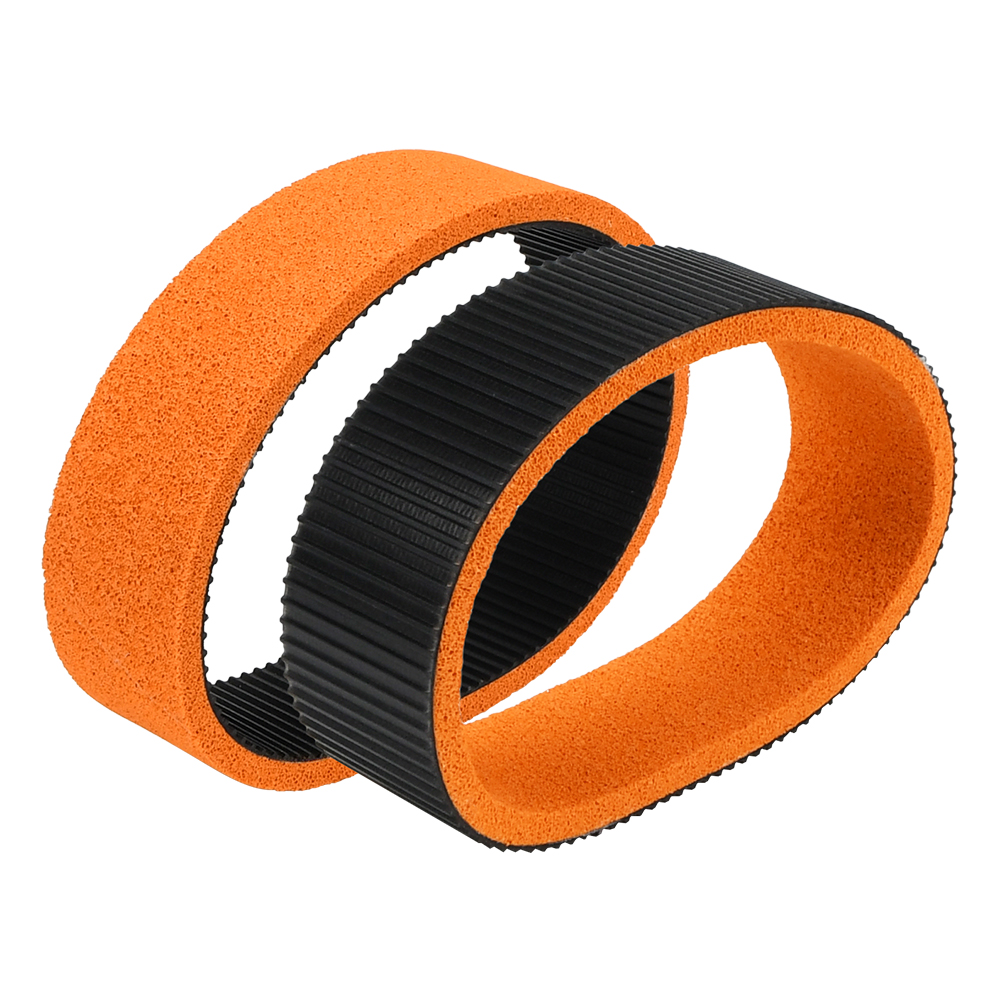
The limitation is mechanical, not chemical. Silicone has lower tensile strength and lower tear resistance than rubber, so it is a poor choice for high-torque indexing drives where a rubber belt would last longer. The usual solution is a silicone vulcanized timing belt built on a stronger cord, or a split design: a rubber timing belt for the drive, a silicone or sponge facing for the food-contact surface.
Oil-Proof and Non-Stick Timing Belts for Food and Snack Packaging
Snack lines are the hardest environment in food packaging. Frying oil mist settles on everything, seasoning powder cakes onto belt surfaces, and the belts run hot. A standard rubber belt swells in oil, glazes over, and starts slipping within a shift. An oil resistant timing belt uses a compound formulated to resist swelling in vegetable and animal fats, usually NBR-based for rubber or a specialised PU for plastic belts.
- Swelling resistance. NBR compounds resist non-polar oils and fats; a standard neoprene belt can swell several percent and lose its length tolerance.
- Non-stick surface. Seasoning and sugar dust adhere to soft, tacky surfaces. A smoother, lower-surface-energy coating sheds powder instead of building a crust that changes the belt's running diameter.
- Temperature pairing. Oil resistance and heat resistance are different properties. A snack line at 120°C needs both, which is why oil-resistant rubber and silicone are often used at different stations on the same machine.
- Cleanability. A non-stick surface is also a cleanable surface: less residue means shorter CIP cycles and fewer bacterial harbourage points.
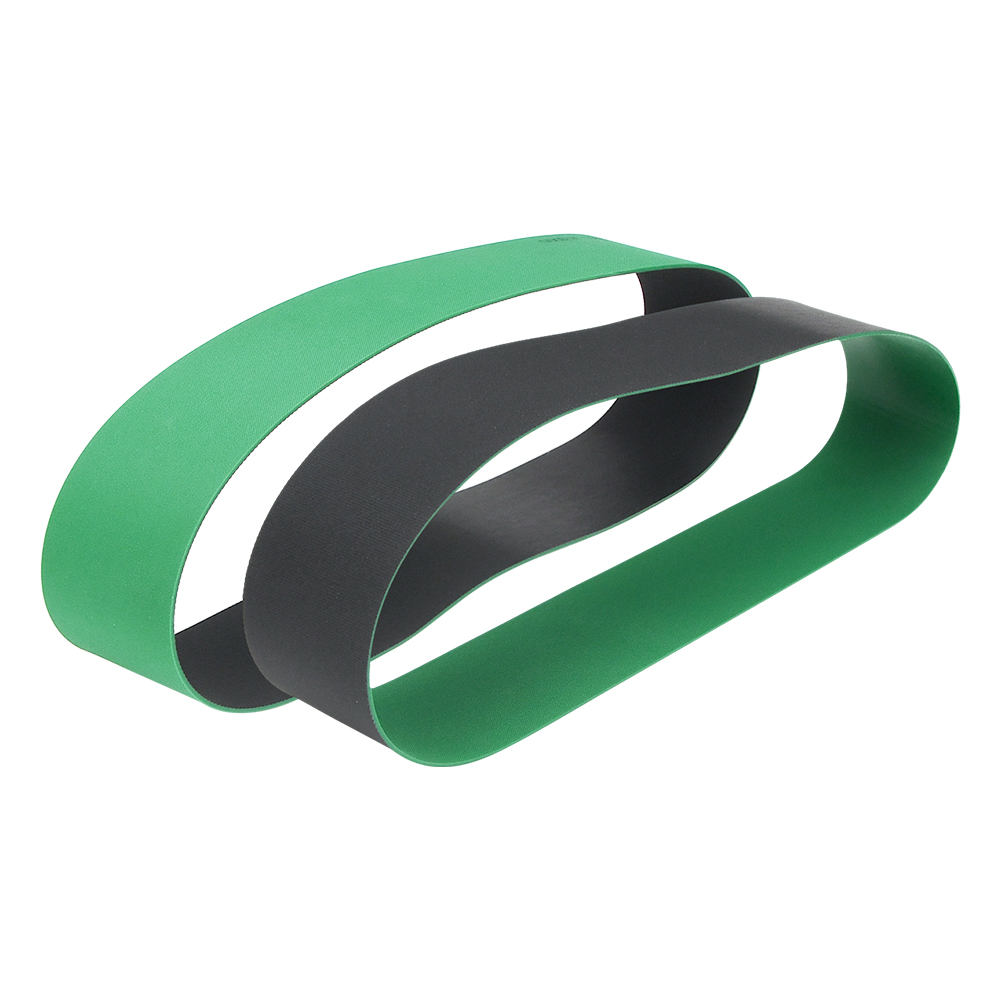
For lighter duties — small pouches, confectionery, bakery feeding — an oil resistant timing belt in PU may be the better economic answer, because PU endless timing belts are moulded without a splice and resist oils while holding length tolerance tightly. The trade-off is temperature: PU has a lower continuous service ceiling than silicone.
Choosing Food-Grade Timing Belts for Wrapping, Sealing and Feeding Stations
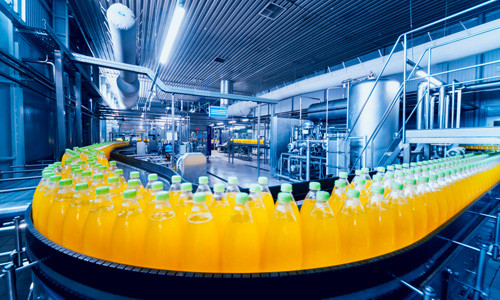
Different stations on a food line need genuinely different belts. Choosing one belt type for the whole machine is the most common specification error we see, and it usually shows up as premature failure at exactly one station.
| Station | Contact type | Belt construction | Why |
|---|---|---|---|
| Wrapping / flow wrapper | Intermittent, film contact | PU endless timing belt or silicone coated | Accurate indexing; low elongation keeps cut length stable |
| Sealing / crimp jaws | Indirect heat, no product contact | Silicone vulcanized timing belt | Survives radiant heat without embrittling |
| Feeding / infeed | Direct product contact | Silicone or PU food-grade, smooth cover | Listed for repeated contact; easy to clean |
| Transfer / discharge | Direct product contact, gentle | Sponge or foam coated timing belt | Compliant grip protects soft or decorated product |
| Washdown zones | Direct contact, wet | PU with sealed edges, stainless-friendly | Low water absorption; resists bacterial growth |

Three specification habits reduce audit risk. Keep a written material declaration per belt position on the machine, not per machine. Record the coating thickness, because a coating added later can invalidate the original declaration. And keep the joint method in the specification: an open-ended belt spliced on site with a non-food-grade adhesive is no longer a food-grade belt, however good the original compound was. Our packaging industry belt solutions page covers the station-by-station options in more depth, and the VFFS packaging machine belt guide goes deeper on film-contact and sealing-jaw duties.
Preventing Contamination: Cleanable Belt Constructions for Food Plants
Hygiene auditors no longer ask only what a belt is made of. They ask where it can hide contamination. On a timing belt, there are four such places, and each has an engineering answer:
- The tooth side. Open tooth profiles trap product. Enclosed or fabric-faced tooth sides, or a fully coated back, reduce harbourage.
- The splice. A vulcanized joint is smoother than a mechanical fastener and has no crevice for residue. Mechanical fasteners are usually unacceptable in direct-contact zones.
- The edges. Cut edges expose fabric, which wicks moisture and supports microbial growth. Sealed or coated edges are the hygienic option.
- The backing interface. A coating bonded with a non-listed adhesive is both a compliance and a hygiene risk, because the bond line can fail and open a gap.
Colour matters too, though not for the reason most buyers think. Blue and white belts are standard in food plants not because the colour is hygienic but because it is detectable: a fragment of blue belt on a white conveyor or in a pale product is visible to an inspector and to vision systems. That is also why coloured belts help with foreign-object detection programmes, a point we cover in the silicone vs rubber food contact comparison.

GOODLY Food-Grade Timing Belt Options: Certified Materials and Custom Profiles
GOODLY supplies food-grade belts as a documented product rather than a claim. Each food-contact order is built from a named compound and can be issued with a material declaration covering the finished belt, including the coating and the cord treatment.
Documented compounds
FDA and EU-listed silicone, PU and NBR rubber compounds, declared per finished belt rather than per raw material.
Detectable colours
Blue, white and other detectable compounds for foreign-object programmes and line identification.
Custom profiles
Any length, T5/T10/AT10/HTD/GT profiles, with cleats, guides and coatings bonded in-house.
Cleanable construction
Vulcanized endless joints, sealed edges and fully coated backs to close harbourage points.
Because moulding, coating and vulcanizing all happen in one plant, a custom food-grade belt does not wait on three suppliers: custom timing belts and coated constructions ship as samples in 3-5 working days, and the first article is the reference for every later batch. Start from the silicone timing belt range or the rubber timing belt range, and tell us the station, the product and the cleaning regime.
Is an FDA-compliant belt the same as a food-grade belt?
Not automatically. FDA 21 CFR 177.2600 covers rubber articles for repeated food contact, and compliance applies to the finished article including coating, cord treatment and adhesive. A belt whose base compound is listed but whose coating or adhesive is not is not a food-grade belt. Ask for a declaration that names the finished belt.
Can silicone timing belts touch food directly?
Yes. Silicone rubber is listed for repeated food contact and is widely used for direct-contact conveying, dough transfer and baked goods discharge. The limitation is mechanical rather than chemical: silicone has lower tensile strength, so it suits low-torque contact duties better than high-torque drives.
What is the difference between FDA and EU 10/2011 compliance?
FDA 21 CFR 177.2600 is the US rule for rubber articles in food contact and is based on extractables limits. EU 10/2011 is the European plastics framework and requires a Declaration of Compliance with overall and specific migration testing. A belt sold in both markets needs documentation against both.
Which belt resists frying oil and seasoning dust best?
An oil-resistant NBR rubber compound for hot, oily snack lines, or a PU endless belt where temperatures allow. Standard neoprene swells in oil and loses length tolerance. Pair oil resistance with a smooth, low-surface-energy cover so seasoning dust sheds instead of caking.
Do coloured belts have any compliance benefit?
Coloured belts do not change food-contact compliance, but blue and white belts are used for detectability: fragments are visible on product and to vision systems, which supports foreign-object detection programmes required by most food safety standards.
Need Food-Grade Timing Belts With Real Documentation?
Tell GOODLY the station, the product and the cleaning regime. We match the compound to FDA or EU listings, issue a material declaration for the finished belt, and ship sample loops in 3-5 days. Custom profiles and detectable colours are made in-house.
Request Food-Grade Belt Documentation