Rubber Coated Flat Belt 1350 x 30 x 8 mm: A Photo Record of Structure and Selection
- Share
- publisher
- GOODLY
- Issue Time
- Nov 23,2026
Summary
A plain photographic record of one vulcanised rubber coated flat belt sized 1350 x 30 x 8 mm: how the black endless base belt and the buff rubber cover are joined, the dimensions that can be checked one by one, what to confirm when ordering from a drawing or a used belt, and the friction-feed stations it is built for. Every image is an unretouched product photograph with no third-party markings.
Case Record
Where this belt runs, and what to confirm before ordering
Vulcanised rubber coated flat belts are common on friction-feed stations in packaging and light industrial equipment: film pulling on vertical form-fill-seal machines, sheet feeding and separating, case-sealing hold-down conveying, and any station where material is moved by surface friction rather than by toothed engagement.
Because the cover, not a tooth profile, does the driving, the first four things to settle are dimensional: endless circumference, belt width, total thickness, and the hardness and colour of the rubber cover.
If the old belt is still on the machine, sending the used belt or clear photos is usually faster than a drawing. Actual cover thickness, edge finishing and surface texture can all be measured directly from the sample.
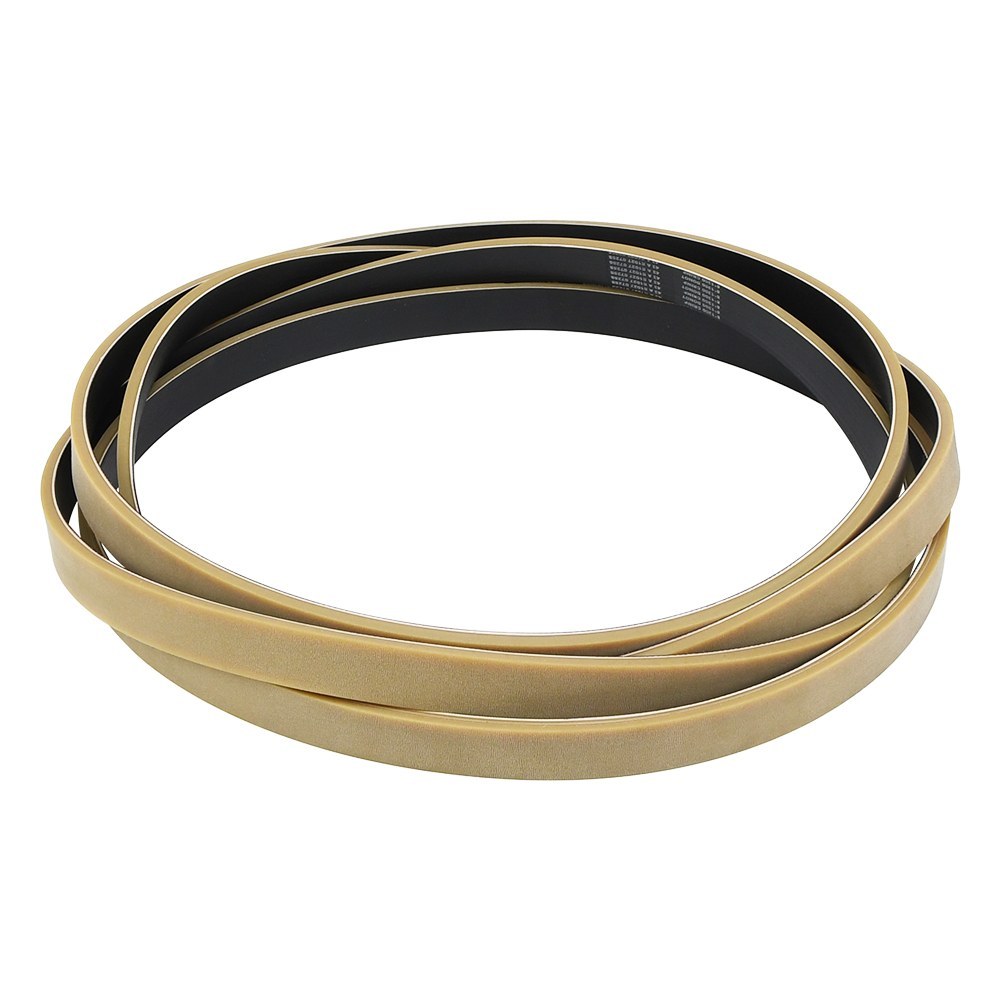
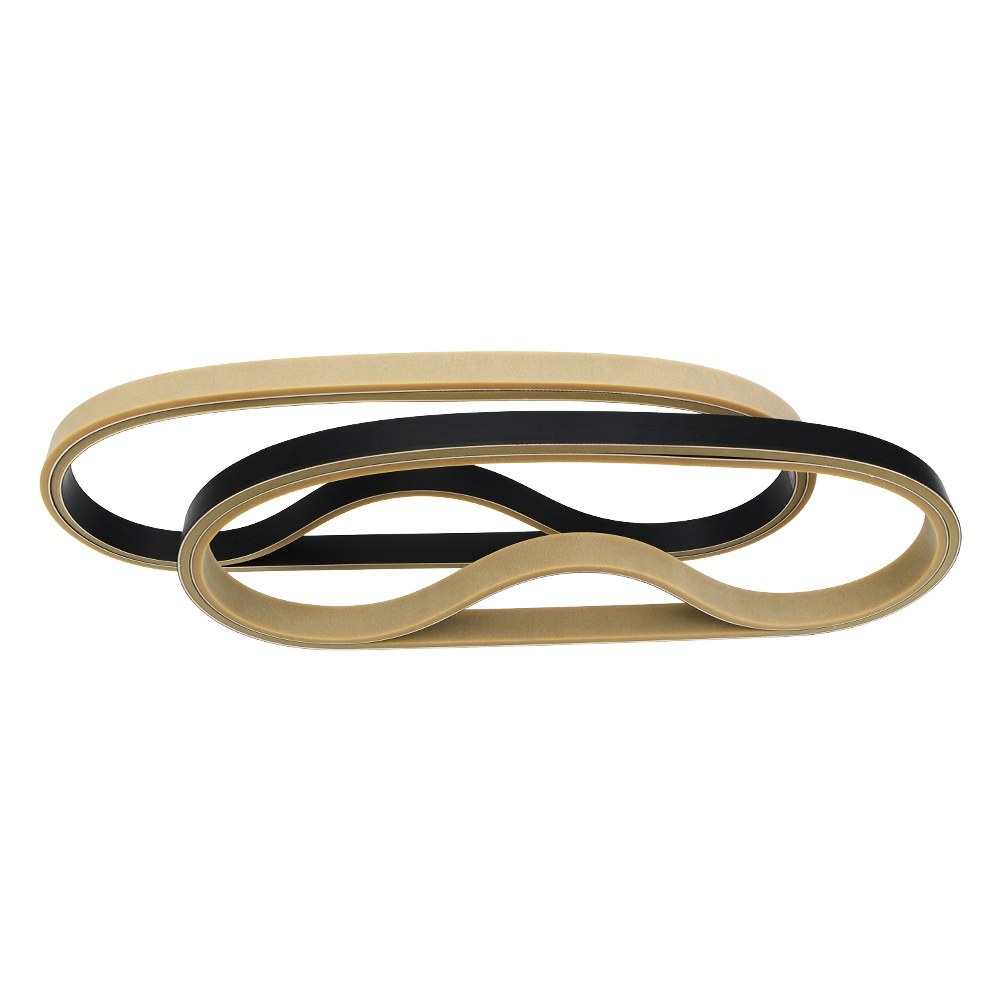
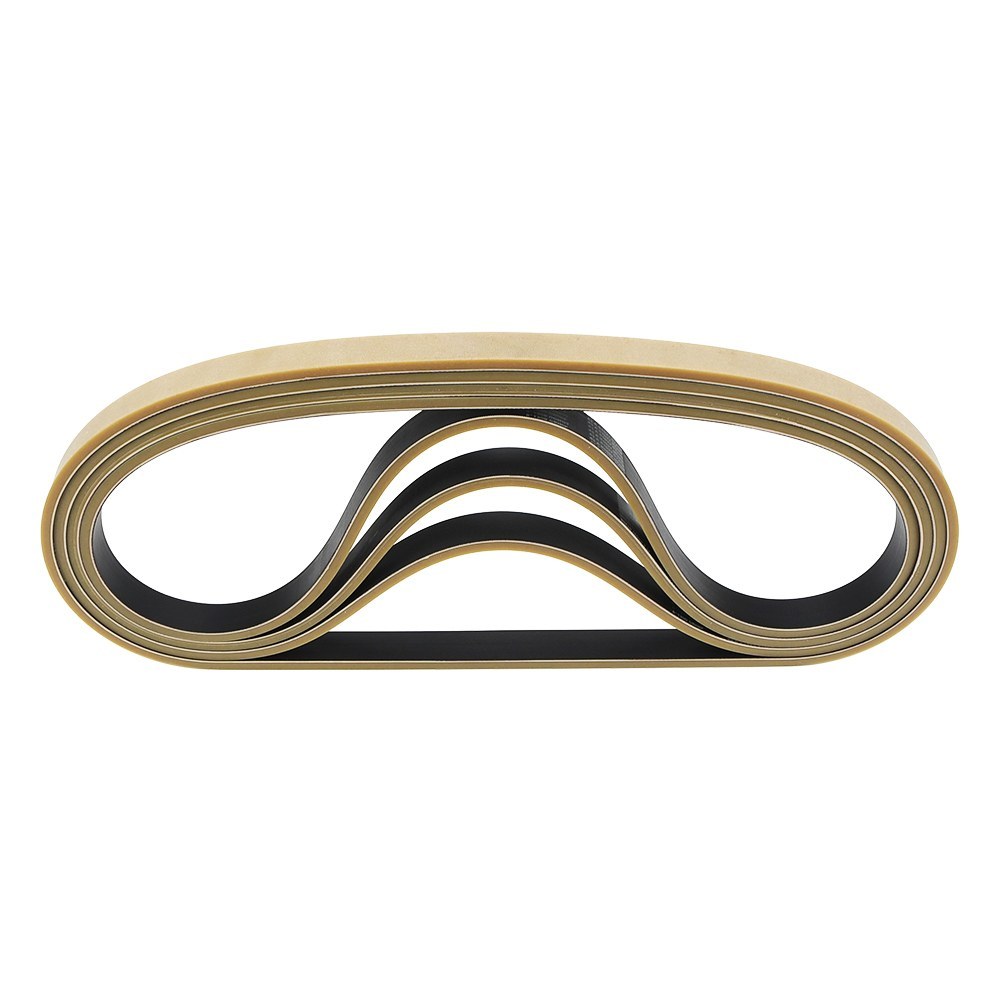
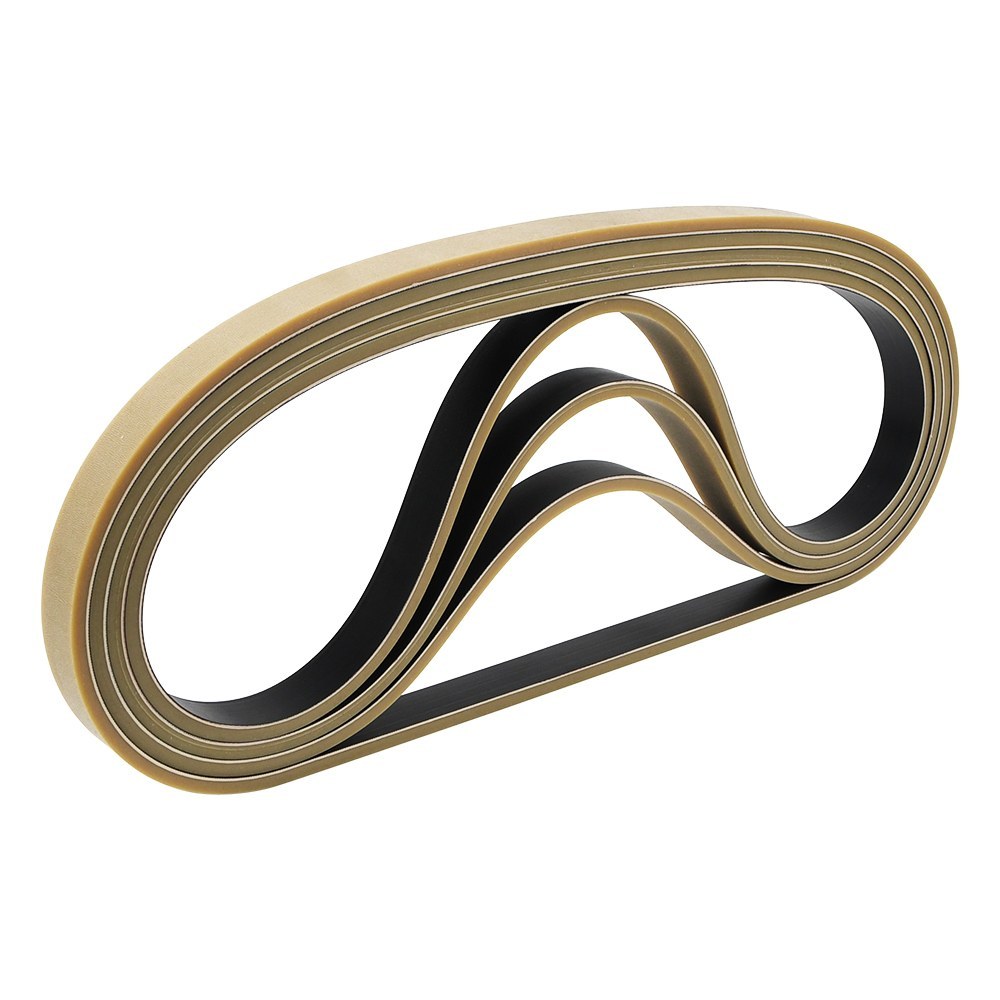
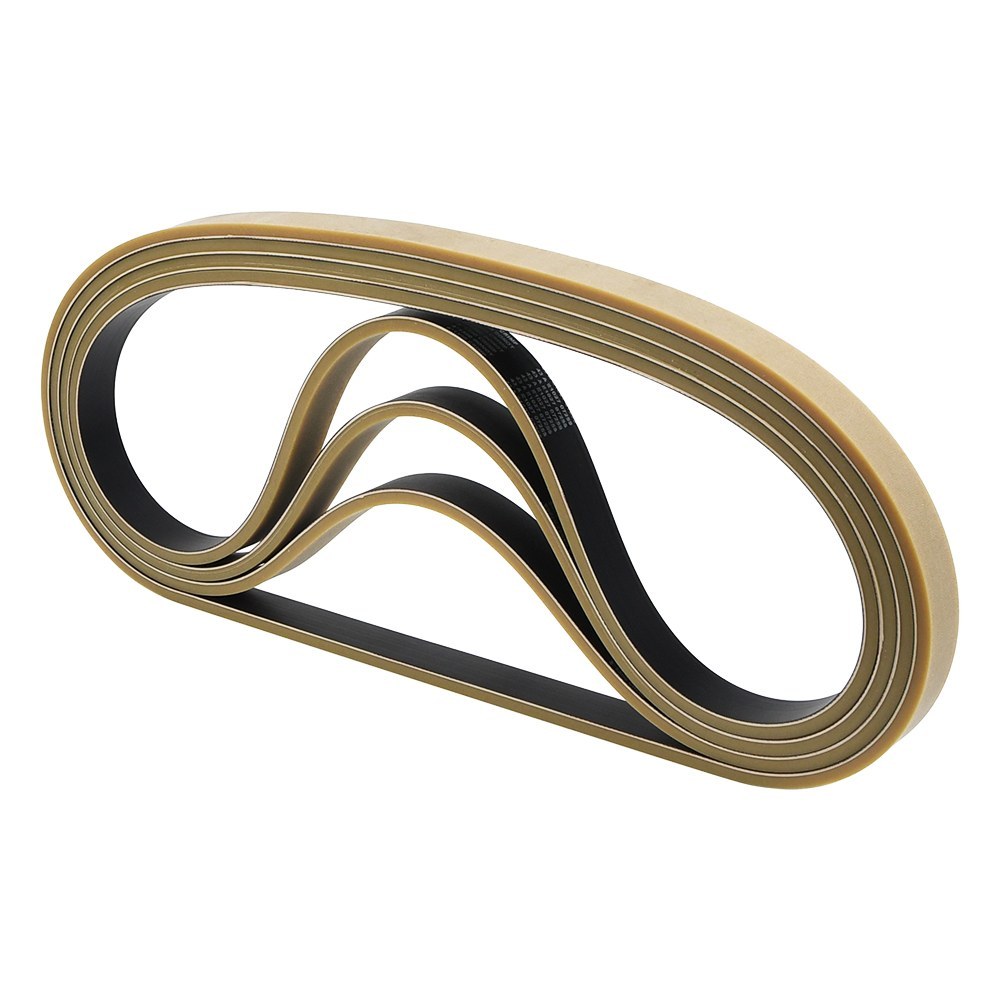
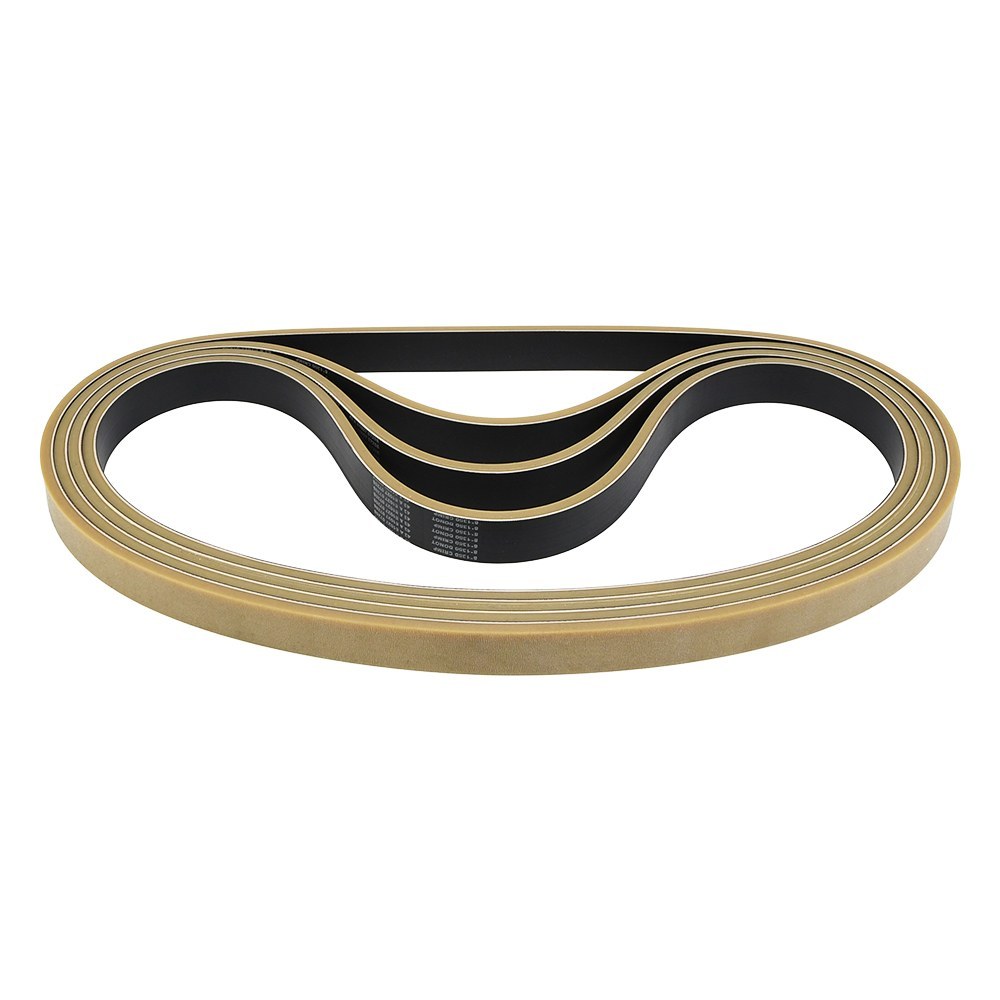
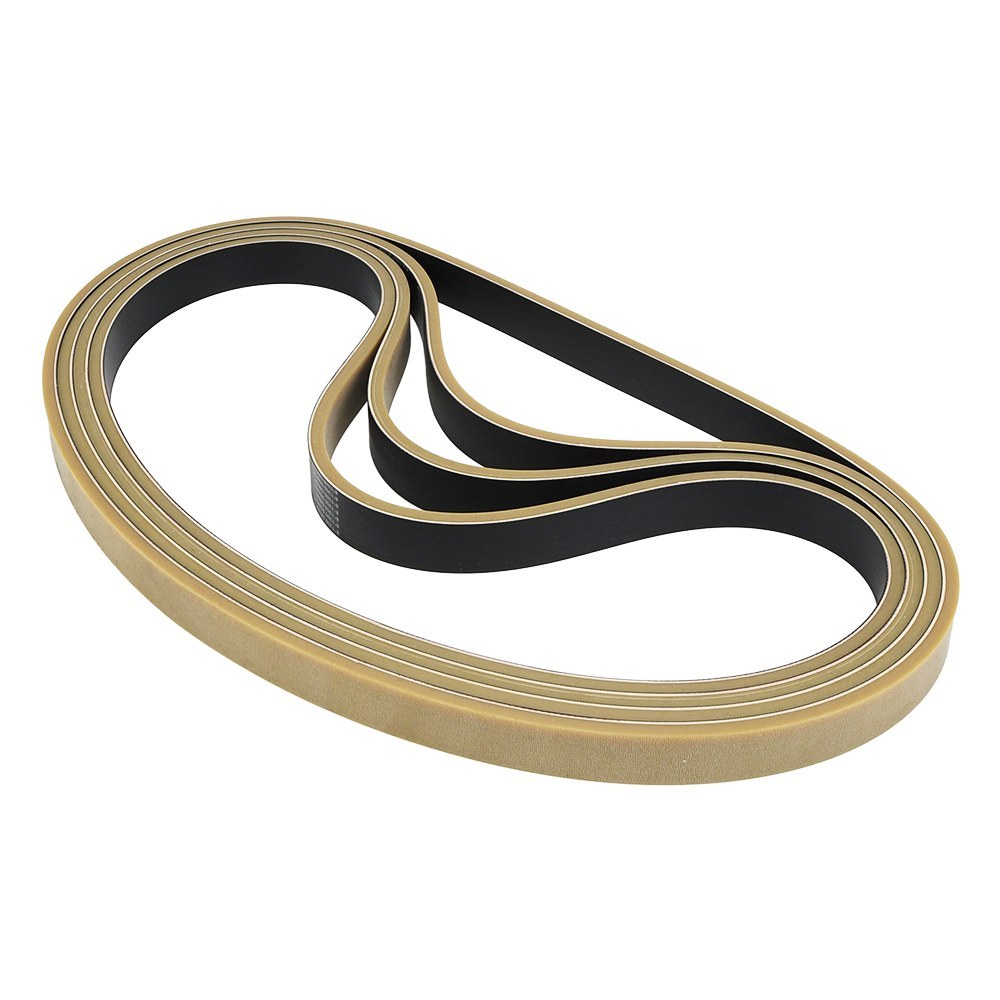
The belt recorded here is 1350 x 30 x 8 mm. All images are unretouched product photographs on a white ground, with no compositing, so the construction can be checked item by item.
Overall view
One continuous endless loop
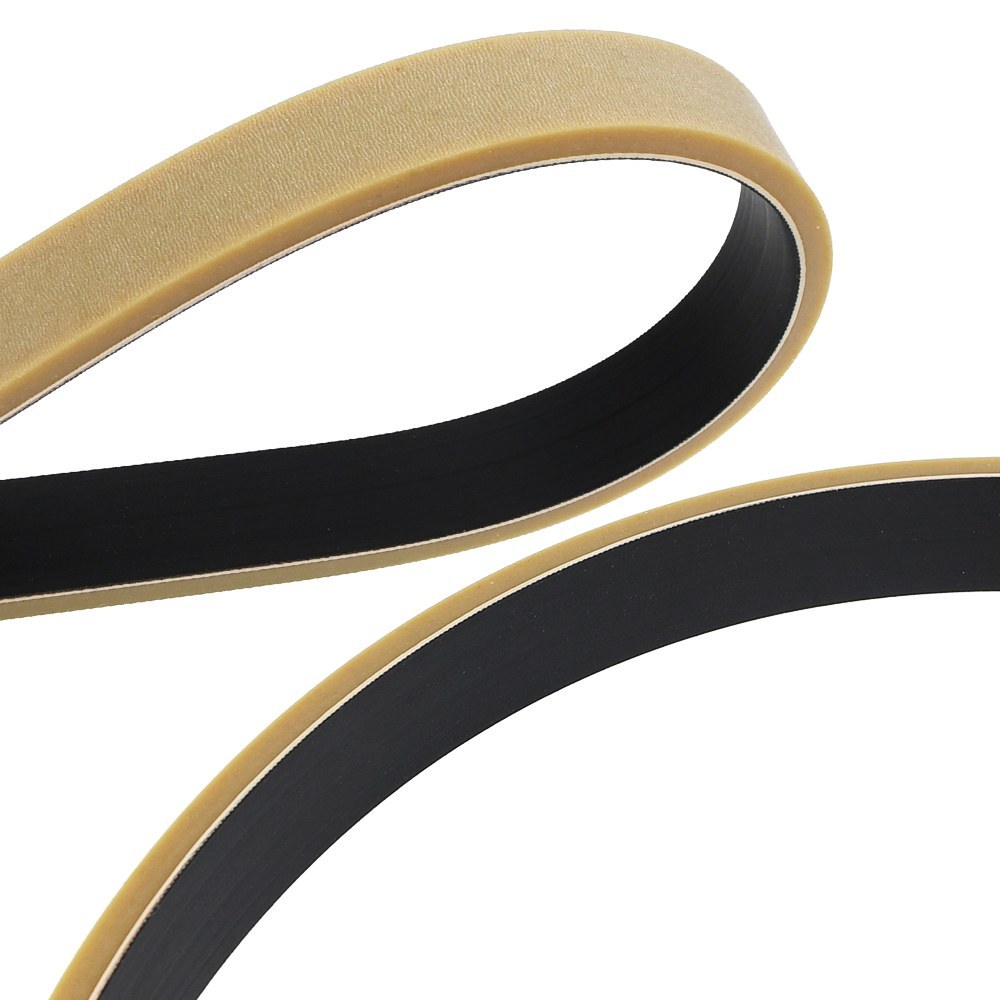
Seen as a whole, the belt forms a continuous loop with no visible joint. The buff rubber cover sits on the outside, the black base belt on the inside, and the two meet in a clean layered line along the edge.
The loop can be folded and twisted without the cover lifting, which is the most immediate practical difference between mould-vulcanised bonding and a cover glued on afterwards.
Construction
Cover, base belt, and how they are joined
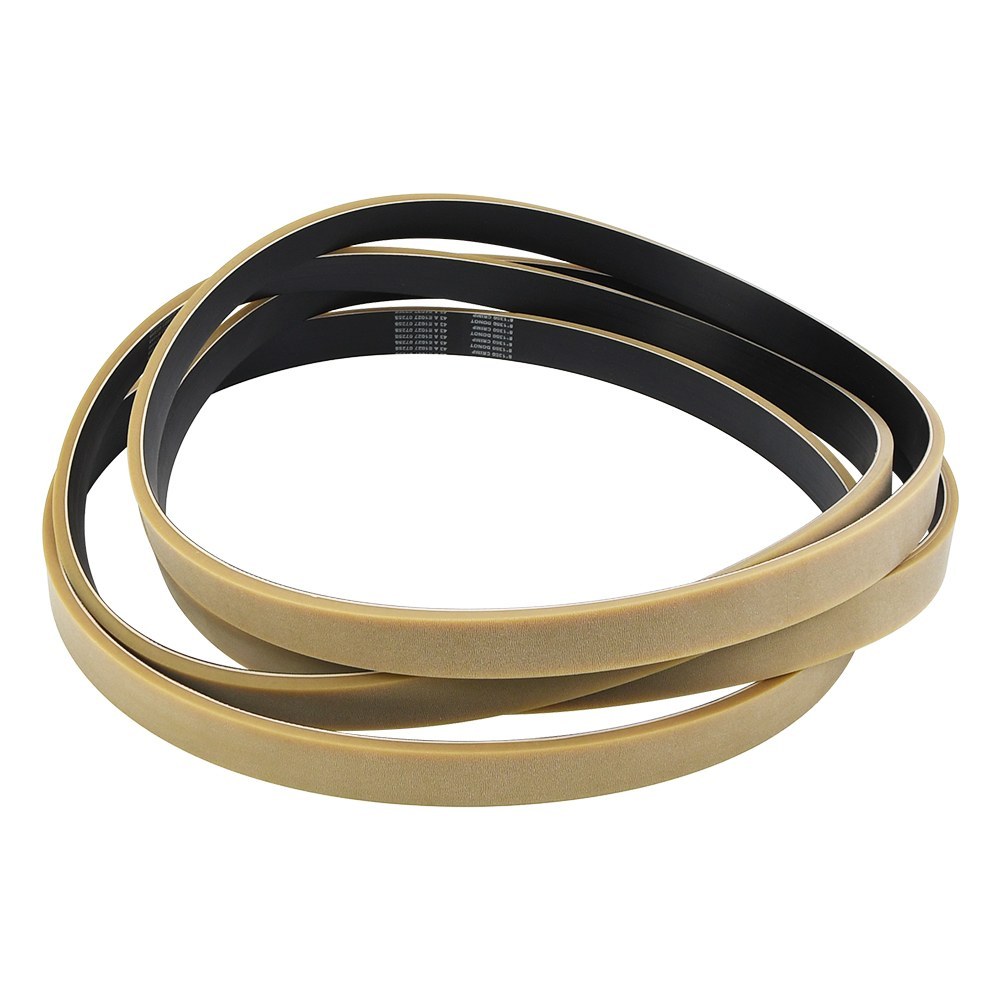
Taken apart, this construction has only three elements, and each one directly affects service life.
Vulcanised rubber cover
The buff elastomer layer on the outside supplies friction and cushioning. It is cured together with the base belt in the mould rather than glued on later, so it resists delamination over long runs.
Black base belt
The inner layer carries tension and holds dimensions, deciding whether the endless circumference stretches under load. Its surface is prepared before vulcanisation to secure the bond with the cover.
Endless loop, no joint
With no splice, friction and tension stay consistent through a full revolution, avoiding the bump or thickness step a joint introduces. This suits stations that need steady, even feeding.
Specification
Dimensions you can check
The values below come from the production specification of this belt. The remaining items can be adjusted for the machine.
| Designation | 1350 x 30 x 8 mm |
|---|---|
| Endless circumference | 1350 mm |
| Belt width | 30 mm |
| Total thickness | 8 mm |
| Base belt | Black flat base belt |
| Cover | Vulcanised rubber cover, buff |
| Construction | One-piece endless loop, no joint |
| Bonding | In-mould vulcanisation |
| Adjustable | Circumference, width, total thickness, cover hardness and colour, surface texture |
Dimensional and material records can be supplied with the order. This article makes no claim about any certificate or test mark not shown in the photographs.
Custom build
Four steps from drawing or sample to dispatch
Belts of this type rarely run straight off a shelf, so the following points are normally confirmed in order.
Send a sample or a drawing
Give circumference, width, total thickness and the installation space on the machine. With a used belt, cover hardness and surface condition can be measured directly.
Set the cover parameters
Choose cover hardness, colour and surface texture for the material being moved, such as paper, film or cartons, to avoid either scuffing from too much grip or slipping from too little.
Vulcanise and trim
Cover and base belt are cured together in the mould, then edges are trimmed and circumference and thickness checked so the loop stays uniform all the way round.
Check before dispatch
Each belt is reviewed for loop size, cover appearance and bond edges, and ships with dimensional and material records.
Photo set
Ten angles of the same belt
Arranged in shooting order, with no compositing and no third-party markings, for checking construction and surface condition item by item.
FAQ
Four questions that come up during selection
Will the cover delaminate?
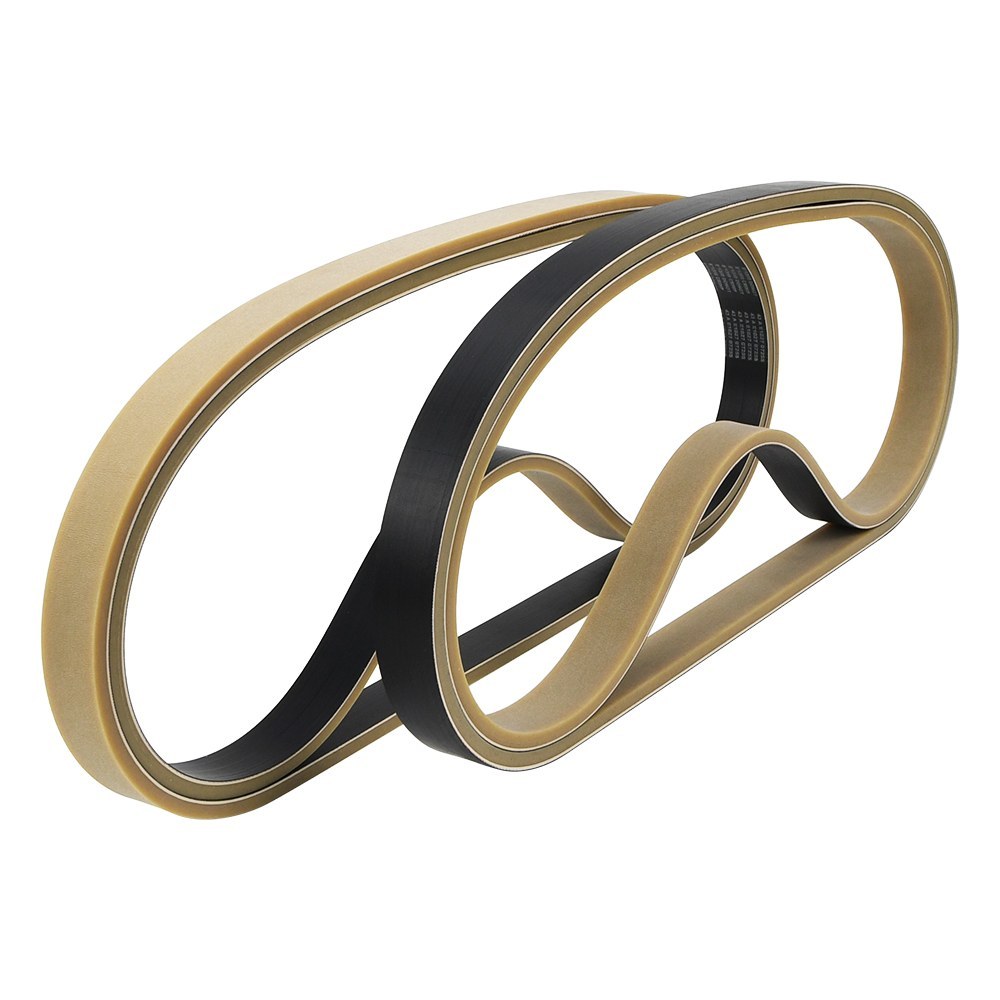
The cover is vulcanised to the base belt in the mould, not glued on afterwards. Actual life still depends on tension, pulley diameter, speed and the material handled, so a sample trial under real conditions is recommended.
Can I change only the width, or only the circumference?
Yes. Circumference, width, total thickness, cover hardness and colour, and surface texture can each be adjusted independently once confirmed against a drawing or sample.
Is this belt suitable for food-contact stations?
This article records only the construction and dimensions of an industrial friction-feed belt and makes no food-grade compliance claim. If that is a requirement, raise it at enquiry stage so the material can be specified separately.
What do I need to provide for a quote?
Endless circumference, width, total thickness, required cover hardness and colour, plus the machine model or photos of the old belt. A sample belt can be sent directly.
Summary
Three things decide whether a coated flat belt performs
How the cover bonds to the base belt, whether thickness stays even around the whole loop, and whether cover hardness matches the material being moved. All three can be checked against the photographs and the dimensional record, without relying on marketing claims.
If you have a sample belt or a drawing from a similar station, put the four parameters above together and contact GOODLY to confirm the specification.