Rubber Timing Belt: The Complete Buyer Guide for OEMs and Machine Builders
- Share
- publisher
- GOODLY Belts
- Issue Time
- Oct 15,2026
Summary
A practical buyer guide to rubber timing belts for OEMs and machine builders: how a quality rubber timing belt is constructed, the compounds that matter, the specs to check before ordering, how rubber timing belt HS code classification works for imports, and how GOODLY holds pitch accuracy in volume production. Includes a spec checklist and a sample-and-drawing request path.
What Makes a Quality Rubber Timing Belt? Construction and Compounds
Elastomer, tension member and tooth facing — the three layers that decide belt life
For most industrial drives the rubber timing belt is the default workhorse: it is strong, quiet, dimensionally stable and cost-effective in volume. But two rubber timing belts that look identical on a photo can differ by a factor of three in service life, because performance is set by the elastomer compound, the tension cord and the moulding process — not by the colour. This buyer guide walks OEMs and machine builders through what actually matters when specifying a rubber timing belt in 2026.
What Makes a Quality Rubber Timing Belt? Construction and Compounds
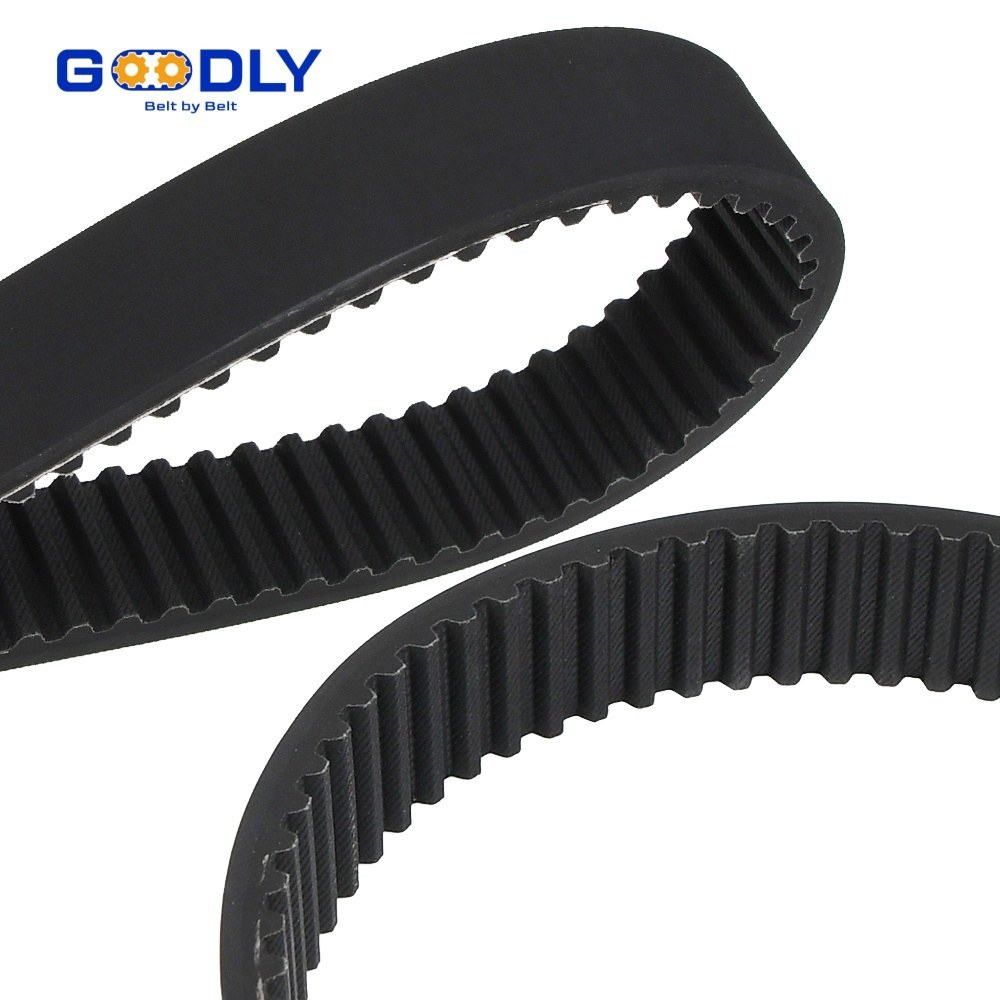
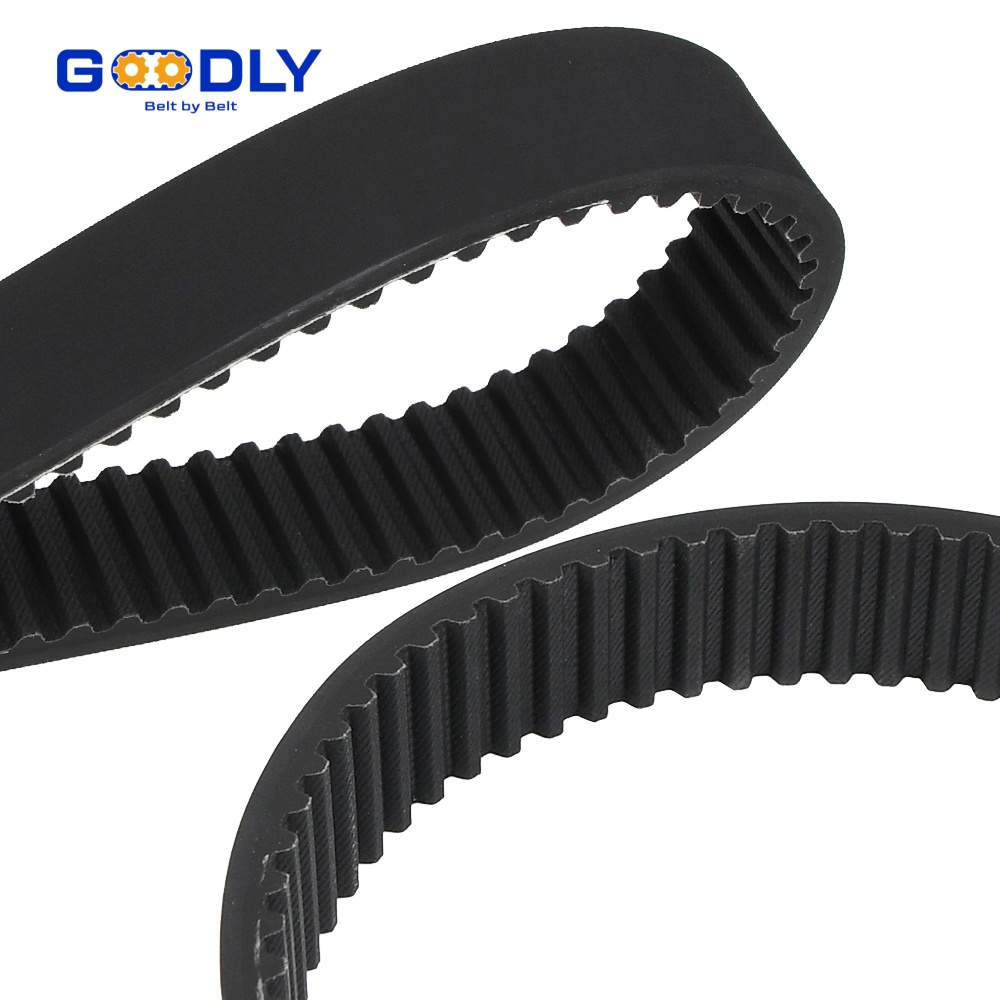
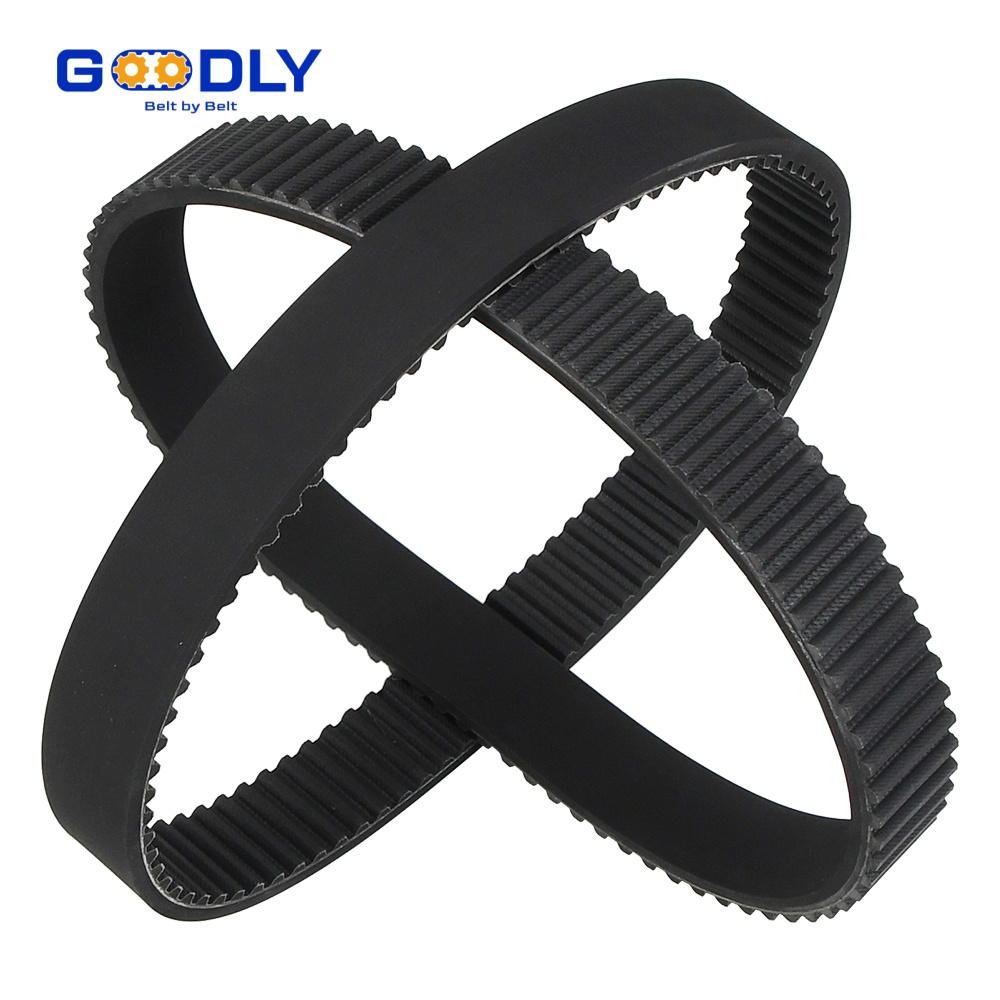
A quality rubber timing belt is built in three functional layers. The tooth facing carries the load and wears against the pulley; the tension member resists elongation; the elastomer body bonds the two and protects the cord. Neoprene (CR) is the classic industrial compound for general drives; EPDM adds ozone and weather resistance; hydrogenated nitrile (HNBR) suits oil and heat. Cheap belts often skimp on the cord — glass or aramid in place of a proper aramid cord — which is why they stretch and lose registration within weeks.
| Layer | Function | What to specify |
|---|---|---|
| Tooth facing | Load transfer, wear | Wear-resistant rubber, defined hardness |
| Tension member | Resists elongation | Glass, aramid (Kevlar) or steel cord |
| Backing | Protection, grip | Plain, fabric or rubber coated |
| Elastomer | Bonding, environment | Neoprene, EPDM or HNBR grade |
The engineers’ rule of thumb: if a drive must hold registration for a whole maintenance interval, over-specify the cord rather than the compound. Compare constructions with our Timing Belt product range.
Rubber Timing Belts for Packaging and Printing Machinery: Key Specs to Check
Packaging and printing machines are the most demanding mainstream applications for a rubber timing belt, because they combine high cycle counts with tight registration. Before you approve a quote, confirm these five specs in writing.
- Pitch and profile — must match the pulley exactly (T5, T10, HTD 5M/8M, AT10 and so on).
- Length tolerance — state your acceptable band, typically ±0.05 mm per pitch class.
- Width and tooth count — cut from the same mould run as your first article.
- Backing type — plain, fabric or rubber coated depending on grip and noise targets.
- Cord type — glass for economy, aramid for shock loads and long centres.
Rubber Endless Timing Belt vs Open-Ended Options for Your Drive
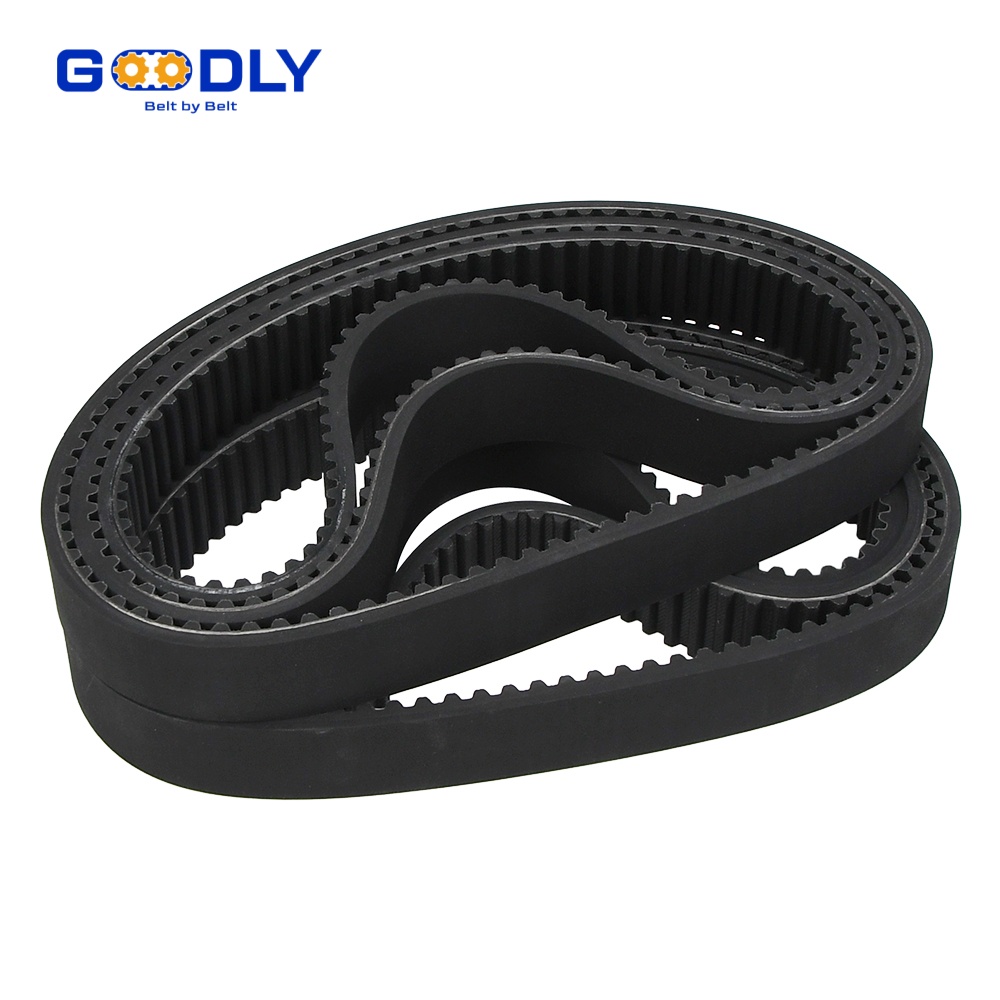
A rubber endless timing belt is moulded as a continuous loop, so it has no joint and the best possible pitch consistency — the right choice for fixed-centre drives such as a print cylinder or a cam indexer. An open-ended belt is supplied as a length and joined on site, which is useful when the belt must be threaded through an existing frame or when the run is very long. Where a closed belt fits, prefer it: joints are the weak point in any drive. Splicing options are covered on our special machining page.
Rubber Timing Belt HS Code and Import Classification for Global Buyers
Getting the rubber timing belt HS code right avoids customs delays and unexpected duty. Most vulcanised rubber transmission belts classify under HS 4010, with the exact subheading depending on the belt type and whether it is endless or open. PU and other plastic belts fall under a different heading, so a mixed shipment needs more than one code. Always confirm the code with your broker against the actual construction, and ask your supplier for a declaration that matches.
| Product | Indicative HS heading | Notes |
|---|---|---|
| Vulcanised rubber timing belt | 4010.3x | Endless rubber transmission belts |
| Rubber belt with textile reinforcement | 4010.1x | Check cord vs fabric reinforcement |
| Polyurethane timing belt | 3926.90 | Plastic belts classify outside 4010 |
| Belt + pulley kits | 4010 + 8483 | Separate the mechanical parts |
GOODLY supplies HS-code documentation with every export order so your broker can clear the shipment without a second round of questions. For the wider sourcing picture see understanding timing belt cost.
How GOODLY Rubber Timing Belt Manufacturing Ensures Pitch Accuracy
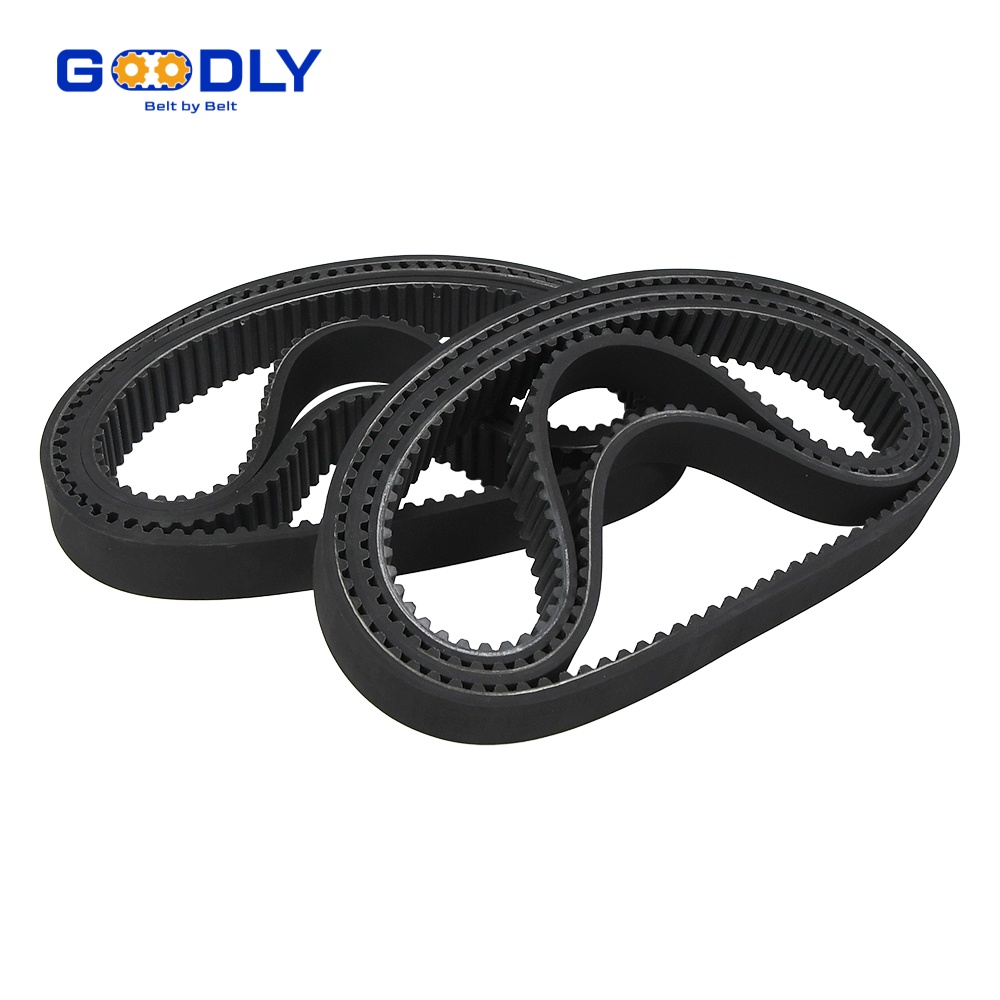
Pitch accuracy is a manufacturing outcome, not a marketing claim. GOODLY controls it end to end: moulds are cut to ISO 5296 tooth geometry, cord tension is set before curing, and every batch is measured on pitch, length and width to a ±0.05 mm band with a dimensional report released against your PO. Because we run the compounds in house, we can also tune hardness and backing for your specific drive instead of selling you the nearest catalogue item.
Original equipment buyers can review our process on the About GOODLY page, and compare the grades on the Rubber Timing Belt product page.
Rubber Timing Belt Spec Checklist Before You Order
How long does a rubber timing belt last?
With correct tension and alignment, a quality rubber timing belt typically runs several thousand hours in a packaging or printing drive. Heat, oil and misalignment are the main life-shortening factors.
Can you match our existing rubber timing belt?
Yes. Send a sample or a drawing with pitch, profile, length, width and tooth count, and GOODLY will cross-reference it and quote a drop-in equivalent.
What is the MOQ for a custom rubber timing belt?
Custom pitch, width and profile belts usually start from a low tooling-free MOQ; ask us with your annual volume and we will confirm.
Do you supply food-grade rubber timing belts?
We supply food-contact grades and silicone options; compliance is declared per order against FDA 21 CFR and EU 10/2011.
Request rubber timing belt samples and drawings within 48 hours
Send your spec and GOODLY will return a drawing, a dimensional tolerance commitment and samples typically in 3–5 days, with volume delivery in 10–15 days.
Request Rubber Timing Belt SamplesHS codes shown are indicative only; confirm the final code with your customs broker. GOODLY tolerances and lead times are typical capabilities confirmed per order.