Rubber vs Polyurethane Timing Belts: Material Comparison for Industrial Drives
- Share
- publisher
- GOODLY Belts
- Issue Time
- Oct 15,2026
Summary
Rubber vs polyurethane timing belts compared for industrial drives: abrasion resistance, temperature range, chemical resistance, backings and load behaviour. Learn when a polyurethane timing belt outperforms rubber, when rubber wins, and how PU timing belts perform in robotic automation. Includes a head-to-head comparison table and a specification review path.
Polyurethane vs Rubber Timing Belt: Key Performance Differences
Two elastomers, two very different sets of strengths on the machine
Should your next drive use rubber or polyurethane timing belts? Both are synchronous, both are toothed, and both will run a machine — but they age differently, resist different chemicals, and suit different duty cycles. Rubber is the forgiving all-rounder; polyurethane is the precision performer. This comparison sets out the real engineering differences so OEMs can pick a material on evidence rather than habit, and looks at how PU timing belts behave in robotic automation.
Polyurethane vs Rubber Timing Belt: Key Performance Differences
A polyurethane vs rubber timing belt choice hinges on four variables: abrasion, temperature, chemicals and dimensional stability. Polyurethane is cast rather than vulcanised, so its teeth are extremely abrasion-resistant and hold tolerance well; that is why fine-pitch PU belts dominate 3D printers and precision indexers. Rubber is more elastic, grips better and tolerates heat and shock, which suits packaging, printing and general industrial drives.
| Property | Polyurethane (PU) | Rubber (neoprene / EPDM) |
|---|---|---|
| Abrasion resistance | Excellent | Good |
| Temperature range | approx. −20 to +80°C | approx. −30 to +100°C |
| Oil & chemical resistance | Very good | Moderate |
| Elongation / shock tolerance | Low, stiff | High, forgiving |
| Dimensional stability | Excellent | Good |
| Typical use | Precision, conveying, gripper | Packaging, printing, heavy drives |
| Cleanliness | Clean, low dust | Good |
Neither column is “better”; they are different tools. For the synchronising role itself, see our what is a timing belt explainer, and for PU applications specifically, uses of polyurethane timing belts.
Polyurethane Timing Belts: Abrasion Resistance, Temperature Range and Backings
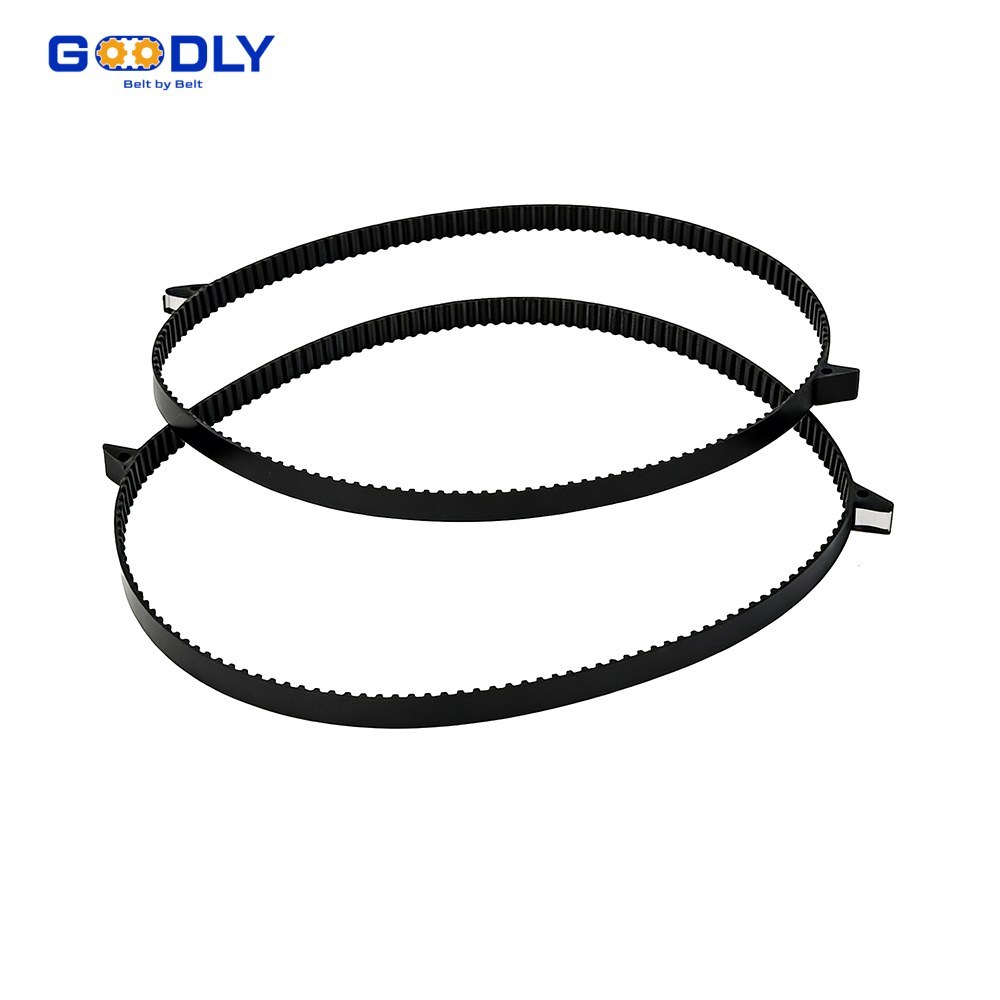
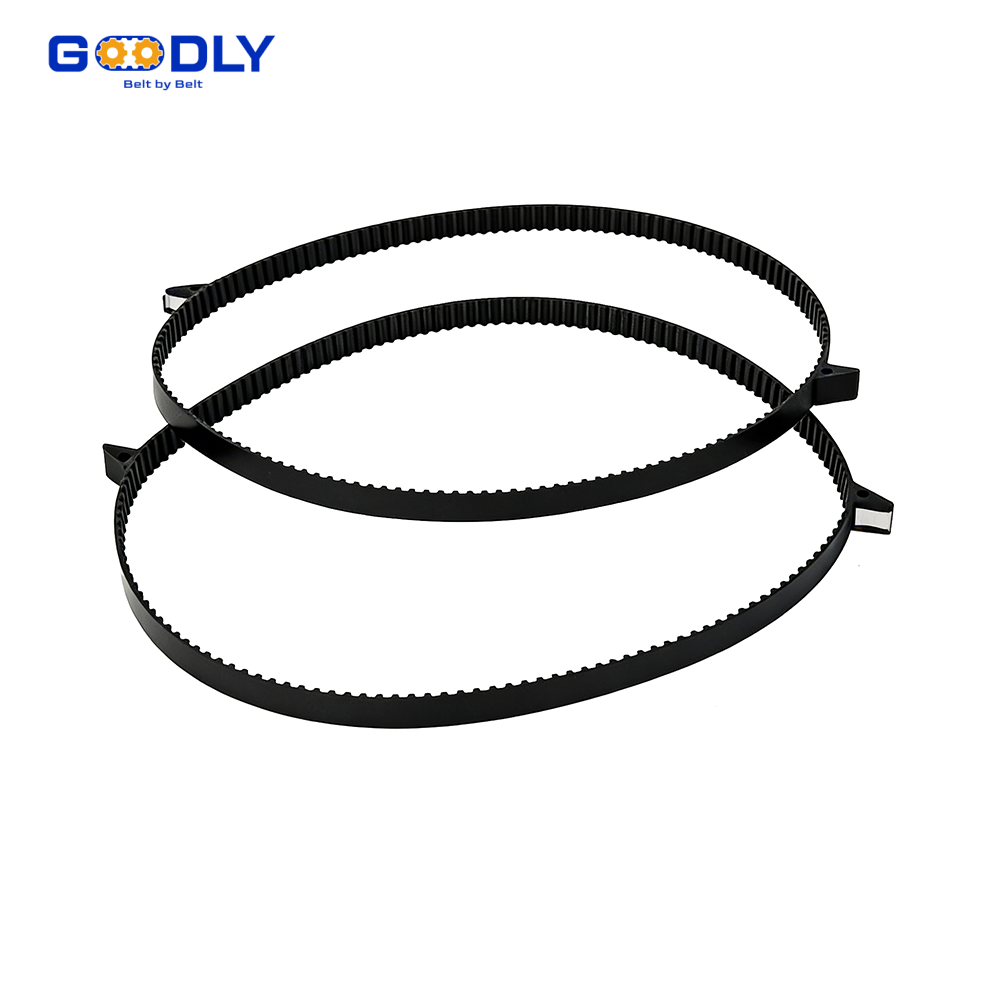
Polyurethane timing belts are cast onto a steel or aramid cord, which gives them a very stable pitch and strong resistance to tooth wear. They can be produced with an endless, truly seamless body, and backings can be added for grip or handling: plain, fabric, or a rubber/sponge coating. Because PU accepts bonding well, it is also the easiest material to add cleats, profiles and custom coatings to.
Polyurethane Timing Belt Temperature Range and Friction Behaviour
The practical polyurethane timing belt temperature range is roughly −20°C to +80°C for standard grades, with special compounds extending the top end. Above that, PU softens and creeps, so heat-soaked applications such as a sealing jaw or a high-temperature dryer should move to silicone or a rubber grade. Friction behaviour matters too: PU runs dry and clean but can squeal on smooth backings, which is why a fabric or rubber backing is often specified where a PU belt also drives a product.
When a Rubber Timing Belt Outperforms Polyurethane in Your Machinery
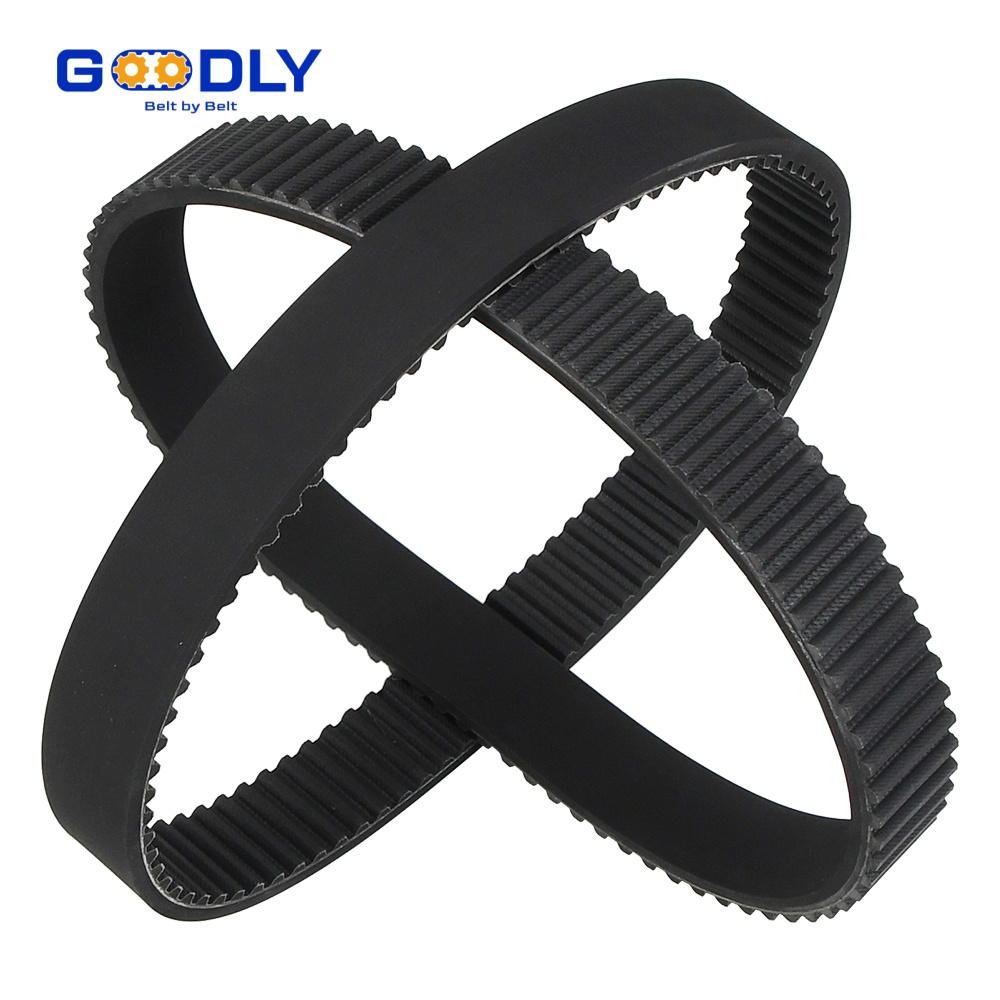
Switch back to a rubber timing belt when the drive sees heat above 80°C, frequent shock loads, or a need for elasticity to absorb vibration. Rubber also wins where the belt must grip under high tension, and in legacy machines designed around neoprene. In practice many plants run both materials side by side: PU on the precision axis, rubber on the main drive.
Choose rubber when it runs hot
Consistent to about 100°C, with silicone grades higher still.
Choose rubber for shock loads
Higher elongation absorbs start-up torque and jams.
Choose PU for precision
Stable pitch and low creep keep registration tight.
Choose PU for oil and chemicals
Resists oils and many solvents far better than rubber.
Choose PU for clean conveying
Low dust and easy to clean for food-adjacent lines.
Choose PU for custom builds
Easier to add cleats, profiles and bonded coatings.
Application Guide: PU and Rubber Timing Belts in Robotic Automation
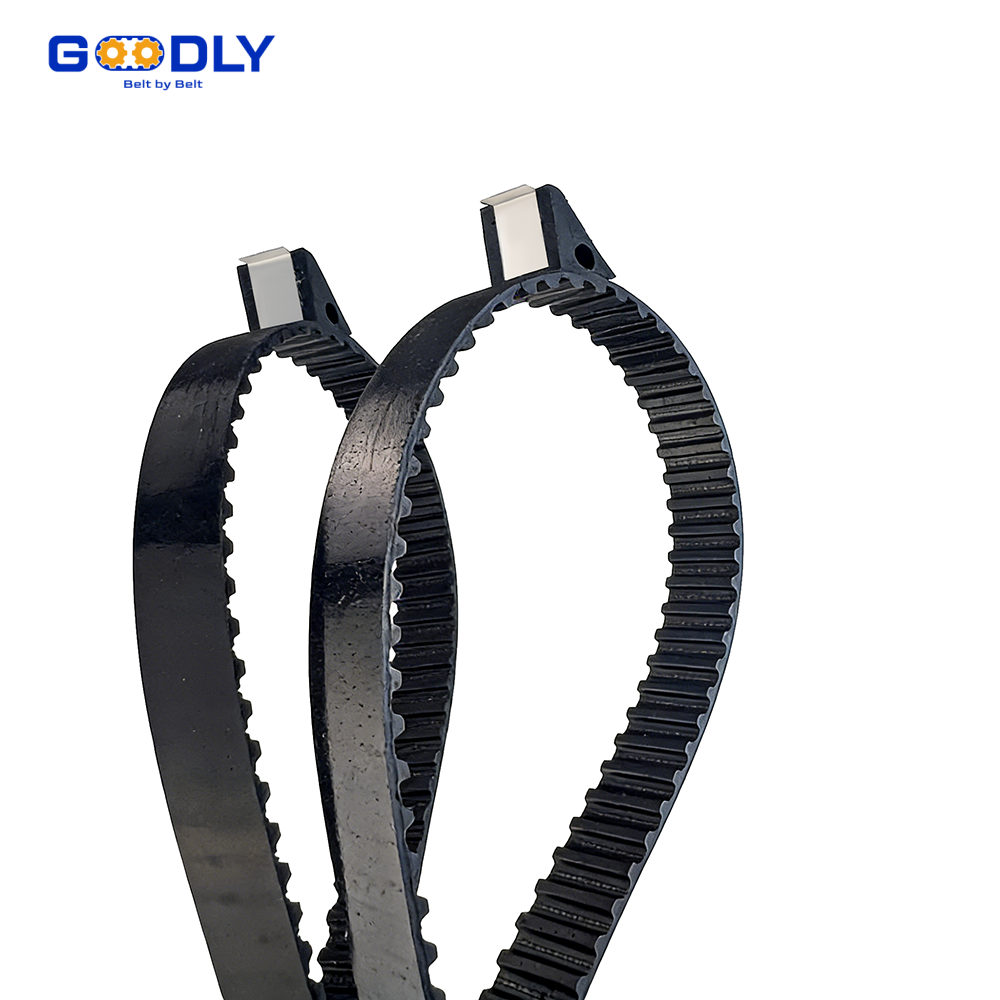
In robotic automation the belt is often part of the repeatability chain. Polyurethane timing belts in robotic automation — pick-and-place heads, gantries, gripper drives and linear axes — are preferred because low creep keeps the axis true over millions of cycles. Rubber may still be used on the heavier transfer axes, or where the belt is also conveying product and needs grip. The pairing rule is simple: keep the precision axis PU, and let rubber carry the load and shock.
For the vibration and noise side of drive design, our pitch and system design guide is worth reading alongside this article.
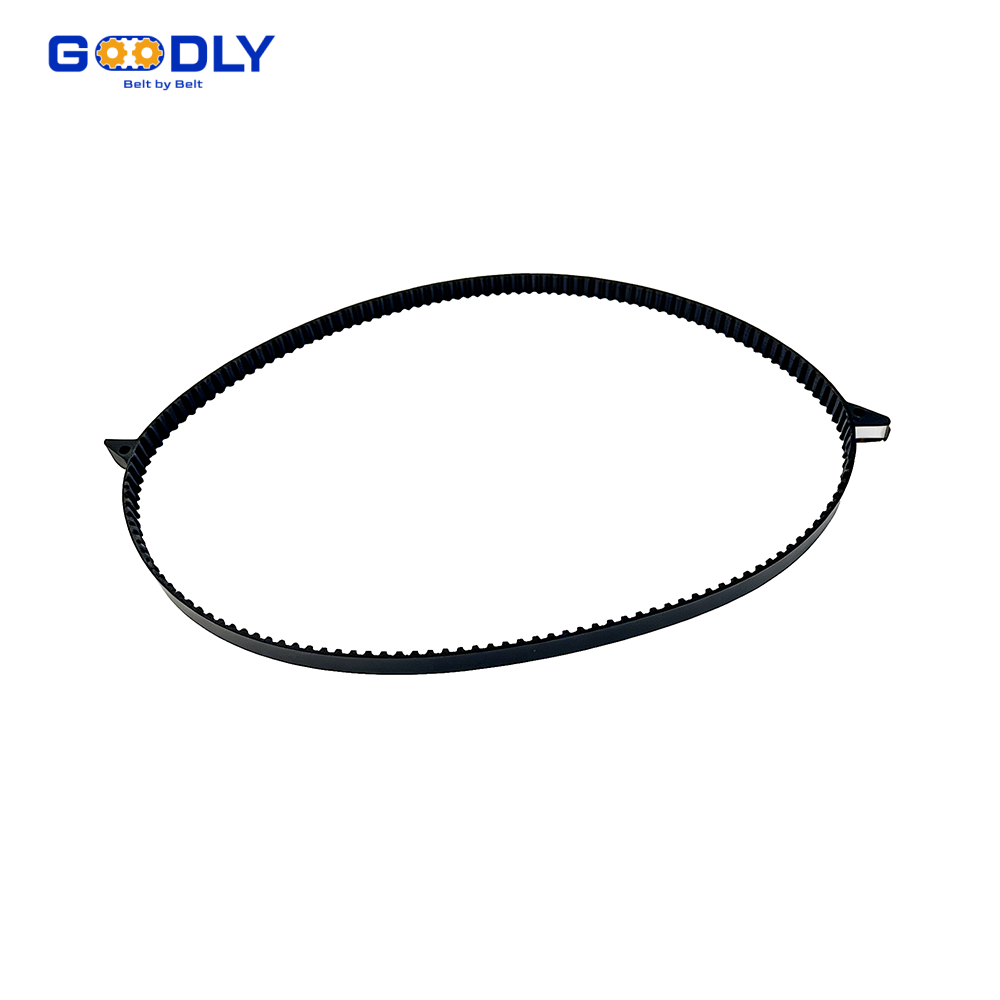
Which Material Do You Need? Ask GOODLY for a Free Specification Review
Are PU timing belts stronger than rubber?
PU belts are stiffer and more abrasion-resistant, but ‘stronger’ depends on the cord and width. For shock loads, rubber’s elasticity often gives a longer life.
Can you supply both materials from one factory?
Yes. GOODLY manufactures rubber timing belts and polyurethane timing belts in house and can quote both for the same drive.
What is the maximum temperature for a PU timing belt?
Standard PU is rated to about +80°C; higher-temperature compounds are available, but silicone or rubber is usually the better answer above that.
Do PU belts need different pulleys?
The pulley profile must match the belt profile, not the material. A T10 PU belt runs on the same T10 pulley as a T10 rubber belt.
Get a free material recommendation from GOODLY
Send the operating temperature, chemical exposure and duty cycle, and our engineers will tell you whether PU or rubber is the better specification — with samples in 3–5 days.
Ask About PU and Rubber BeltsTemperature and performance figures are typical values for standard grades and vary by compound. Confirm exact ratings per order.