Silicone vs Rubber Timing Belts: Which Handles Heat, Oil and Food Contact Best?
- Share
- publisher
- GOODLY Belts
- Issue Time
- Oct 15,2026
Summary
Silicone vs rubber timing belts compared on the three conditions that decide the choice: heat, oil and food contact. This guide covers silicone rubber vs neoprene, the difference between neoprene, EPDM and natural rubber grades, what FDA and EU food-contact rules require, and a simple mapping from machine conditions to the right material. Includes a four-material comparison table.
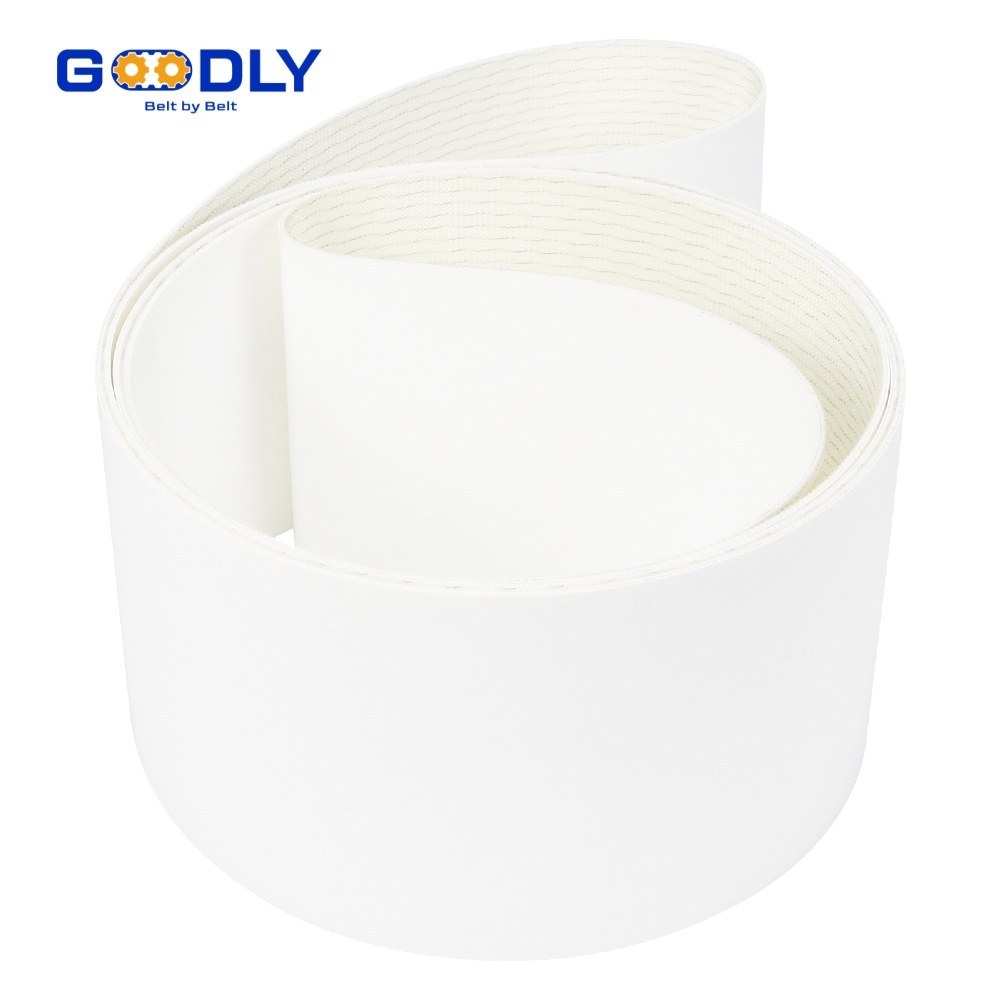
Silicone Rubber Timing Belt vs Neoprene: Temperature and Chemical Resistance
One condition usually decides the material — here is how to find it
Choosing between a silicone vs rubber timing belt is rarely about the belt and almost always about the environment. Heat, oil and food contact each point to a different elastomer, and picking the wrong one shortens life or fails an audit. Rubber — especially neoprene and EPDM — is the tough all-rounder; silicone is the heat and hygiene specialist. This guide compares the two families and the common rubber grades so you can match material to machine conditions with confidence.
Silicone Rubber Timing Belt vs Neoprene: Temperature and Chemical Resistance
A silicone rubber timing belt and a neoprene belt sit at opposite ends of a simple trade-off. Silicone wins on heat (to about 200°C) and on non-stick, food-safe behaviour, but has lower tear strength. Neoprene is stronger, tougher and cheaper, resists oil moderately well, and is the default for general industrial drives. If your dominant risk is temperature or hygiene, choose silicone; if it is load, abrasion or cost, choose neoprene or another rubber grade.
| Condition | Silicone | Neoprene | EPDM | Natural rubber |
|---|---|---|---|---|
| Max continuous temp. | ~200°C | ~100°C | ~120°C | ~80°C |
| Oil resistance | Moderate | Good | Poor | Poor |
| Ozone / weather | Excellent | Good | Excellent | Poor |
| Food contact | Excellent | Grade-dependent | Grade-dependent | Grade-dependent |
| Tear / abrasion | Moderate | Good | Good | Excellent |
| Relative cost | Higher | Moderate | Moderate | Low |
For the mechanics that are common to every material, start with what is a timing belt.
Rubber Timing Belt Grades: Neoprene, EPDM and Natural Rubber Compared
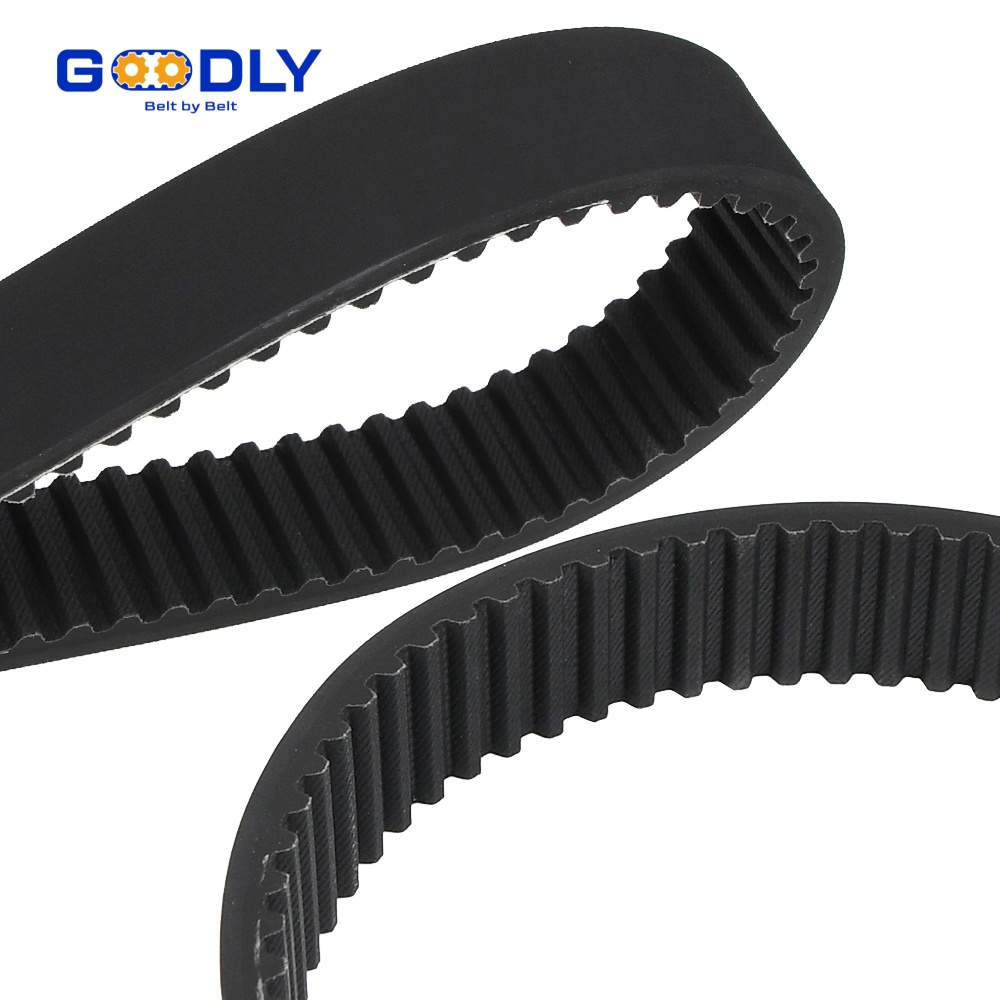
‘Rubber’ is not one material. A neoprene timing belt is the classic industrial grade: balanced strength, decent oil resistance and predictable life. EPDM trades oil resistance for outstanding ozone and weather resistance, which makes it the outdoor and washdown choice. Natural rubber offers the best abrasion and grip but ages fastest in sunlight and ozone. Choosing the wrong grade is the most common reason a ‘rubber’ belt fails early.
EPDM Timing Belt: Heat and Ozone Resistance for Outdoor Drives
An EPDM timing belt is the right spec when a drive lives outdoors or in a humid, ozone-rich environment — think agricultural machinery, exposed conveyors or cooling-tower drives. EPDM also tolerates hot water and steam better than neoprene, which is why it appears on washdown equipment. It is a poor choice for oil contact, where neoprene or nitrile grades do better.
Food Contact Rules: Which Timing Belt Materials Meet FDA and EU Standards
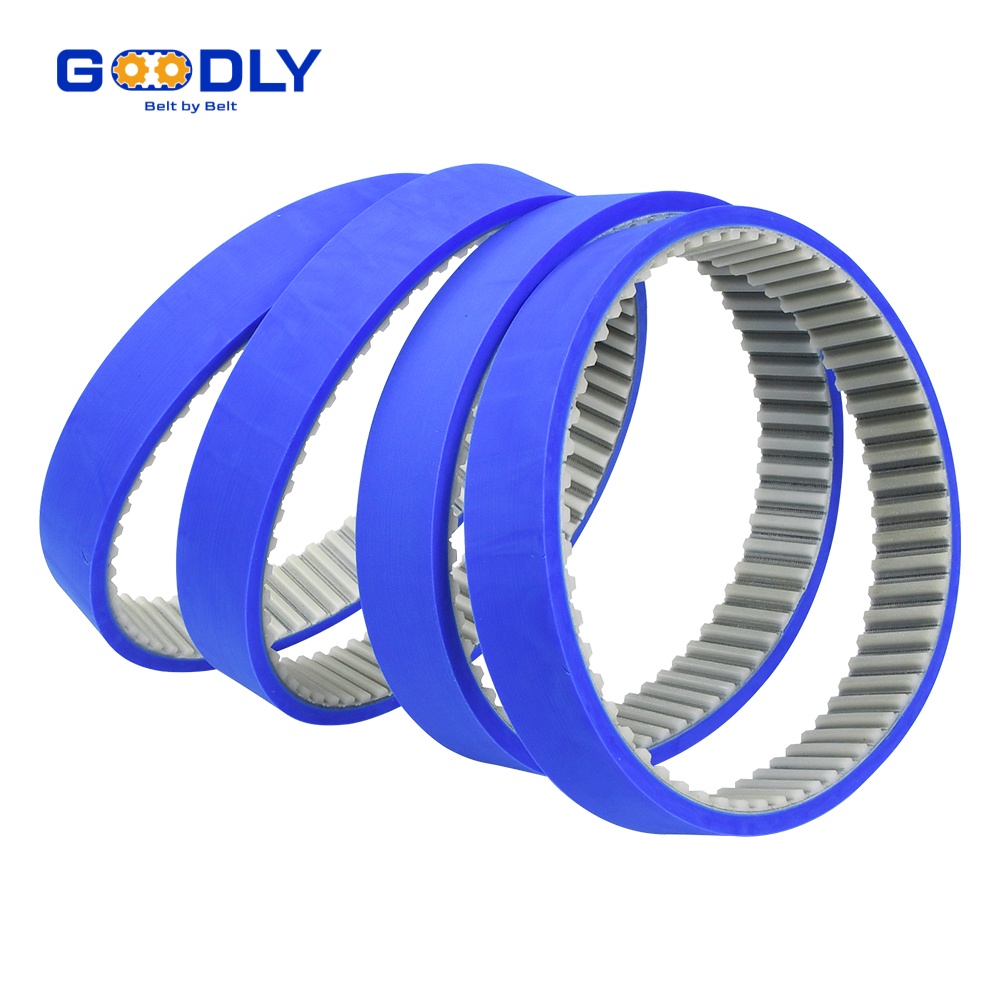
Where the belt may touch product, material compliance is a hard gate, not a preference. Food-contact grades are compounded to FDA 21 CFR 177.2600 in the US and EU Regulation 10/2011 in Europe, and are usually supplied white or blue so contamination is visible. Silicone is the most common food-contact choice because of its heat and release properties, but food-grade rubber and PU grades exist too. Always request a declaration tied to your actual batch — a generic marketing claim will not survive a food-safety audit.
GOODLY supplies food-contact silicone and rubber grades with per-order declarations; see the Silicone Timing Belt range and the pharmaceutical belt solution.

Matching Belt Material to Machine Conditions: Heat, Oil, Abrasion and Hygiene
Use this short mapping to close the decision. If two conditions conflict, the one that causes failure first wins the material.
- Hot and clean, touches food → silicone or silicone vulcanised.
- Oily and loaded, indoor → neoprene or nitrile rubber grade.
- Outdoor, wet, ozone-rich → EPDM.
- Abrasive and shock-loaded → natural rubber or a reinforced rubber grade.
- Precision conveying, oil mist → polyurethane.
- Hot and loaded together → silicone vulcanised.
For the vulcanised option in detail, see our article on vulcanized synchronous belts.
Talk to GOODLY Engineers: Silicone or Rubber for Your Application
Is silicone better than rubber for a timing belt?
Only for heat and food-contact duties. For load, abrasion and cost, rubber grades such as neoprene are usually the better engineering choice.
Which rubber is best for oil contact?
Neoprene and nitrile grades resist oil far better than EPDM or natural rubber, which swell and degrade.
Do food-grade belts cost much more?
There is a premium for compliant compounds and documentation, but it is small relative to the cost of a failed audit or a product recall.
Can I switch material without changing pulleys?
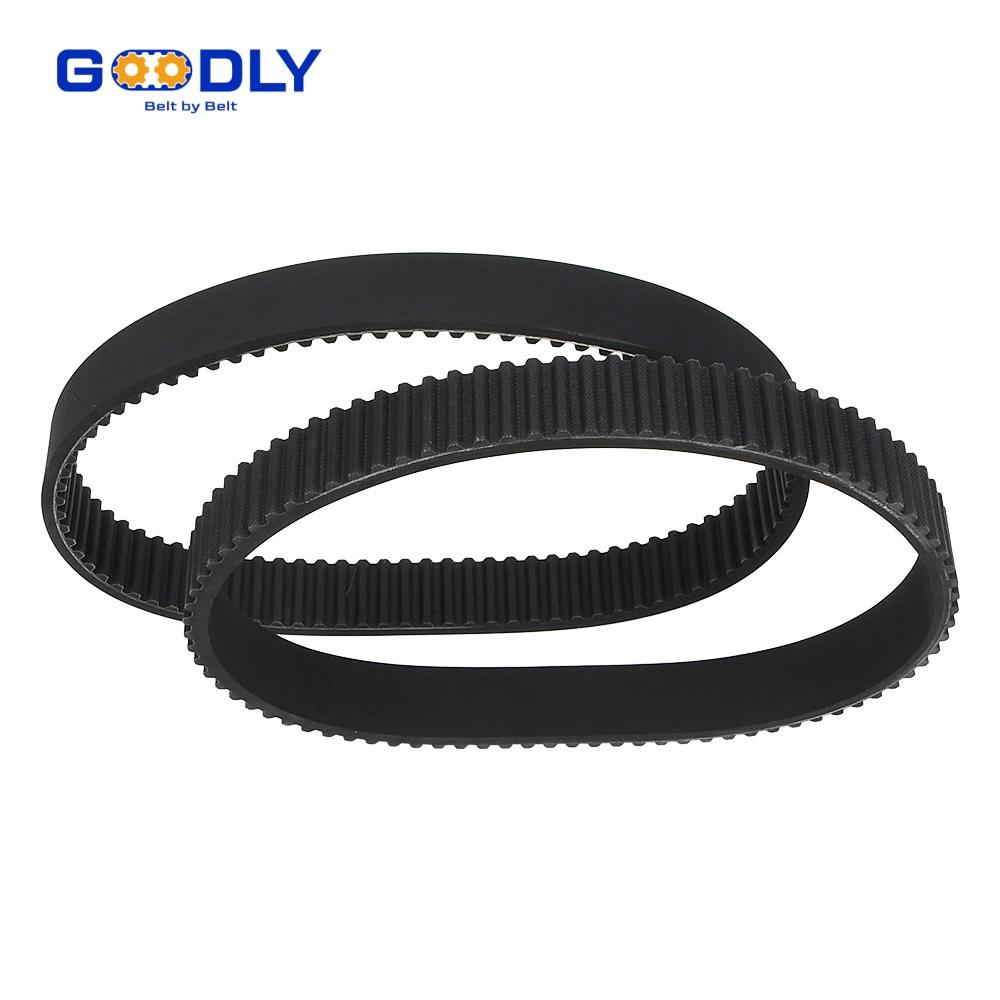
Yes. Pulley profile is set by pitch, not by material, so a T10 silicone belt runs on the same pulley as a T10 neoprene belt.
Not sure whether silicone or rubber fits your machine?
Describe the heat, oil and hygiene conditions and GOODLY engineers will recommend the right elastomer, confirm compliance and quote a tolerance-verified belt.
Ask Silicone or Rubber?Temperature and chemical-resistance values are typical for standard grades and vary by compound and supplier.