Timing Belts for Logistics and Sorting Systems: Cross-Belt Sorters and Parcel Handling
- Share
- publisher
- GOODLY Belts
- Issue Time
- Oct 26,2026
Summary
How timing belt conveyor systems power cross-belt sorters, linear sortation and parcel handling: high-acceleration carrier drives, belt selection for 24/7 logistics duty with wear and noise control, custom belts for warehouse automation and AGV drives, and GOODLY timing belt solutions for logistics and sorting equipment OEMs.
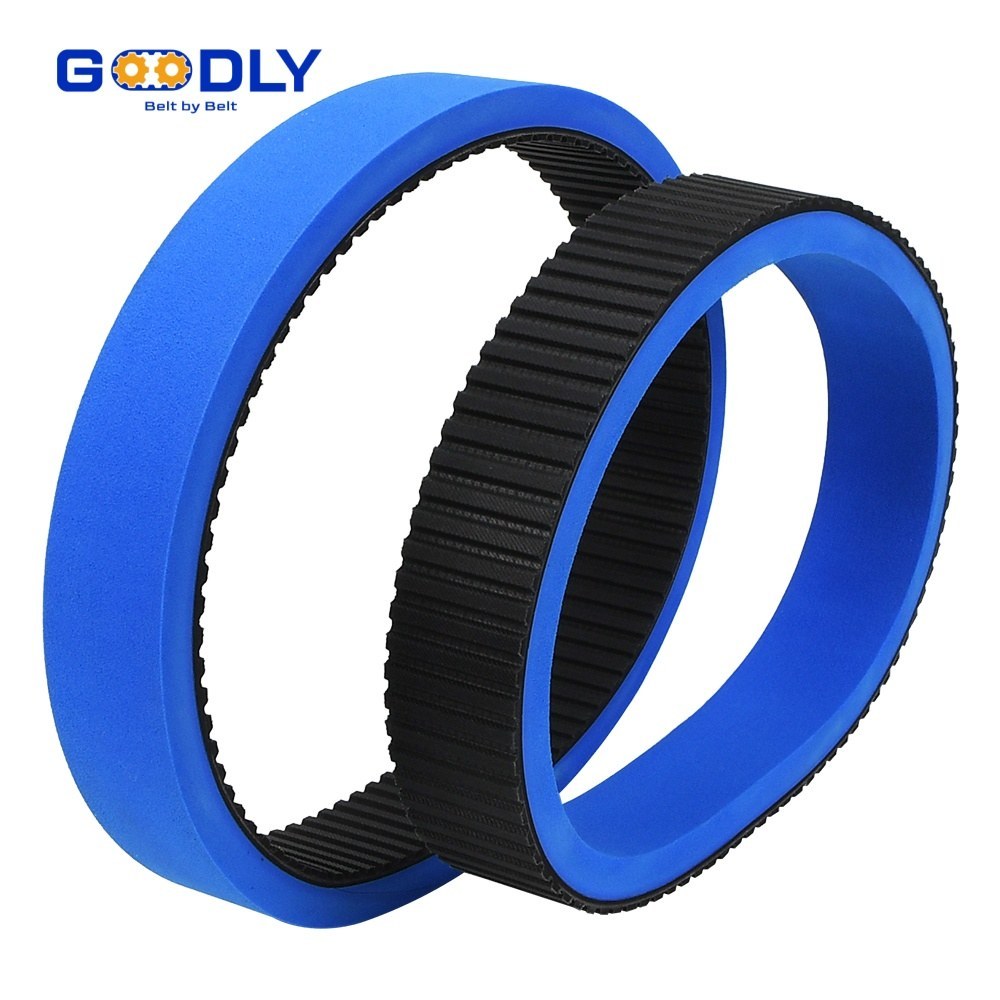
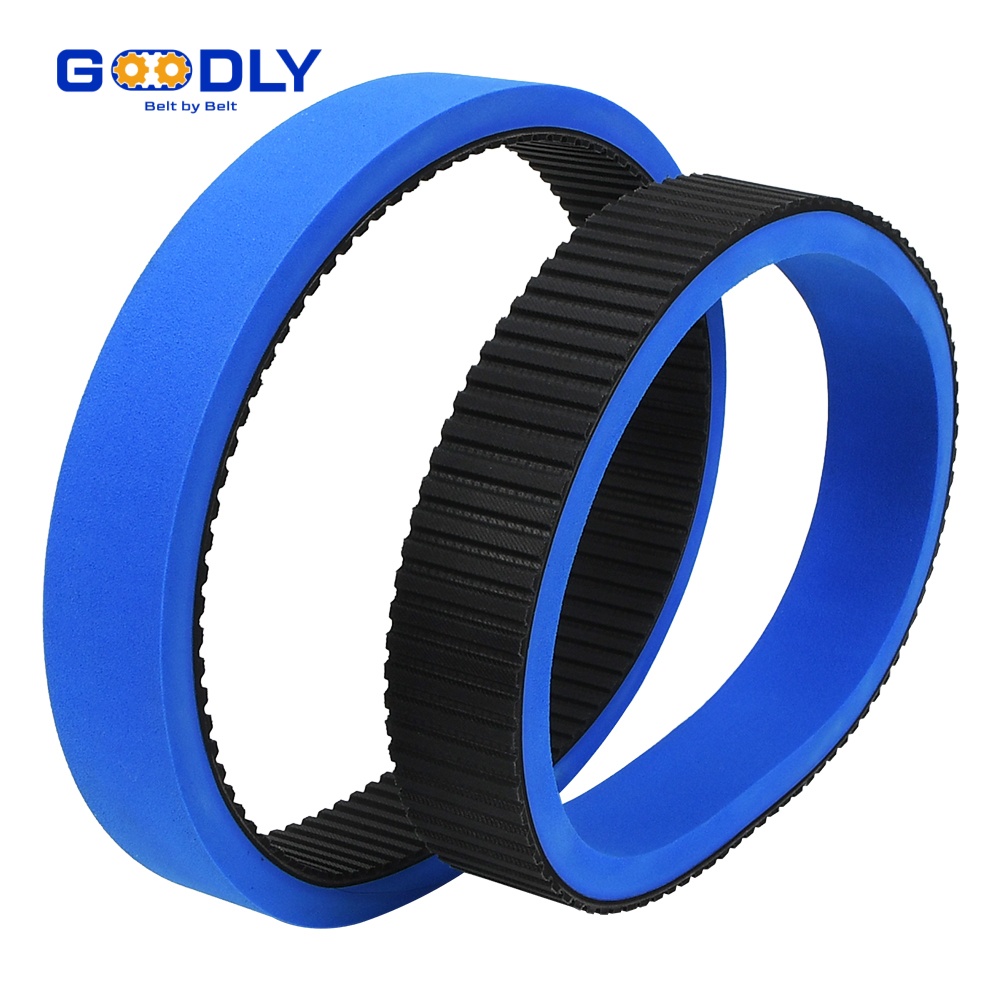
Timing Belts for Logistics and Sorting Systems: Cross-Belt Sorters and Parcel Handling
Carrier drives, induction stations and 24/7 conveyor duty: which timing belt construction keeps millions of parcels moving on pitch
A sortation centre measures itself in parcels per hour, and every one of those parcels rides on a drive that either holds its pitch or quietly stops holding it. Modern timing belt conveyor systems have replaced chain in the most demanding positions of cross-belt sorters, linear sorters and parcel induction lines because positive tooth engagement does what chain and friction conveyors cannot: exact synchronisation, no creep, no lubrication, and far less noise at 3 a.m. in a building that never closes. This guide explains where timing belts run in logistics and sorting equipment, how to select them for 24/7 duty, and what custom options warehouse automation OEMs actually need.
How Timing Belts Power Cross-Belt Sorters and Linear Sortation Systems
Sorting equipment uses timing belts in distinct duties, and each one fails for a different reason. Matching construction to duty is what separates a sorter that runs for years from one that seasons its belts every quarter.
| Station | Belt duty | Dominant failure mode | Right construction |
|---|---|---|---|
| Cross-belt carrier drives | Drive each carrier trolley's shuttle belt that diverts the parcel | Shock loads at divert, tooth shear | High-shear-strength teeth, aramid cord |
| Induction and merge stations | Index parcels into gapped pitch before scanning | Slip and pitch error at acceleration | Low-elongation timing belt, moulded teeth |
| Main transport sections | Long-run timing belt conveyor duty at constant speed | Abrasive wear from parcel contact, dust | Coated or rubber covered conveyor timing belt |
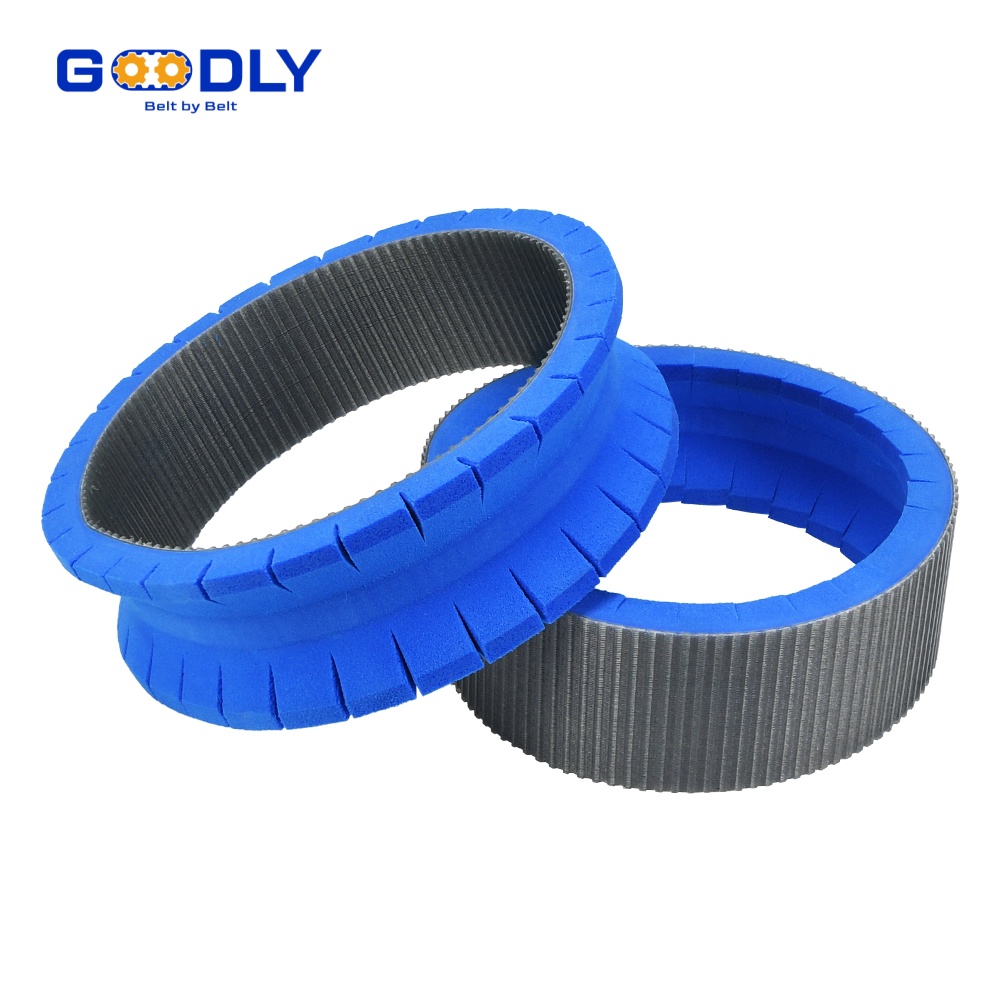
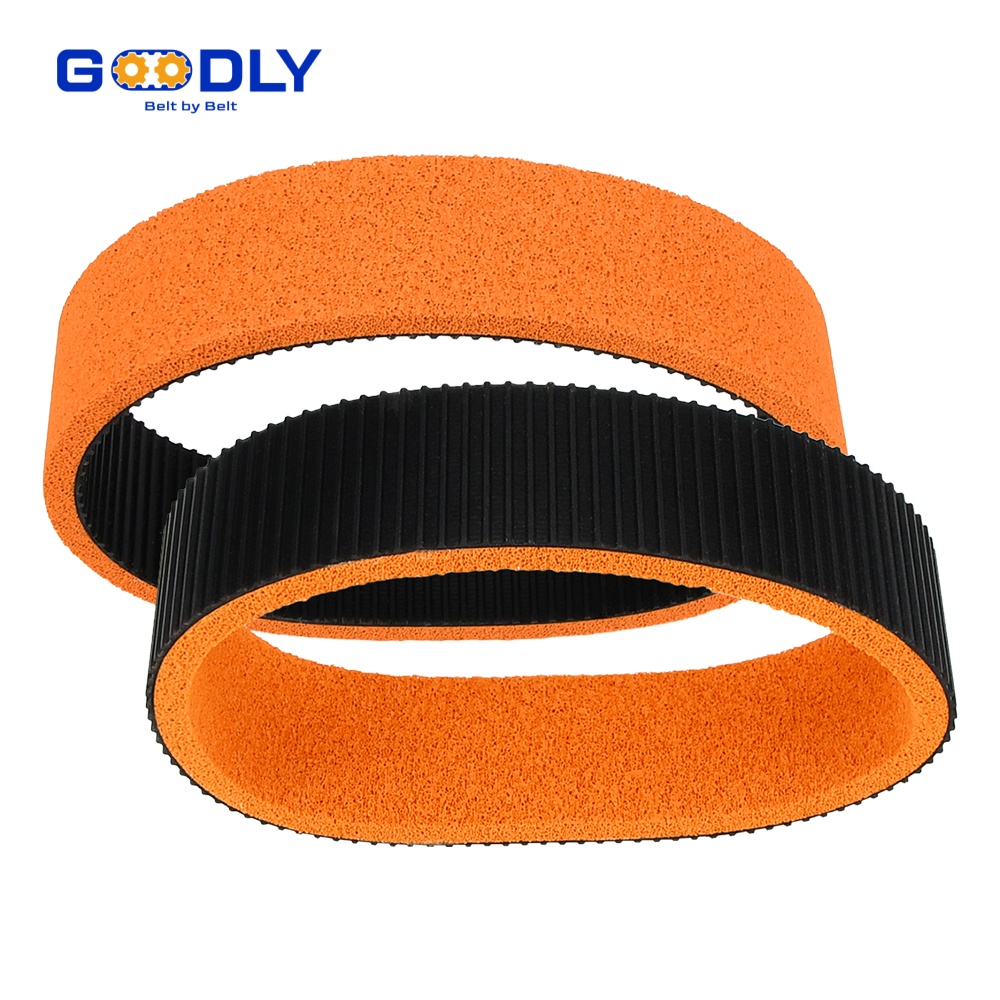
| Discharge chutes and angled transfers | Gentle direction change for fragile parcels | Surface marking, edge wear | Sponge or rubber-coated belt surface |
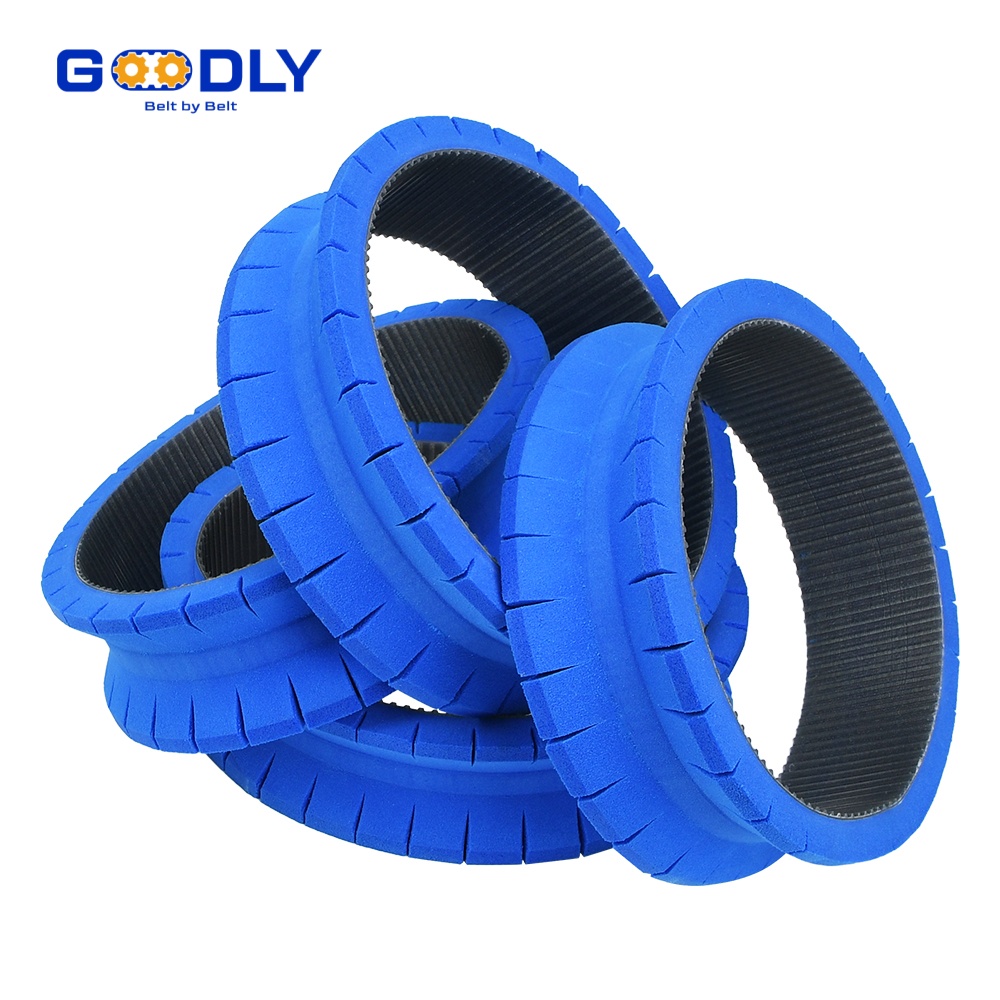
The carrier shuttle is the heart of a cross-belt sorter: a small belt starts and stops a parcel thousands of times per shift, and every acceleration shock passes straight through the teeth. That is why sorter OEMs specify high-shear tooth constructions and why a replacement cross belt sorter timing belt should be bought to the original pitch and cord specification, not merely by length.
Timing Belt Conveyor Systems for Parcel and E-Commerce Fulfillment
E-commerce fulfilment compressed the sortation world's timeline: seasonal peaks double throughput overnight, and the belts that were sized for average volume become the bottleneck. Timing belt conveyor systems give fulfilment operators three advantages over legacy chain and friction lines. First, positive engagement means induction gaps stay exact even when the line runs at peak speed, which keeps barcode reads and divert decisions reliable. Second, timing belt conveyors need no chain lubrication — a real difference in buildings where a dropped drop of oil is a ruined parcel. Third, a timing belt conveyor runs dramatically quieter, which matters in automated facilities that operate beside staffed workstations around the clock.
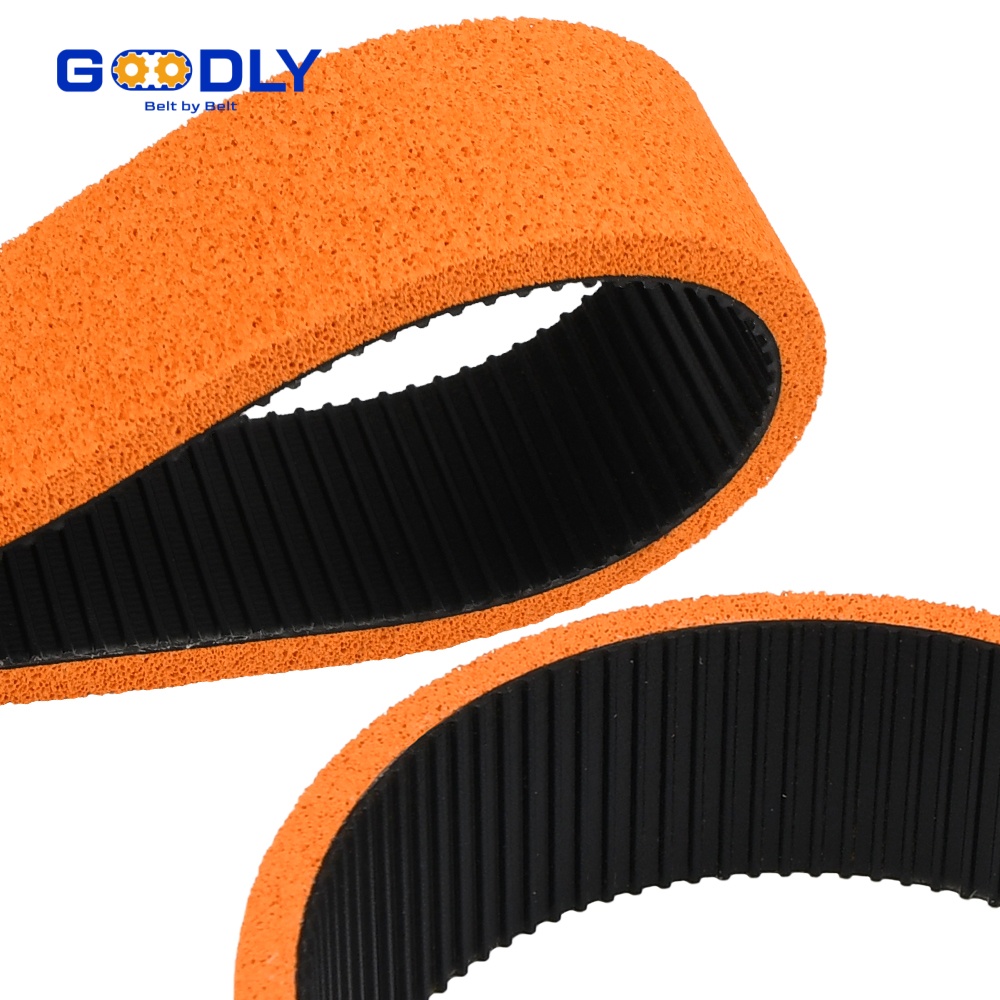
For the fragile end of parcel handling — blister-packed goods, clamshells, padded envelopes — the conveyor surface matters as much as the drive. Foam-coated constructions bring gentle contact to high-speed transport, and our sponge timing belt guide covers the coating selection for delicate handling in detail.
High-Acceleration Timing Belt Drives for Sortation Carriers
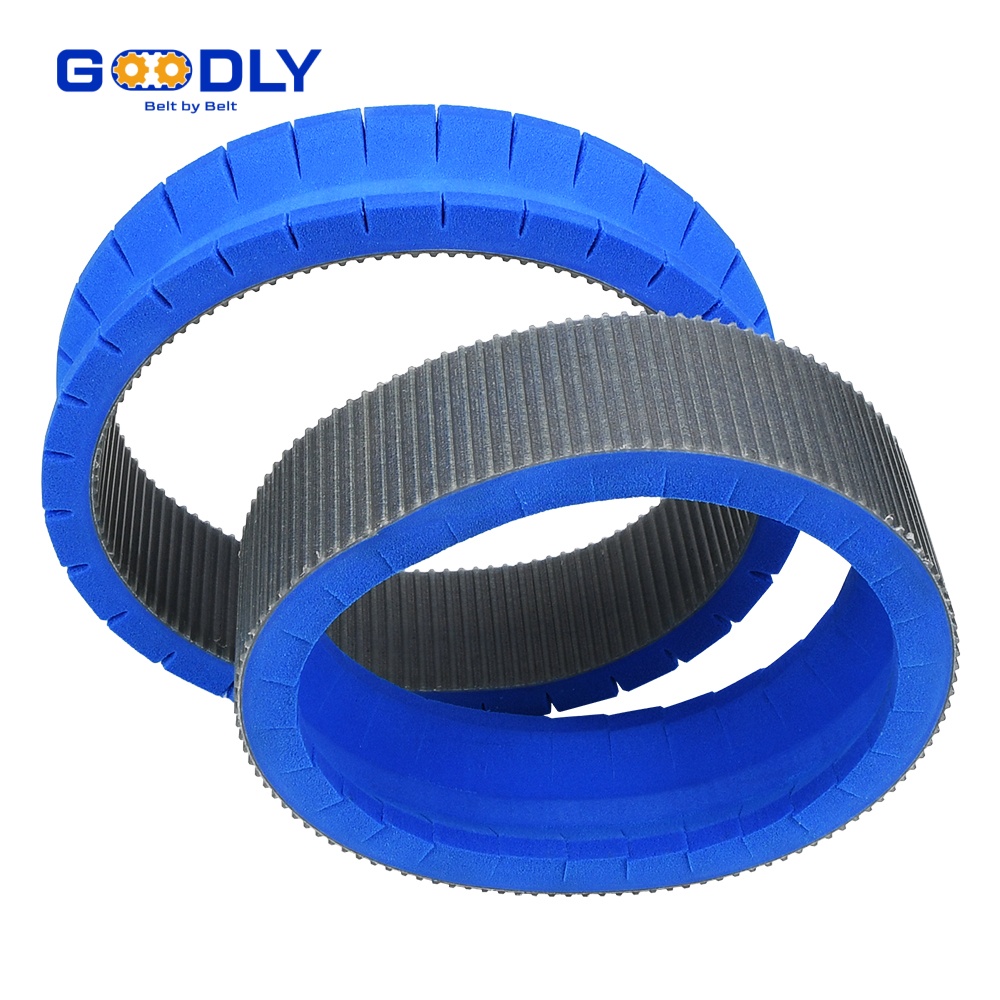
Sortation is an acceleration problem more than a speed problem. A carrier may be at rest 80% of the time and then hit full divert speed in a fraction of a second; the belt sees repeated shock torque that no steady-state calculation predicts. Selection rules that hold up in practice:
- Size by peak torque, not average. Divert shocks produce tooth loads several times the running load; aramid cords and full-depth teeth absorb them without ratcheting.
- Check tooth shear, not just tensile strength. The classic sorter failure is sheared tooth roots after months of divert shocks — ask for shear-strength data on the specific construction.
- Control tension precisely. Over-tensioned carrier belts load bearings and cords; under-tensioned belts ratchet one tooth at each start. A tension gauge is part of sorter maintenance, not a luxury.
- Match belt sets. On multi-belt drives, mixed old and new belts share load unevenly and wear the new belt to the old one's pitch.
Selecting Timing Belts for 24/7 Logistics Operations: Wear and Noise
Continuous duty changes the selection calculus: a belt that is adequate for eight hours a day ages four times faster in a logistics centre. Three wear mechanisms dominate, and each has a construction answer.
Abrasive wear comes first — parcel dust, kraft paper fibres and plastic film abrade any surface they slide across. A conveyor timing belt with a rubber or PU cover formulated for abrasion resists glazing and keeps its friction coefficient stable through peak season. Heat build-up comes second: high-cycle starts raise belt temperature, and cords lose tension stability as they creep under heat. Low-creep glass and aramid cords hold pitch where polyester drifts. Noise comes third: tooth mesh impact, repeated at sorter frequency for thousands of hours, is both an acoustic complaint and a diagnostic. Rounded-profile teeth and low-friction facings cut mesh noise at the source; when mesh noise starts rising on an installed line, it usually means tooth wear or tension loss, and our packaging machinery belt guide covers the same inspection routine from the packaging side.
Custom Timing Belts for Warehouse Automation and AGV Drives
Warehouse automation is a custom timing belts industry by nature: OEM sorters, shuttles, cube-storage robots and AGV drives each fix their own centre distances, and the installed base of legacy lines needs replacements no catalogue lists. Four custom dimensions define most logistics OEM orders:
- Pitch length and profile. Cut from moulded sleeves without tooling cost, in AT, HTD and GT profiles; wide belts for transport sections, narrow loops for carrier shuttles.
- Widths and coatings. Abrasion-resistant rubber, PU and sponge covers matched to what rides on the belt surface.
- Double-sided drives. Serpentine layouts driving carriers from both belt faces, with controlled phase alignment between stations.
- Cords and colours. Aramid for divert shock loads, glass for dimensionally stable long runs; colour-coded covers for maintenance zoning.
For AGV and shuttle drives specifically, miniature and small-pitch belts dominate: compact wheels, high start-stop frequency and zero tolerance for ratcheting. Send the worn belt or the machine drawing and a confirmed specification comes back with the quotation — reverse-engineering legacy sortation equipment is routine work.
GOODLY Timing Belt Solutions for Logistics and Sorting Equipment
GOODLY supplies timing belt drive and conveyor products to sorting equipment OEMs and to logistics operators maintaining mixed fleets of sorters, shuttles and parcel lines. Every logistics sorting belt we ship — carrier shuttle loops, transport-section timing belt conveyors or coated gentle-handling belts — is pitch-verified before packing, so the accuracy you qualify on the sample is the accuracy you get at 10,000 parcels an hour. Moulding, coating and jointing run in one plant, so a custom sortation belt moves from drawing to sample in 3-5 working days and the construction stays frozen for the life of the line. The logistics and sorting transmission belt solution page lists the station-by-station options, and the GOODLY story shows the factory behind them.
Shock-rated drives
High-shear teeth with aramid cords that survive millions of divert starts and stops.
24/7 abrasion control
Coated conveyor belts that hold friction and surface quality through peak season.
Quiet sortation
Rounded-tooth constructions cutting mesh noise in staffed automation halls.
3-5 day samples
Custom lengths, widths and coatings shipped for line trials without tooling cost.
Why use timing belt conveyor systems instead of chain in sortation equipment?
Timing belts synchronise positively without chain creep, need no lubrication, run far quieter and are lighter at speed. For induction and carrier duties where parcel pitch must stay exact, positive tooth engagement is the only construction that holds the gap under acceleration.
What fails first on a cross belt sorter timing belt?
Tooth roots, typically: repeated divert shocks load the teeth far beyond the running torque, and a belt with insufficient shear strength or over-tension loses tooth material. Specifying high-shear constructions with aramid cords and correct span tension addresses the root cause.
How often should conveyor timing belts be inspected in a 24/7 facility?
Visually every week during peak season and on a fixed quarterly cycle otherwise: check tooth flange shape, span tension with a gauge, and cover glazing. Rising mesh noise is the earliest audible symptom of pitch wear or tension loss.
Can you reproduce timing belts for a legacy sorter no longer supported by its OEM?
Yes. Send the worn belt and the machine model: we measure profile and pitch length, identify the cord and cover, confirm the specification in writing within 48 hours, and cut replacement loops from moulded sleeves without tooling cost.
Equipping a Sorter, Shuttle or Parcel Line?
Send GOODLY the machine drawing, the station duty and the peak throughput target. We confirm profile, cord and coating within 48 hours and ship trial belts in 3-5 days — pitch-checked, shock-rated, and repeatable across batches.
Send Your Sortation Belt Specification