Timing Belts for Paper, Corrugated and Converting Machinery: Folding to Die-Cutting
- Share
- publisher
- GOODLY Belts
- Issue Time
- Oct 30,2026
Summary
Paper converting timing belts for folding, scoring, rotary die-cutting and print finishing: why zero-slip synchronous drives protect register accuracy, heat-resistant and anti-slip constructions for high-speed lines, and custom belts for converting machine builders from GOODLY.
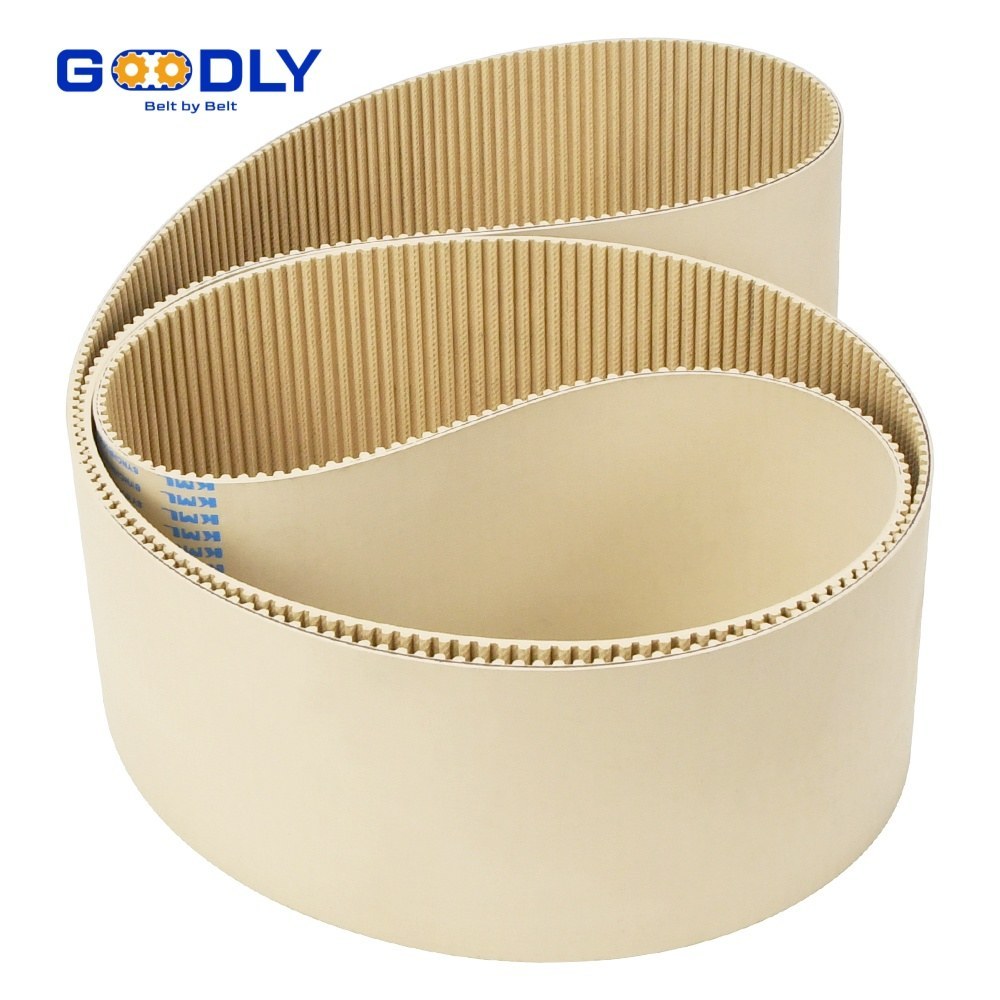
Timing Belts for Paper, Corrugated and Converting Machinery: Folding to Die-Cutting
Zero-slip register drives, heat-resistant constructions and custom belts for converting machine builders
Paper converting is a register business. A folder that folds two millimetres off, a die-cutter that nicks the wrong panel, a sheeter that cuts long by a millimetre — each one scraps product at full line speed. Behind almost every one of those stations sits a synchronous drive, and paper converting timing belts are what hold the mechanical register between knife, anvil, fold plate and print cylinder. This guide covers where timing belts do the work in folding, scoring and die-cutting machinery, which constructions survive high-speed heat and paper dust, why zero-slip drives protect register, and how converting machine builders specify custom timing belts for new platforms.
Precision Timing Belt Drives in Folding, Scoring and Die-Cutting Stations
In a modern folder-gluer or corrugated converting line, timing belts appear in three distinct roles, and each has its own specification logic. Getting the role right is the difference between a belt that lasts years and one that is replaced every quarter.
| Station | Role of the timing belt | Typical specification |
|---|---|---|
| Folding and plough stations | Synchronises fold belts and rollers to the main shaft | PU steel-cord, HTD 5M/8M, anti-static option |
| Scoring and creasing | Holds the crease line in register with the print | Rubber HTD, low-elongation cord, matched pair |
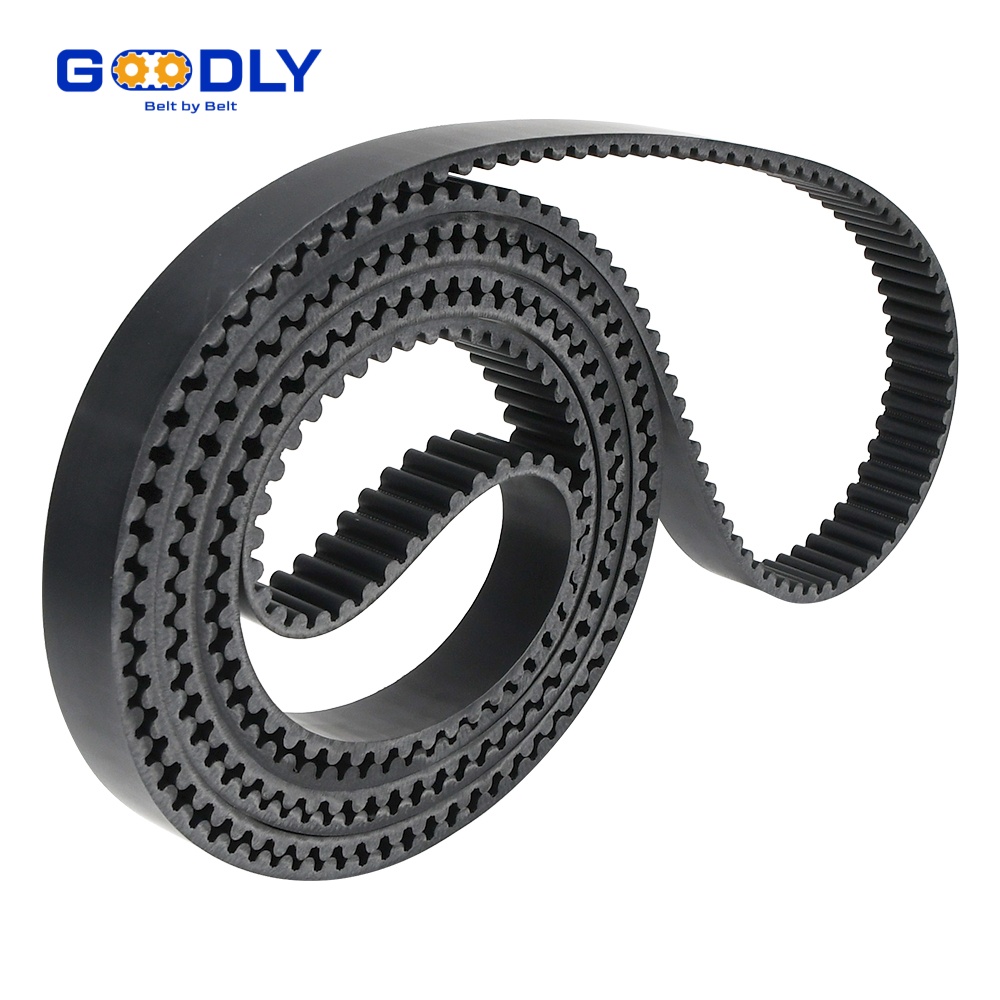
| Rotary die-cutting | Drives anvil and knife cylinders in fixed phase | Wide PU or rubber, high torque, aramid cord |
| Sheet feeding and transport | Transfers sheets without marking or slip | Flat and coated belts, rubber or PU top face |
| Print finishing and stackers | Synchronises gripper chains and delivery | Double-sided or coated belts, quiet running |
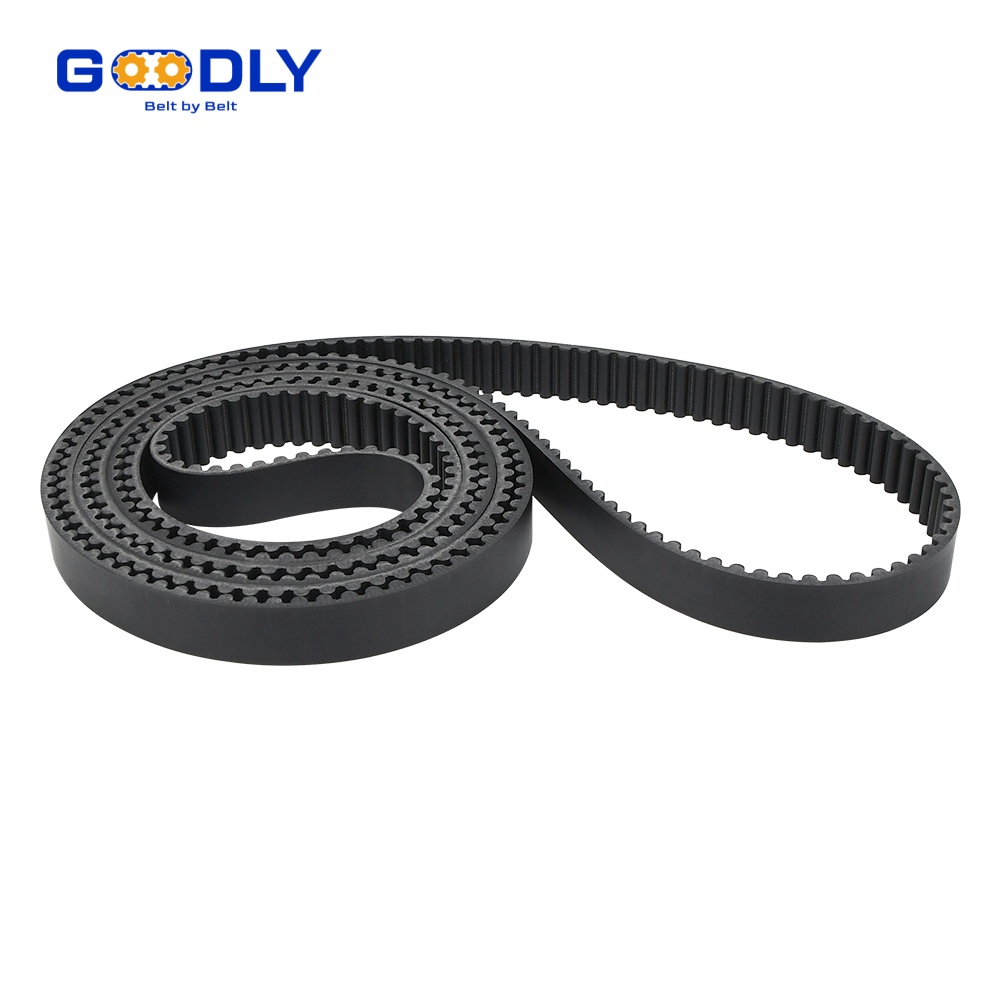
Two rules recur across all five. First, phase-critical stations — anything where two shafts must stay in a fixed angular relationship — need a positive drive, never a friction belt. Second, the drive must be matched as a set: pulley tooth count, belt pitch and centre distance together define the phase relationship, so replacing one belt in a matched pair without the other shifts timing on the first shift.
High-Speed Converting Lines: Heat-Resistant, Anti-Slip Timing Belts
Speed turns small problems into heat. At 300 metres per minute and above, flex frequency rises, tooth mesh generates heat, and stations close to hot-melt, sealing or drying sections add ambient load on top. Printing machine timing belt specifications for these lines rarely match what a slow machine needs:
- Heat-resistant bodies. Standard rubber hardens and cracks above roughly 80 C surface temperature. Silicone and heat-stabilised rubber constructions keep elasticity where folders and sealers run hot.
- Low-elongation cords. Steel or aramid cords hold pitch length at speed; glass-cord belts creep under continuous high-speed load and lose register over a shift.
- Anti-slip and anti-static surfaces. Paper dust plus static makes sheets skate and stick. Coated top faces and anti-static compounds keep transfer predictable and reduce dust build-up on the belt.
- Correct width for torque at speed. Narrow belts running fast generate more heat per tooth; sizing width for the actual torque rather than the original catalogue width is often where a repeat failure is solved.
- Balanced, true-running pulleys. At high rpm, pulley runout shows up as belt tracking drift and edge wear — check flanges and bearing play at every belt change.
Timing Belts for Rotary Die-Cutting and Print Finishing Equipment
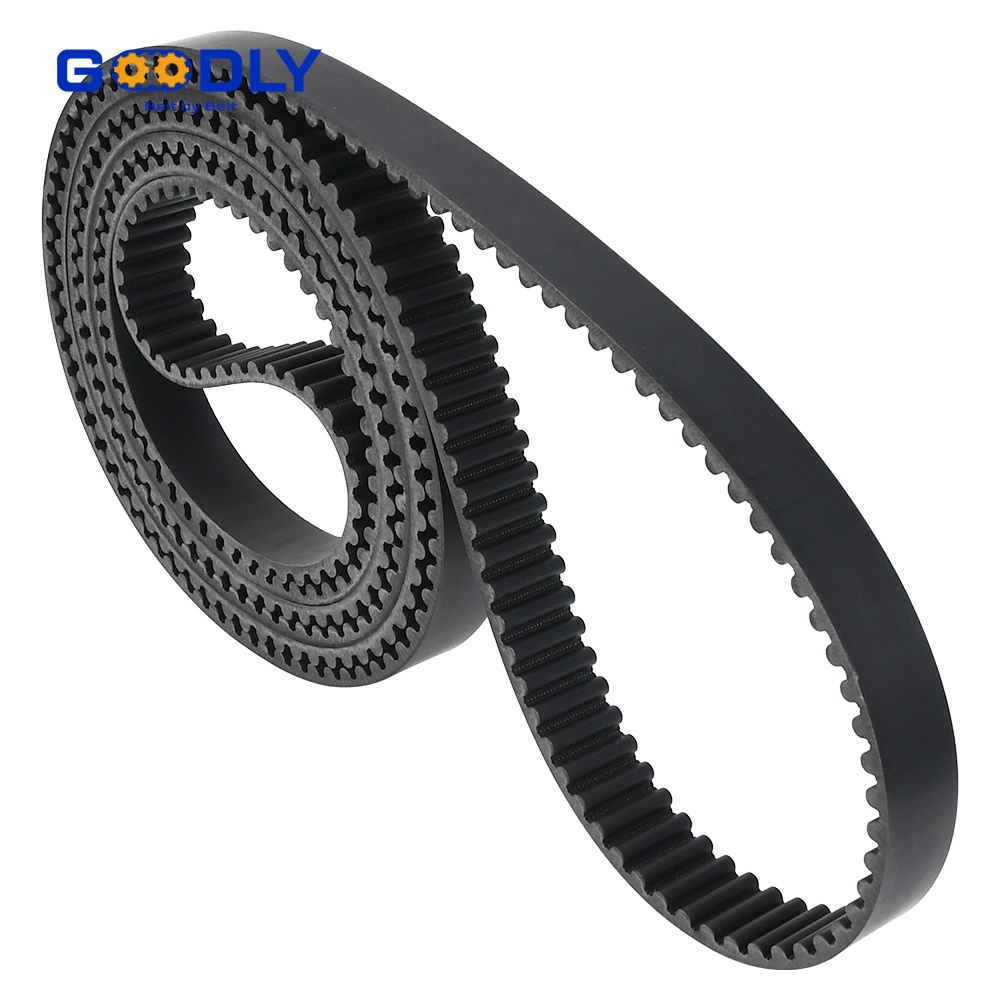
Rotary die-cutting is the most demanding station on most converting lines: knife and anvil cylinders must stay in phase under intermittent shock as each sheet passes, and any backlash shows up as a ragged cut or a nicked panel. Drives here use wide, high-torque belts with aramid or steel cords, tensioned on the slack side with a rigid idler, and preferably arranged so the belt wraps the majority of the driven pulley. On print finishing equipment — folder-gluers, stitchers, die-folders — the same logic applies at lower torque but tighter register, which is why matched pairs and documented phase marks matter as much as the belt itself.
Register Accuracy: Why Converting Machines Need Zero-Slip Timing Belt Drives
Register is the relationship between two moving surfaces at the moment they meet: knife to anvil, fold plate to panel, print cylinder to sheet. Friction drives — flat belts, round belts, friction wheels — transmit motion by slipping slightly less than they slip, which means the relationship drifts with load, temperature and wear. A synchronous drive transmits by tooth engagement, so the relationship is fixed by geometry. That is the whole argument for timing belts in converting machinery, and it produces four practical consequences:
- Register survives load changes. When a heavier board grade enters the line, a friction drive slips more and register walks; a toothed belt does not care about the load change until it is overloaded outright.
- Timing is set once, physically. Phase marks and pulley tooth counts define the relationship, so a belt change restores the original timing rather than requiring re-adjustment by trial.
- Waste drops at start-up. Lines with positive drives reach saleable product in fewer sheets after a grade change or a belt replacement.
- Diagnosis gets simpler. If register drifts on a toothed drive, the cause is mechanical — tension, a worn pulley, a loose hub or a stretched cord — not mysterious slip, which shortens troubleshooting.
- Double-sided belts solve the two-path problem. Where one shaft must drive two stations in opposite senses, teeth on both faces remove a second drive — the trade-offs are compared in our double-sided timing belt guide.
Custom Timing Belts for Paper Converting Machine Builders
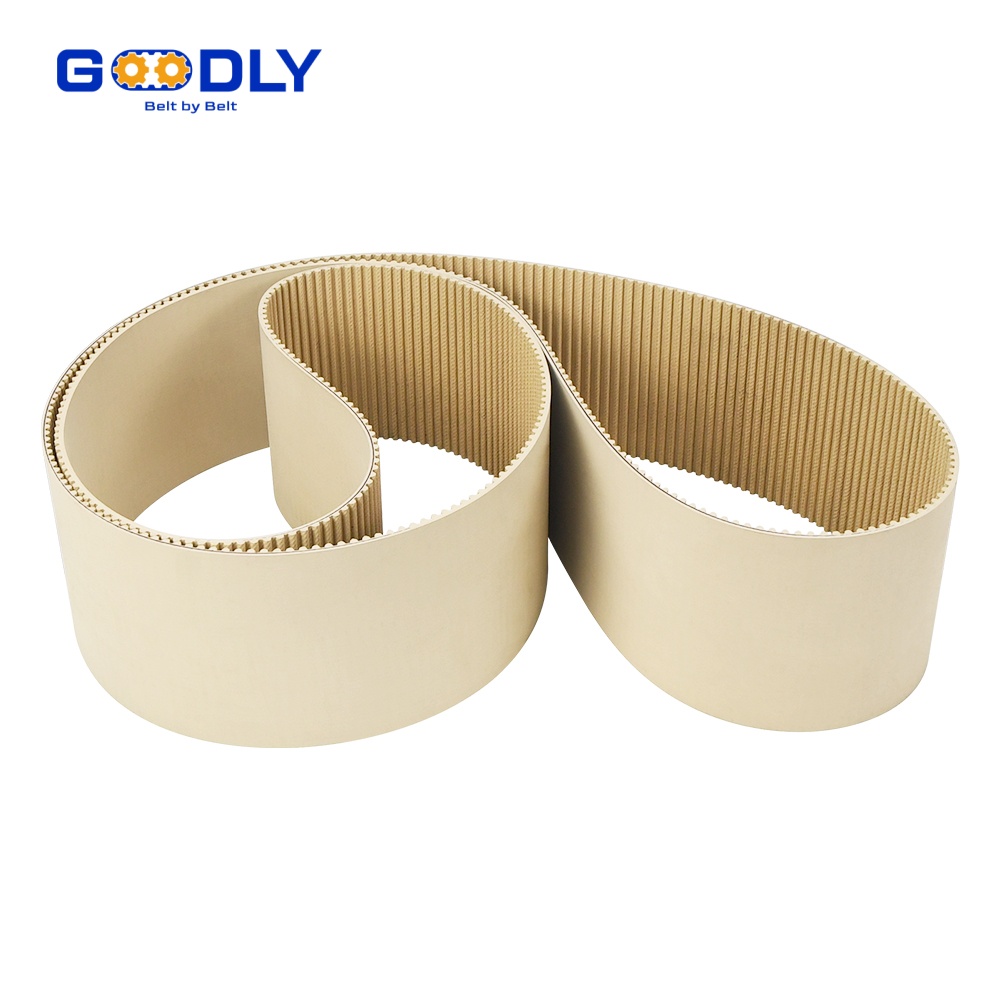
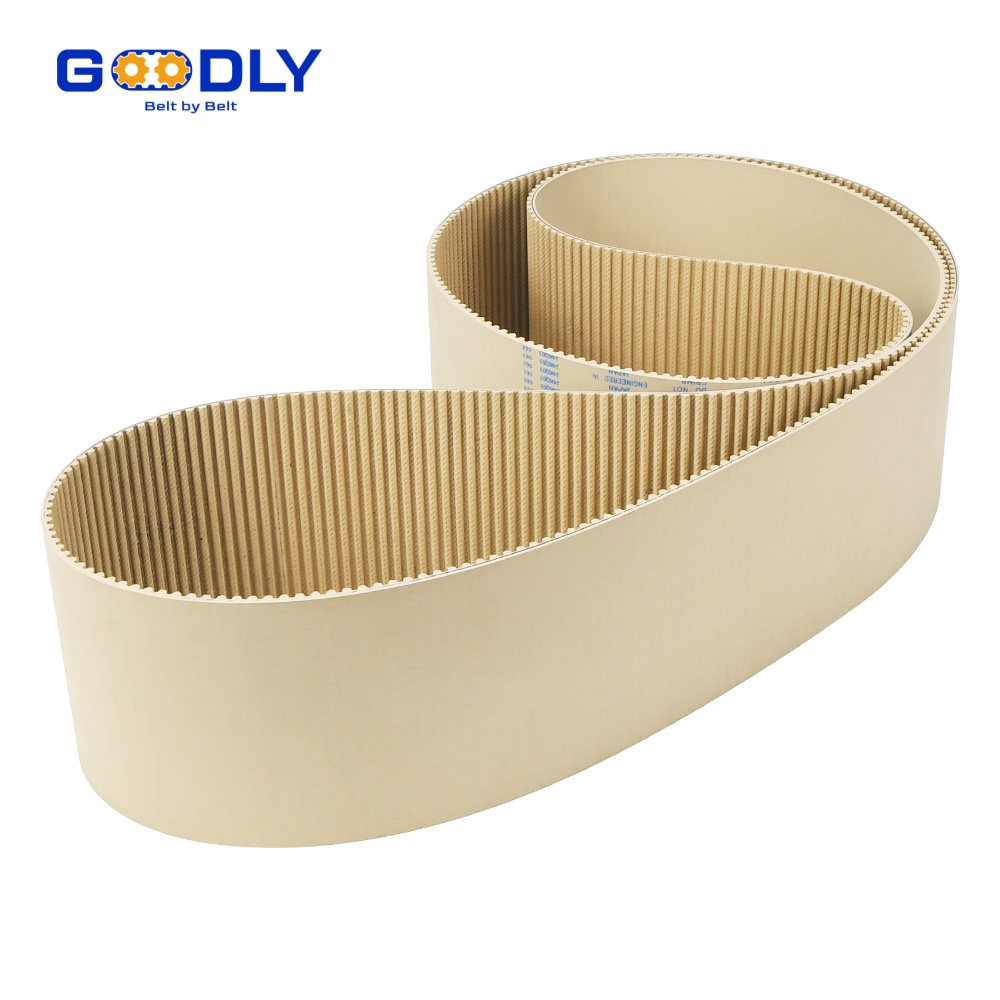
Converting machine builders rarely buy from a catalogue. Frame layouts are proprietary, centre distances are fixed by the station geometry, and the belt often doubles as a product-contact surface. GOODLY builds custom timing belts for exactly this situation: any pitch length within the moulding range, non-standard widths, coatings and cleats, special machining, and coloured or marked backs for identification on the line. The printing application context is documented on our printing industry belt solutions page, and adjacent converting work is covered in the packaging solutions section.
- Length and width to your drawing. Moulded to the centre distance you designed, not the nearest stock size, so no idler relocation is needed.
- Coatings for paper contact. Rubber, PU foam or fabric top faces to control grip and prevent marking on coated stocks.
- Special machining. Cleats, profiles, holes, edge trimming and back grinding where the belt also conveys or registers the sheet.
- Traceable marking. Laser or moulded codes on the back so maintenance can identify a belt without measuring it.
- Repeatability across machine batches. The approved construction is frozen and reproduced identically for series machines — see how constructions compare in our endless versus spliced guide.
GOODLY Belts for Printing and Converting: Request Engineering Support
GOODLY supplies timing belts to printing, packaging and paper converting machine builders, with the engineering support that makes a drive work on the first build: profile and width selection against your torque and speed, cord choice for register stability, coating selection for paper contact, and prototype sampling in 3-5 working days. Existing installations are covered too — our printing industry solution page maps the common stations, and the printing press drive guide explains how those drives behave at production speed. For line rebuilds where belt drives share duty with conveyors, the timing belt conveyor design guide covers the selection basics.
Register-first selection
Profile, cord and tension chosen for phase stability, not catalogue convenience.
Heat and dust ready
Silicone and heat-stabilised compounds plus anti-static options for high-speed lines.
Coating and machining
Rubber, foam and fabric faces, cleats, trimming and back grinding in one plant.
Batch-to-batch repeat
Frozen construction reproduced identically for every machine in the series.
Why do converting machines use timing belts instead of flat or friction belts?
Because register depends on a fixed angular relationship between shafts. A toothed belt transmits by engagement, so knife-to-anvil and fold-to-print timing cannot drift with load, temperature or wear. Friction drives always slip slightly, and that slip changes with board grade and line speed, which shows up as register error and waste.
What timing belt construction suits high-speed paper converting?
Usually a PU body with steel or aramid cord for low elongation and clean running, in HTD or AT profile sized for the actual torque. Where stations run hot — folders, sealers, dryers — silicone or heat-stabilised rubber keeps elasticity. Add an anti-static option and a coated top face where paper dust and static cause sheets to skate.
Can you supply belts to our machine drawing rather than a stock size?
Yes. Custom pitch lengths, non-standard widths, coatings, cleats and special machining are all moulded in-house, with prototypes in 3-5 working days. Once a construction is approved it is frozen and reproduced identically for series machines, so machine twelve runs the same drive as machine one.
How do we keep register after replacing a belt on a converting line?
Use matched pairs where two belts share a drive train, fit belts with the same pitch and tooth count, and set phase using the machine's timing marks before tensioning. Then re-check register after 15-30 minutes of running, because new cords seat and lose a small amount of tension on first load.
Building or Rebuilding a Converting Line?
Send GOODLY your station layout, torque and speed figures, or the belt you are replacing. Our engineers return a profile, cord and coating recommendation with a sample in 3-5 working days — and support the series build once the construction is approved.
Request Converting Belt Engineering Support