Timing Belts for Robotics, 3D Printers and CNC Machines: A Precision Drive Guide
- Share
- publisher
- GOODLY Belts
- Issue Time
- Oct 29,2026
Summary
Timing belts for robotics, 3D printers and CNC machines: GT2 vs HTD selection for print quality, CNC backlash control, robot belt materials for flex life and noise, plus custom precision drive belts for automation OEMs from GOODLY.
Timing Belts for Robotics, 3D Printers and CNC Machines: A Precision Drive Guide
GT2 profiles, backlash control and material selection: how timing belts deliver precision in robots, printers and machine tools
Precision machines live and die by lost motion. A 3D printer timing belt that stretches a fraction of a percent turns crisp corners into ringing ghosts; a CNC axis with backlash ruins the surface finish it was bought to produce; a robot wrist that lags its command misses the pick every cycle. Timing belts are the quiet answer in all three machines: tooth engagement removes slip, pre-tension removes lash, and the right profile keeps everything repeatable to tenths of a millimetre. This guide explains how to choose timing belts for timing belt robotics, desktop printers and CNC timing belt drives — profile by profile, material by material.
Types of Timing Belts Used in Robotic Automation and Motion Systems
The types of timing belts used in robotic automation split into two families with different jobs: traction belts that move the machine itself, and process belts that touch the product. Understanding which family an application belongs to is the first selection decision, because it drives pitch, cord and body material:
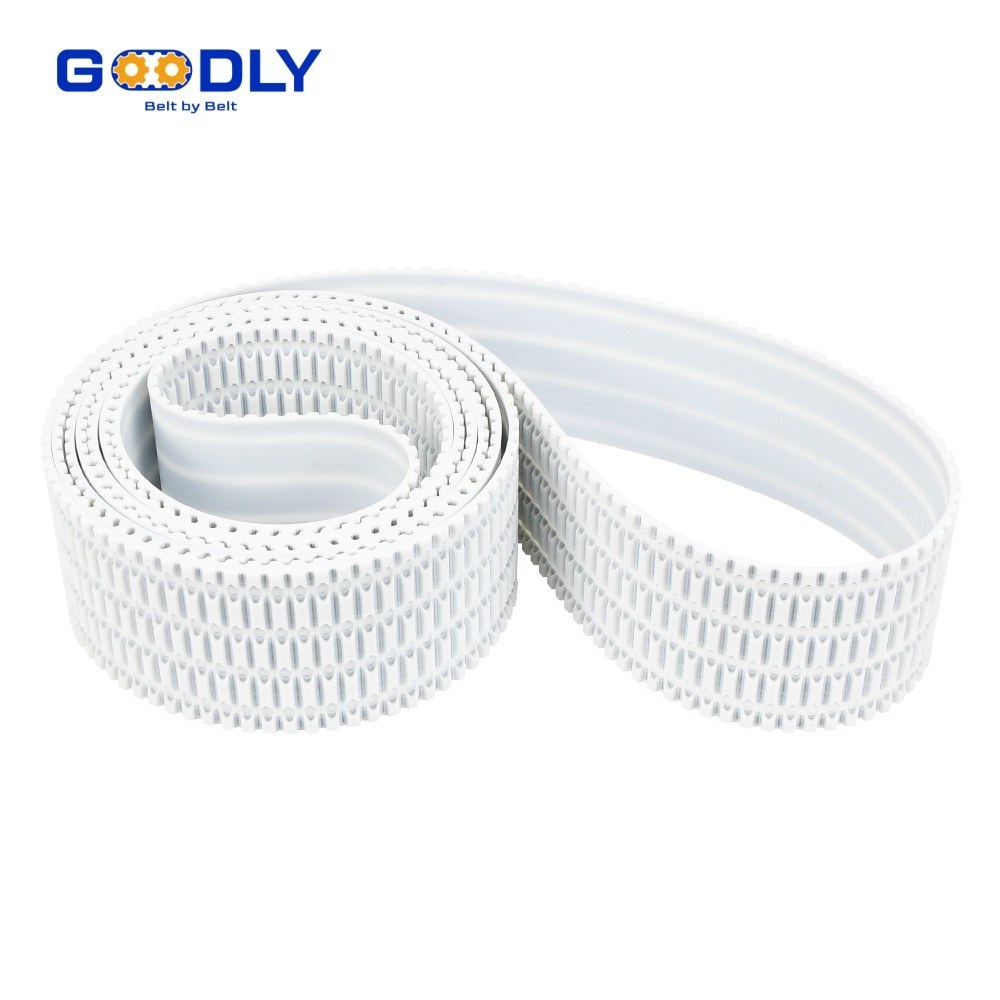
- GT2-class profiles (2 mm pitch). The default for timing belt 3D printing and light robotic gantries: a curved tooth form meshing with minimal clearance on small pulleys, keeping carriages locked to the stepper or servo position. Available in rubber-glass and PU-steel constructions.
- AT and T profiles (5-10 mm pitch). Metric trapezoidal profiles for CNC axes and machine-tool auxiliaries, where higher torque and stiffer teeth matter more than tiny pulleys — the tooth profiles and pitches guide compares them in detail.
- HTD and STD curved profiles (3-14 mm pitch). Rounding-out candidates for heavier robot joint drives and servo reductions where torque density dominates.
- Polyurethane steel-cord linear belts. Open-ended or endless PU belts that drive gantry carriages over metres of travel — the workhorse of robot timing belt linear axes and pick-and-place machines.
- Double-sided belts. Where one drive must serve two motion paths, teeth on both faces drive idlers and secondary carriages without a second motor.
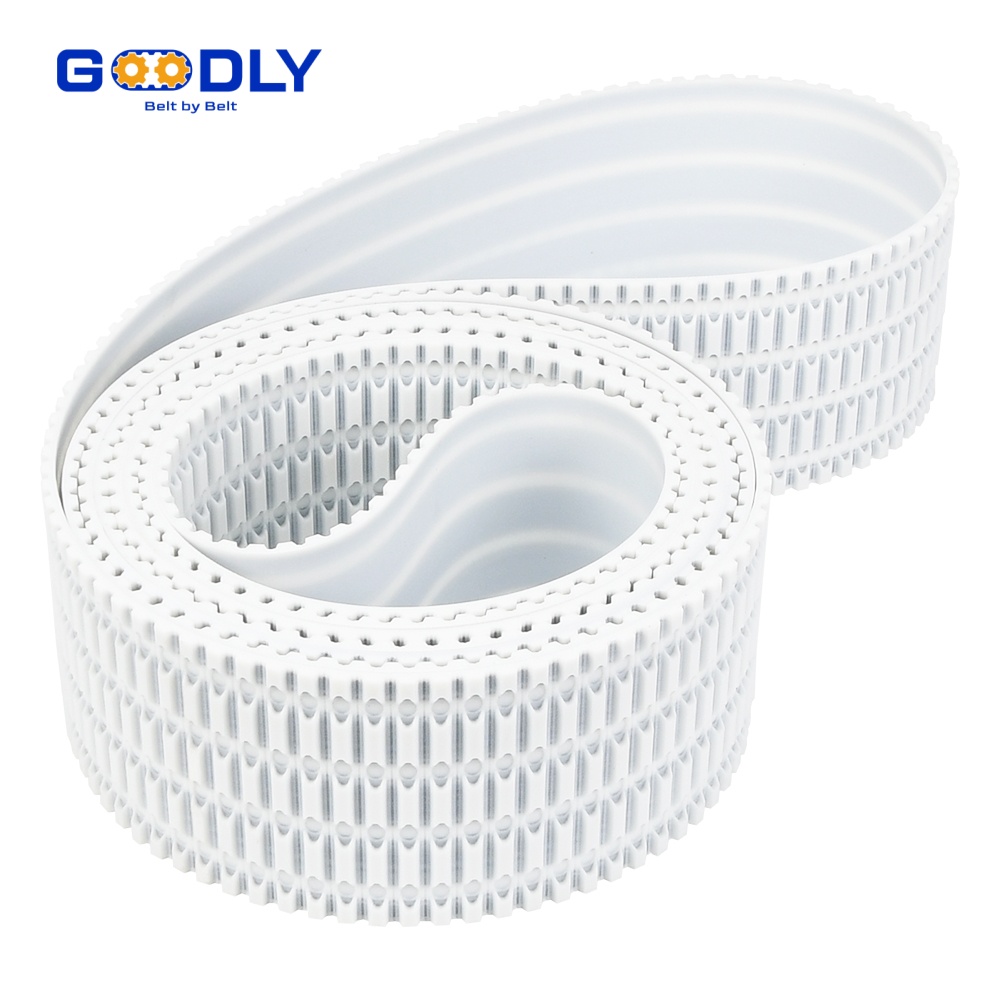
One pattern repeats across all of them: the belt is part of the control loop. Every positioning command a controller issues is only as accurate as the tooth engagement between belt and pulley, which is why precision machines specify synchronous drives wherever a leadscrew would be too long, too slow or too resonant.
3D Printer Timing Belt Selection: GT2 vs HTD for Print Quality
Print quality is a motion-quality problem. Ghosting, ringing and layer shifts trace directly back to how faithfully the carriage follows the commanded acceleration profile — and the 3d printer timing belt is the mechanical link in that chain. The two candidate profiles behave differently:
| Selection factor | GT2 timing belt (2 mm pitch) | HTD 3M / 5M belt |
|---|---|---|
| Tooth engagement | Close-clearance curved teeth grip small pulleys tightly | Deeper, rounder teeth built for torque transfer |
| Backlash behaviour | Low; tight mesh keeps carriage position stable on reversals | More clearance; visible ringing on direction changes |
| Minimum pulley size | 16-20 tooth idlers run quietly and smoothly | Larger minimum tooth counts for full capacity |
| Print-quality impact | Crisp corners, minimal ghosting on fast moves | Better for heavy toolheads and Z-lift than X/Y detail |
| Typical duty | X/Y gantries, CoreXY motion, delta carriages | Z-drives, belts driving heavier assemblies |
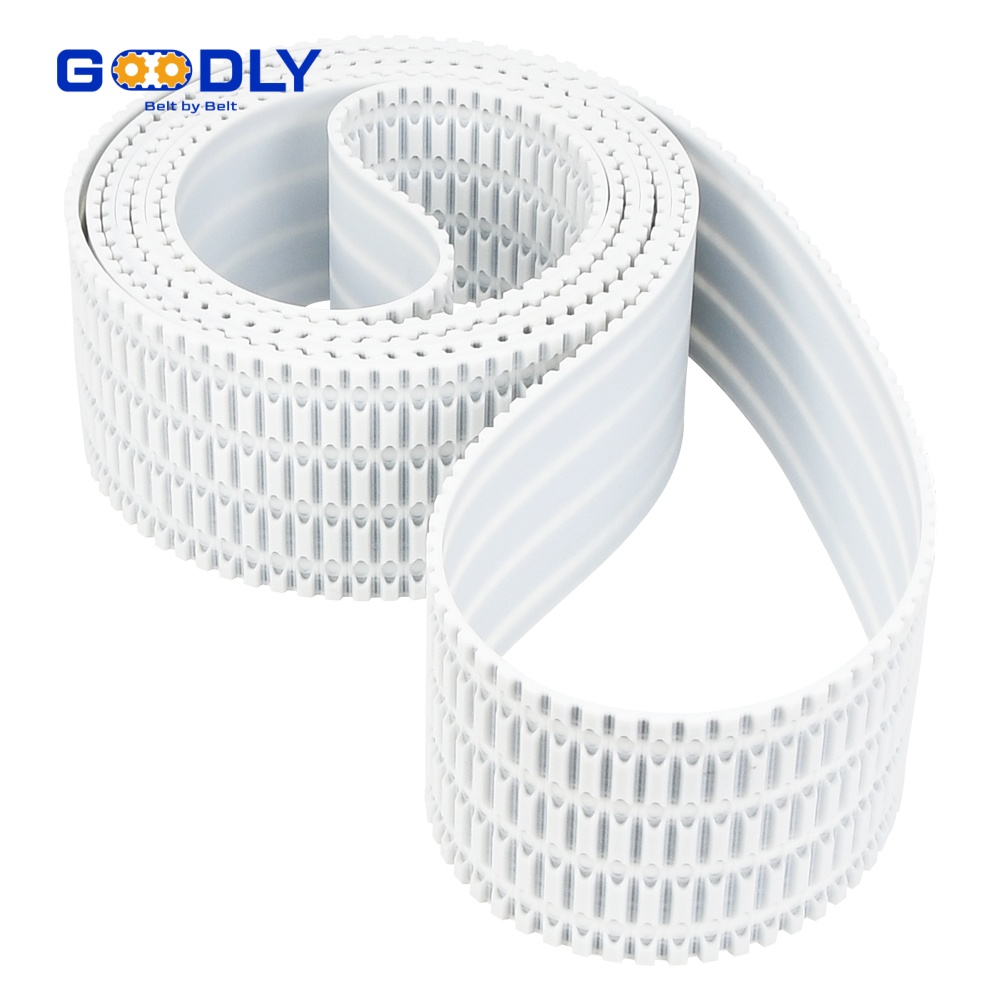
For desktop and prosumer machines the answer is almost always GT2: the profile was effectively designed around printer motion requirements. HTD earns its place where the belt drives mass rather than precision — a bedslinger's Z-axis, a filament extruder gearbox, a heavy tool-changer. Width matters as much as profile: 6 mm GT2 is the standard for X/Y drives, while 9-10 mm widths suit heavier carriages without switching pitch.
GT2 Timing Belt Tension and Pulley Matching for 3D Printers
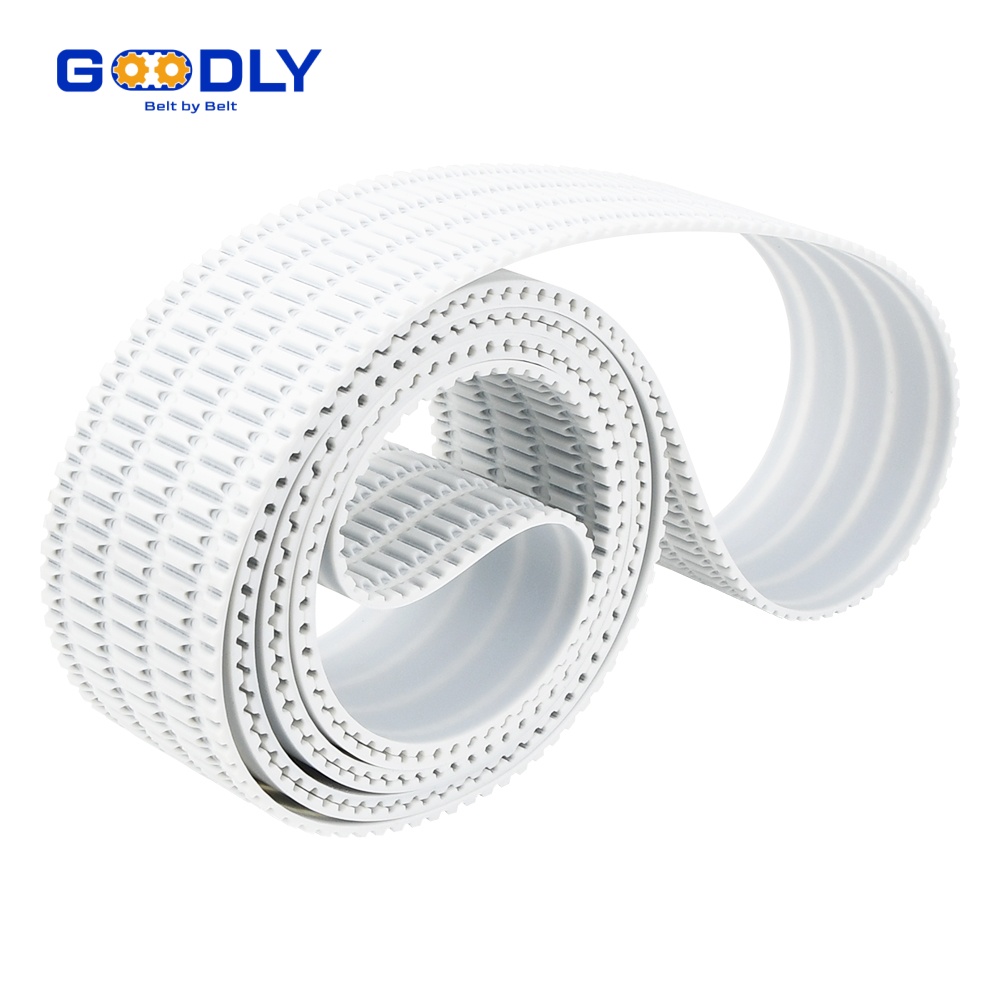
A correct gt2 timing belt loses half its benefit if tension and pulleys are wrong. Three rules cover most printer builds:
- Tension to pluck, not to stretch. A correctly tensioned belt deflects a few millimetres under firm finger pressure and gives a low musical note when plucked; over-tensioning loads stepper shafts and bearings and accelerates cord fatigue. Printed tension gauges and frequency-based phone apps turn this into a repeatable number.
- Respect minimum tooth counts. Wrapping a GT2 belt around fewer than ~16 teeth bends the cords sharply every revolution; on printers this shows up as belt dust and periodic layer artefacts at the pulley's pass frequency.
- Match pulley and belt pitch exactly. A 2 mm-pitch belt on a mislabeled pulley slips imperceptibly and shifts every dimension the printer prints — verify with a caliper across ten teeth (should measure 20.00 mm).
CNC Timing Belt Drives: Backlash Control for Axis and Spindle Motion
On machine tools, cnc timing belt drives appear in three places: primary axis drives on router-style machines, spindle-to-motor power transmission, and auxiliary motion such as tool changers and ATC carousels. In every role the specification question is the same: how much lost motion does the drive add, and does the control loop tolerate it?
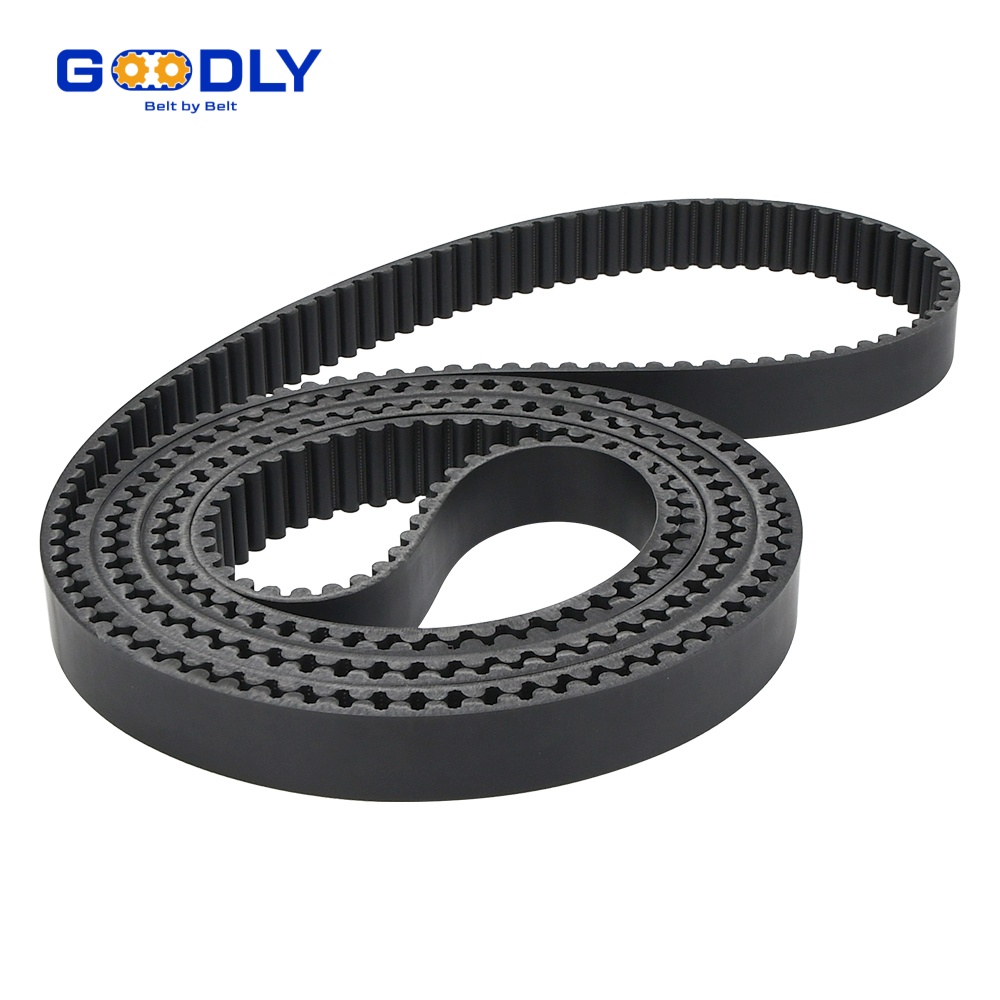
- Axis drives. Belt-driven racks and pinions on CNC routers use wide AT- or HTD-profile belts; backlash is managed with pre-tensioned idlers on the slack side and stiff, low-elongation cords (aramid or steel) that keep the pre-tension through temperature swings.
- Spindle drives. Belts between motor and spindle isolate vibration and run quieter than gears; a cnc timing belt pulley set with hardened teeth resists the high cycle counts, and balance quality matters at spindle speeds.
- Backlash discipline. Tooth engagement itself has no clearance, so measured backlash comes from tension loss and cord stretch — both restored with a properly travelled tensioner rather than by re-gapping the controller.
- Servo pairing. A servo timing belt reduction between motor and ball-screw lets the servo run at its efficient speed band; the belt's stiffness becomes part of the servo tuning, so low-stretch cords are not optional.
Robot Timing Belt Materials: Flex Life, Strength and Noise
Robot joints and printer gantries reverse direction millions of times, and every reversal is a flex cycle for the cords and a mesh cycle for the teeth. Robot timing belt material choice is therefore a fatigue decision first and a strength decision second:
| Construction | Strengths | Watch-outs | Best fit |
|---|---|---|---|
| PU body + steel cord | Near-zero elongation, very high tensile strength, clean-running | Less tolerant of small pulleys; corrosion care in washdown | Linear gantry axes, high-load robot joints |
| PU body + aramid cord | High strength with better small-pulley flex, non-magnetic | Aramid sensitive to sharp bending and misuse | Compact wrists, pick-and-place carriages |
| Rubber body + glass cord | Quiet, cheap, proven in GT2 printers and light drives | Creeps more than steel; moderate strength | Desktop printers, light automation |
| Neoprene + fibreglass (open-ended) | Economical linear runs, weldable into loops | Lower stiffness; watch tension over long spans | Cost-driven linear axes and gantries |
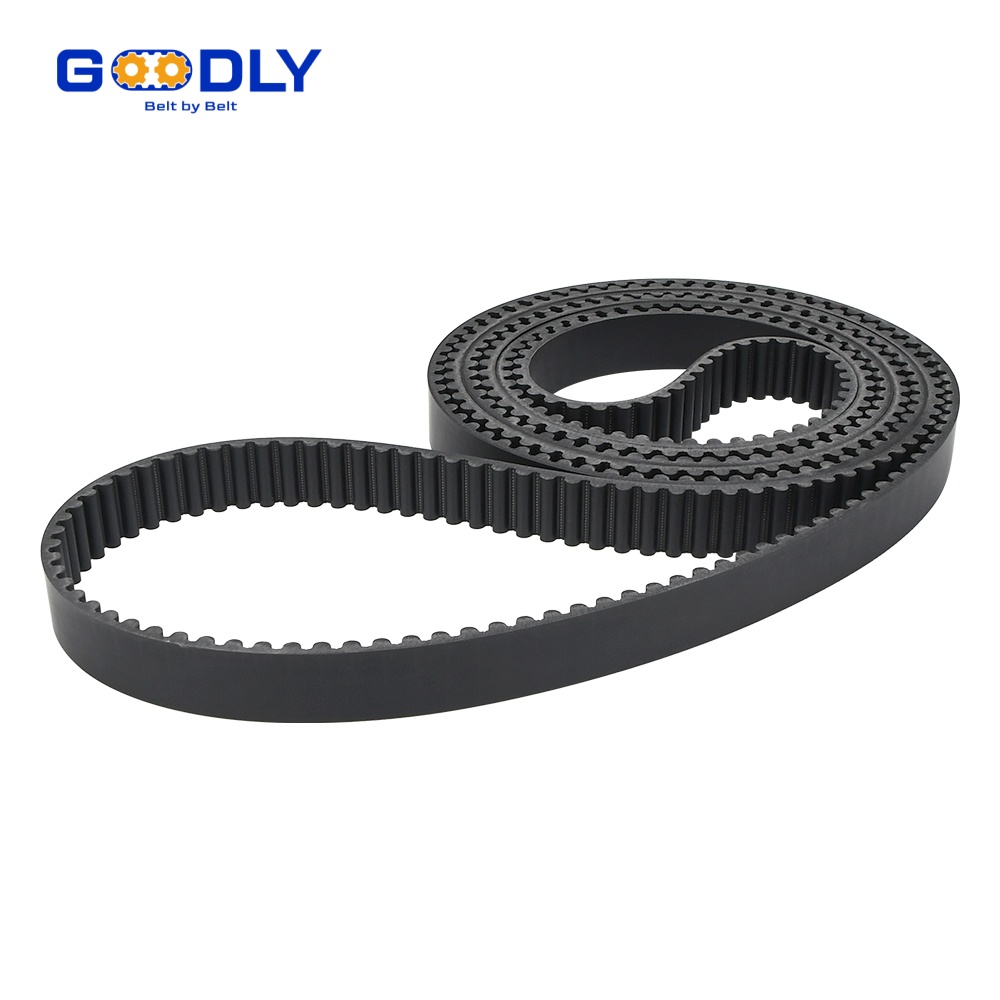
Noise follows stiffness: glass-cord rubber belts hum at high traverse speeds, steel-cord PU belts run quieter and truer but transmit more vibration into the frame. For machines working near people — collaborative robots, benchtop CNC, office-side printers — the rubber-glass GT2 combination remains popular precisely because it is quiet and damped, trading a little repeatability for acoustics.
Sourcing Precision Timing Belts for Automation OEMs: Talk to GOODLY
Automation OEMs need belts that behave identically across machine batches — the twelfth robot must position like the first. GOODLY manufactures precision timing belts as one in-house chain: cord tensioning, tooth moulding, coating bonding and finishing in a single plant, which is what makes both 3-5 day prototypes and batch-to-batch repeatability possible. See how these constructions behave in production in our electronics assembly automation guide, browse the standard timing belt range, or start from the GOODLY homepage to reach an application engineer directly.
Precision first
Profiles, cords and tensions selected against your repeatability budget, not a catalogue default.
Full construction control
Cord, body, tooth profile and surface finished in one plant for batch-to-batch consistency.
Prototype in 3-5 days
Custom lengths, pitches and coatings sampled fast and frozen for series production.
Quiet by design
Damped rubber-glass and PU-steel options tuned to your noise environment.
What timing belt is best for a 3D printer?
A GT2 profile at 2 mm pitch, typically 6 mm wide, is the standard for X/Y motion because its close-clearance teeth minimise backlash on small pulleys and keep carriages locked to stepper position. HTD profiles suit heavier drives such as Z-lifts. Choose a cord and body that matches duty: rubber-glass for quiet desktop printing, PU-steel for high-cycle production printers.
How tight should a GT2 timing belt be tensioned?
Tight enough that the belt deflects only a few millimetres under firm finger pressure and gives a clear musical note when plucked — or use a frequency-based tension gauge for a repeatable number. Over-tensioning overloads stepper and idler bearings and shortens cord life; under-tensioning lets teeth skip under acceleration, which shows up immediately as layer shifts.
Can the same timing belts serve both CNC and robot applications?
The profiles overlap but the priorities differ: CNC axes and spindle drives emphasise torque capacity and stiffness (wider AT/HTD belts, steel or aramid cords, hardened pulley teeth), while robot joints emphasise flex life and compactness (fine pitches, aramid cords, small minimum pulleys). The same plant can supply both — the specification should follow the duty cycle.
Do you supply custom lengths for automation OEMs?
Yes. Moulded production covers custom lengths, pitches, widths and coated constructions without hard tooling, with 3-5 working day prototype lead times. The approved construction is then reproduced identically for series machines, which is what keeps batch twelfth positioning identical to batch first.
Specifying Belts for Robots, Printers or CNC Machines?
Send GOODLY your axis loads, travel, repeatability target and duty cycle — or the belt you are replacing. Our engineers confirm profile, cord and tensioning layout within 48 hours and ship a precision drive prototype in 3-5 working days.
Request a Precision Belt Quote