Timing Belts in Electronics Assembly Automation: Precision Gripping and Conveying
- Share
- publisher
- GOODLY Belts
- Issue Time
- Oct 28,2026
Summary
Timing belts in electronics assembly automation: pick-and-place and robot axis drives, foam-integrated belts for gripping delicate components, anti-static PU constructions, backlash-free drives for vision-guided cells, and custom small-batch prototypes from GOODLY.
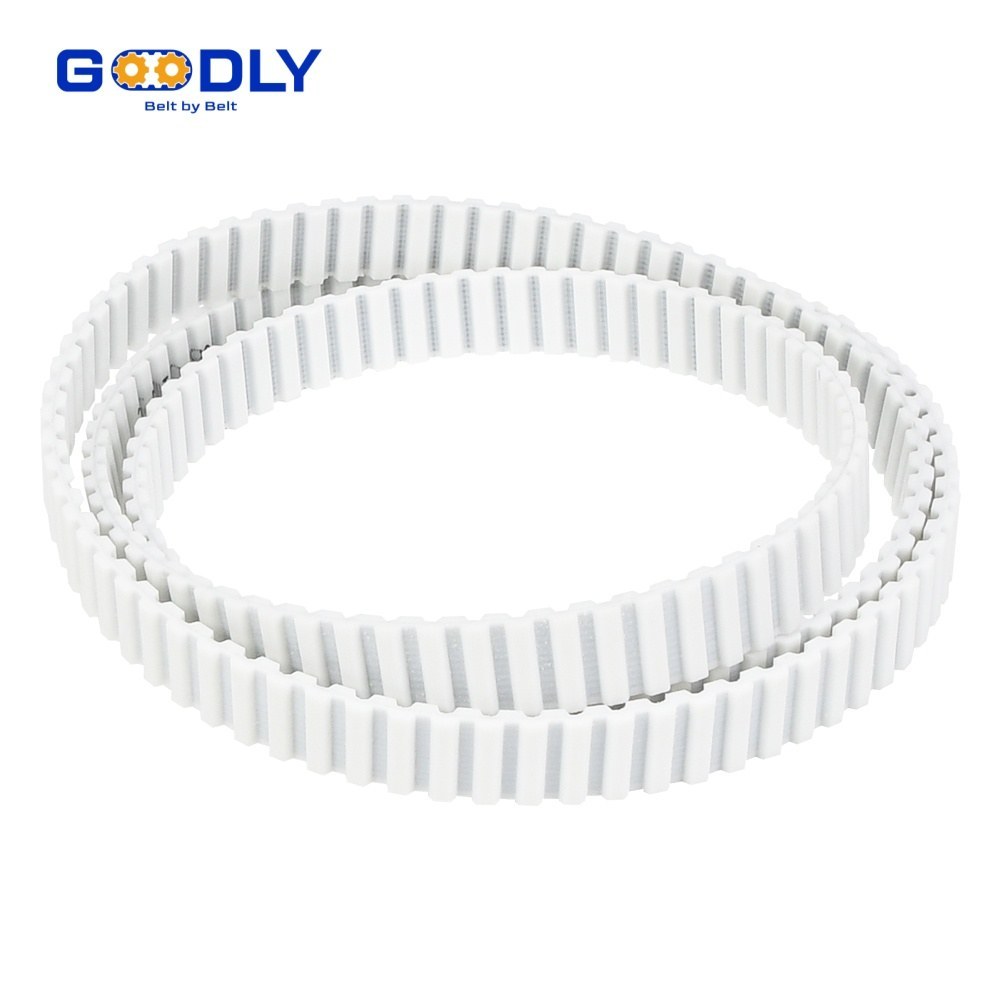
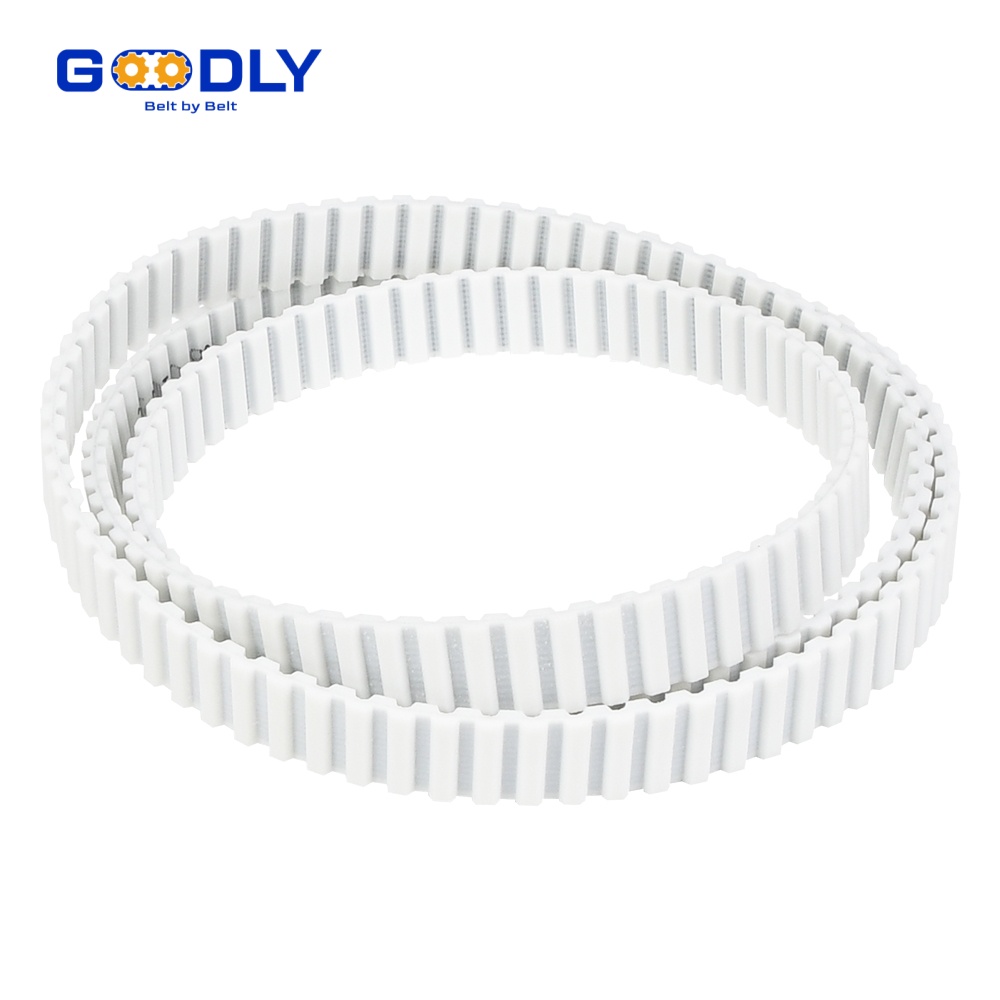
Timing Belts in Electronics Assembly Automation: Precision Gripping and Conveying
Backlash-free drives, soft-touch gripping and anti-static transport: timing belt solutions for electronics assembly equipment
Electronics assembly punishes every compromise in a motion system. A millimetre of backlash turns a vision-guided placement into a rejection; a hard belt face scratches the housing it conveys; a static discharge ruins a board that was perfect one second earlier. Timing belts answer all three constraints with one construction: teeth that eliminate slip and lash, surfaces that can be coated to grip without marking, and PU compounds formulated to bleed off charge. Whether the machine is a timing belt robotics axis, a pick-and-place gantry or a PCB transfer conveyor, this guide explains how to specify timing belts for electronics automation — and where custom constructions earn their keep.
Timing Belt Drives in Pick-and-Place and Assembly Automation
Pick-and-place machines and assembly robots use timing belts in two distinct roles, and the specification differs between them. In drive roles — linear axis belts, gantry drives, tool changer mechanisms — the belt is a machine element: it needs high cord stiffness, minimal elongation and a tooth profile chosen for the acceleration profile. In process roles — gripper belts, component transfer conveyors, feeder tapes — the belt touches the product, so surface, cleanliness and ESD behaviour dominate. Both roles share one non-negotiable property: no slip, ever, because every position the controller commands is only as true as the belt's tooth engagement.
- Linear and gantry axes. Steel-cord or aramid-cord PU belts drive carriages along rails; the tooth system eliminates the backlash that rack-and-pinion and chain drives introduce at every mesh. Fine pitches such as AT5 and AT10 keep tooth stiffness high under reversing loads.
- Robotic joint and wrist drives. Compact robot timing belt reductions sit inside wrists and joints where harmonic drives are too large; a GT2-class profile keeps engagement quiet and backlash minimal at high reversal rates — our tooth profiles and pitches guide compares the candidates.
- Component transfer conveyors. Narrow timing belts carry PCBs, connectors and sensor modules between stations with the same position certainty the machine's vision system was bought to achieve.
Foam-Integrated Timing Belts for Precision Gripping of Delicate Components
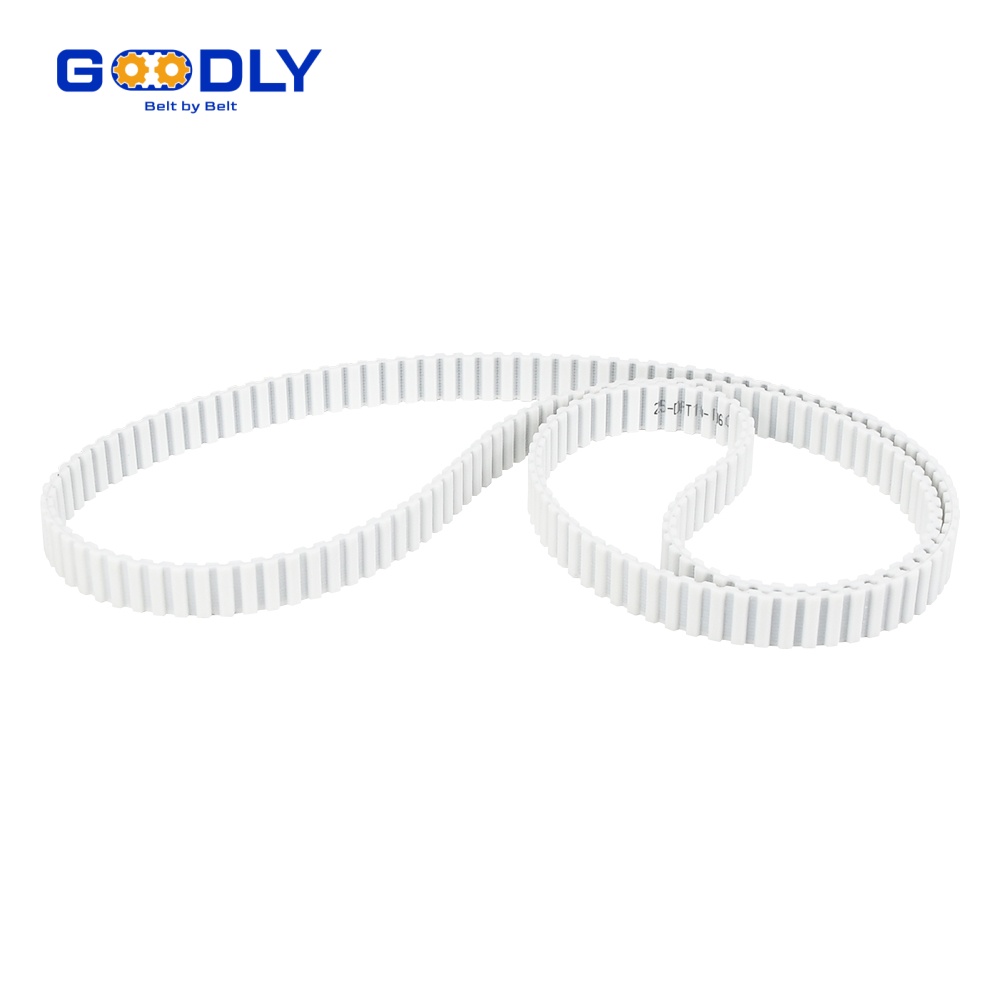
The most elegant electronics applications are gripping stations, not conveyors. A timing belt with foam backing turns the belt itself into a soft actuator: two opposing foam-faced belts form a pinch-vice that lifts PCBs, lenses and moulded connectors without suction cups, contact sensors or servo clamps. The foam supplies conformity — spreading contact pressure so a polished housing or bare board arrives unmarked — while the synchronous core keeps every grip and release locked to the machine cycle. Construction options follow the same logic our sponge-coated belt guide details for fragile handling:
| Gripping duty | Belt construction | Why it works |
|---|---|---|
| PCB and panel transfer | Foam-faced PU timing belt, 2-4 mm closed-cell layer | Conforms to uneven component heights without pressure points |
| Lens and display optics | Fine-cell, low-particulate foam, smooth ground surface | No imprint, no particle shedding on coated surfaces |
| Connector and terminal feeding | Medium-density foam with bonded guide lips | Parts held in orientation until the pick point |
| Pinch-vice lifts between levels | Two opposed foam belts, synchronised tooth systems | Grip force from conformity, timing from the teeth |
| Tray and carrier handling | Dense foam on wider belt bodies | Repeatably nests carriers without scoring their edges |
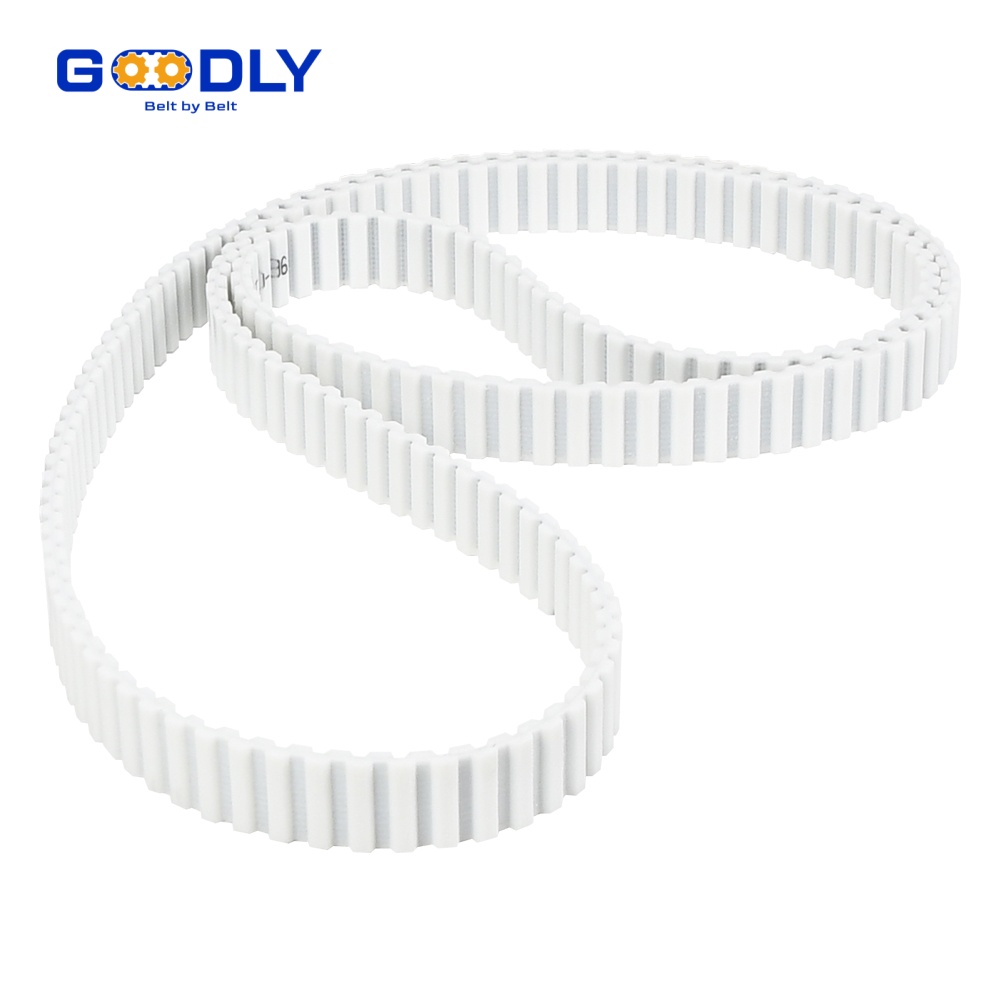
Specify foam by density and thickness rather than by feel: density controls compression set over millions of cycles, thickness controls conformity to component standoffs. Both parameters are custom, and both can be frozen for repeat orders once the prototype passes the customer's placement test.
Anti-Static Timing Belts for Electronic Component Handling
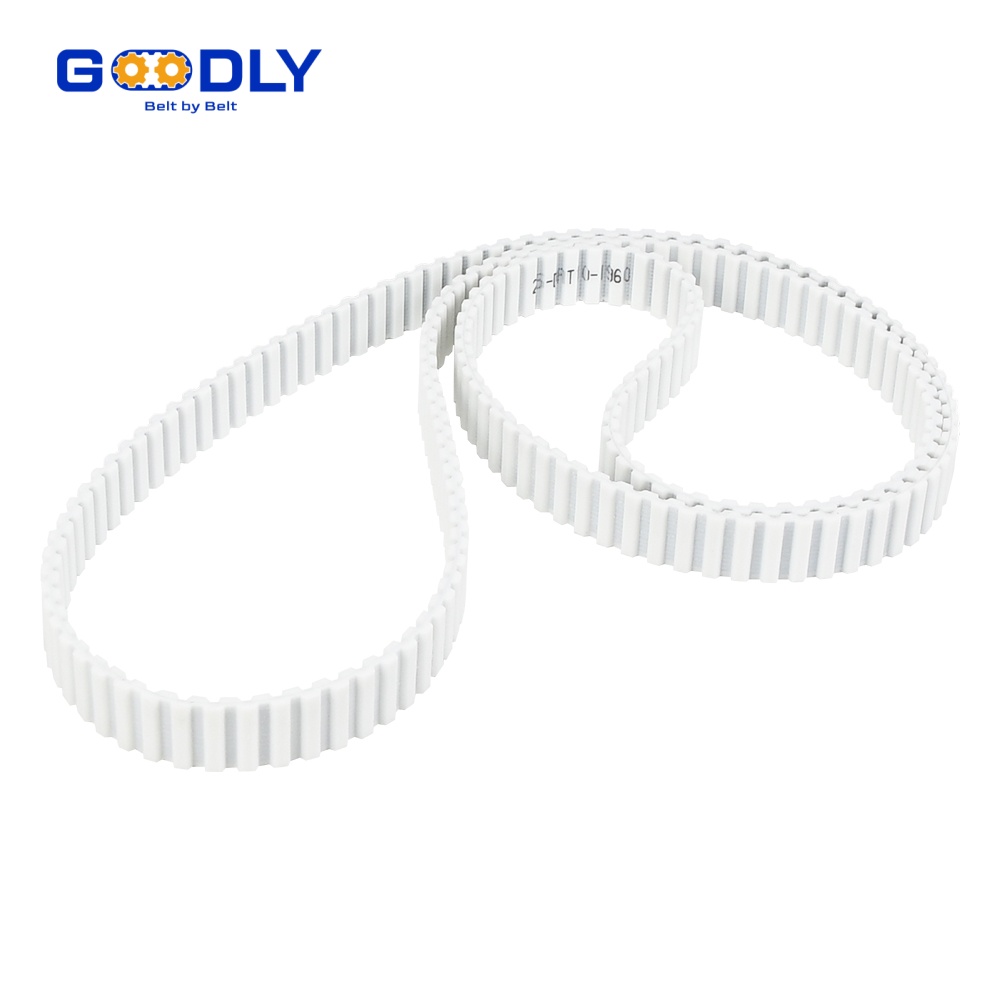
A walking belt is a static generator: every separation of belt from pulley and product from belt moves charge, and an uncontrolled discharge of a few hundred volts is enough to damage sensitive semiconductors long before any human notices. An anti-static belt layer — typically a conductive or statically dissipative additive in a PU timing belt — keeps surface resistance within the 10⁶-10⁹ Ω window so charge bleeds to ground continuously instead of accumulating. Verification matters as much as formulation: ask for surface-resistance test values on the finished belt, not just the compound datasheet, because bonding layers and coatings change the measurement. The selection discipline matches our pharmaceutical anti-static belt guide, where cleanroom and ESD requirements overlap with electronics work.
Backlash-Free Timing Belt Drives for Vision-Guided Assembly Cells
A vision-guided cell is a closed loop: the camera measures, the controller computes, the mechanics delivers. The chain is only as accurate as its loosest link, and in belt-driven mechanics that link is lash — the lost motion at every tooth mesh and direction reversal. Timing belts minimise it structurally: tooth engagement has no clearance by design, pre-tension keeps the cord side always loaded, and PU compounds resist the gradual elongation that would slowly shift the camera-to-motion calibration. That is why assembly equipment builders specify synchronous belts for every axis that a vision system grades: placement heads, label-and-check stations, and dispensing gantries.
- Pre-tension as a calibration input. Belt tension is part of the machine's accuracy budget; specify tensioner travel so production can restore the calibrated value after belt replacement without re-teaching the vision system.
- Cord selection for reversals. Aramid and steel cords resist the stretching that glass-cord belts show under rapid reversing duty, keeping repeatability stable over the machine's life.
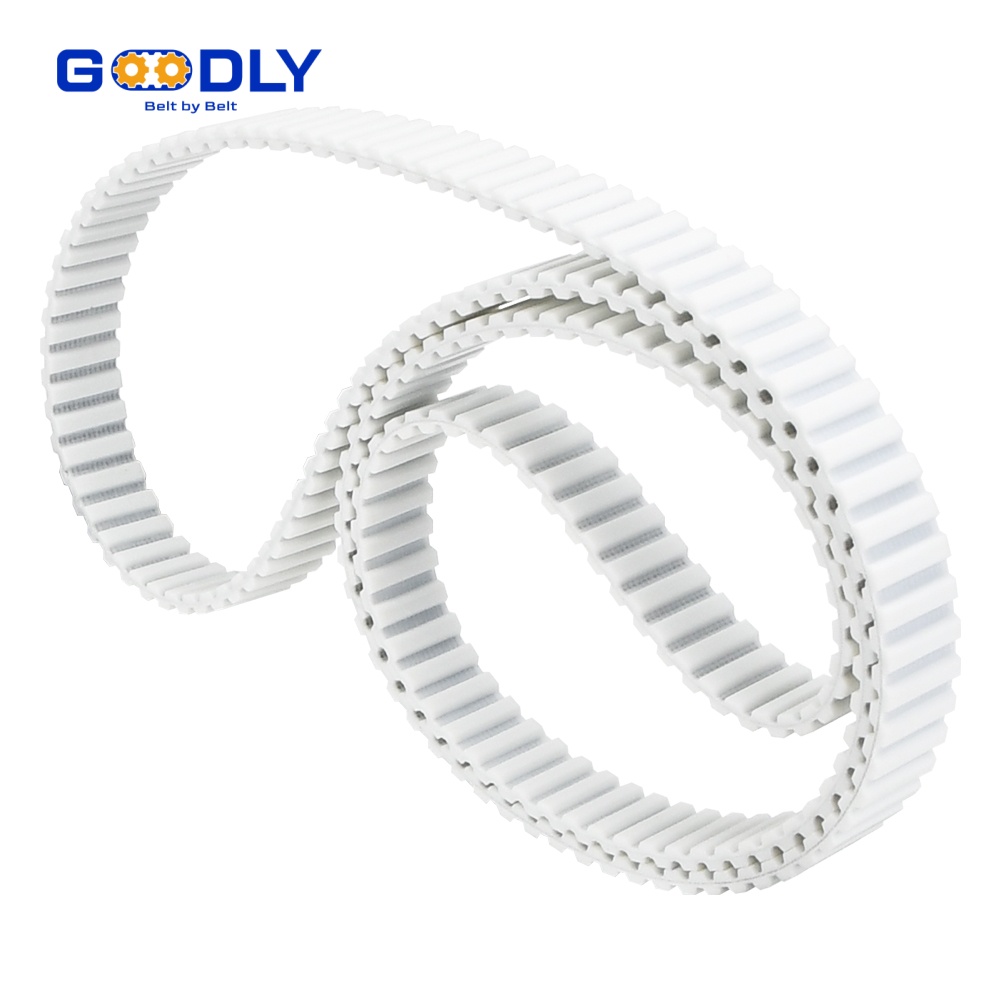
- Double-sided options. Where two product streams share one drive, double-sided timing belts drive rollers and grippers on both faces without a second motor — see when teeth on both sides make sense.
Custom Automation Timing Belts: Small Batches, Fast Prototyping
Automation equipment lives or dies by iteration: a new assembly cell goes through layout revisions, and its belts change with it. That makes small-batch, fast-turnover custom timing belts a supply-chain requirement rather than a luxury. GOODLY's moulding process produces custom lengths, pitches, widths and coated or cleated constructions without hard-tooling lead times, so a prototype belt follows the drawing in 3-5 working days and the approved construction repeats identically for production machines. The parameters that vary most in electronics automation:
- Geometry. Any pitch (T, AT, HTD, GT-class), width and length, endless or open-ended, including narrow widths for compact gantry axes.
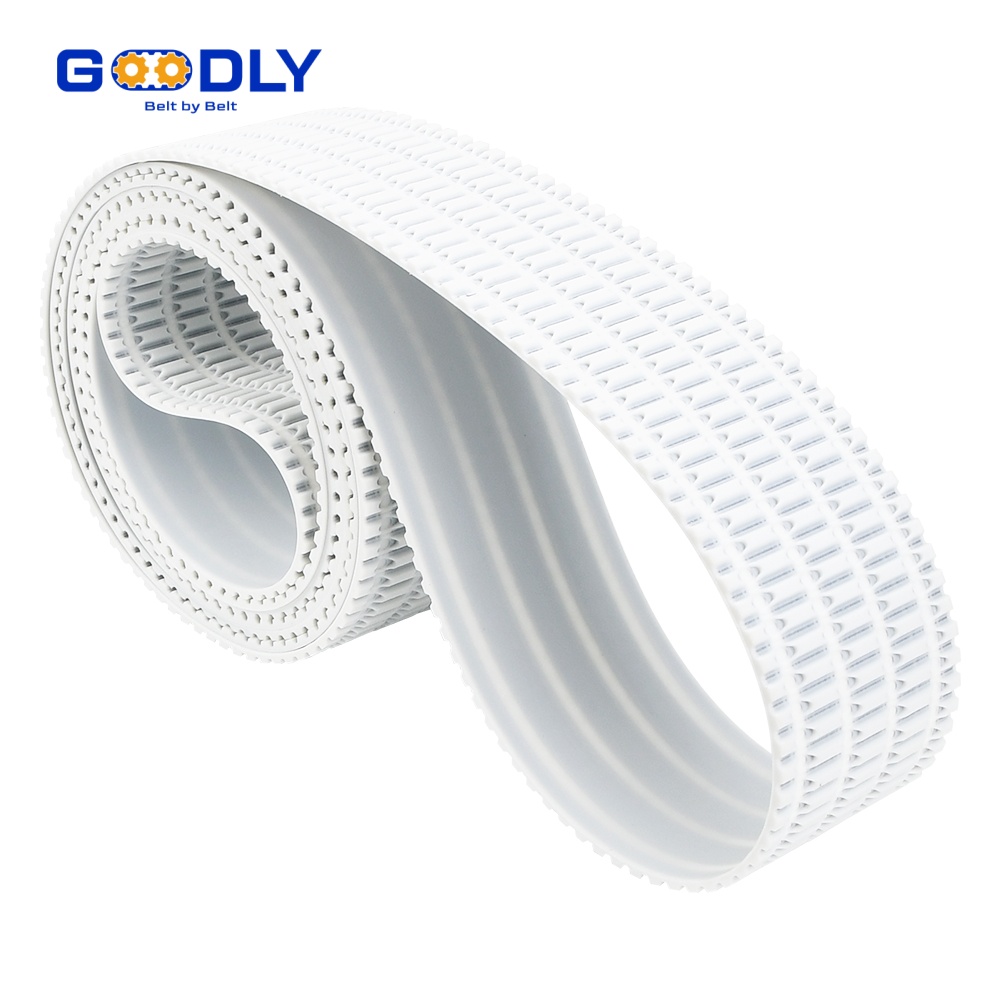
- Surface. Foam, sponge or rubber coatings with specified density and thickness for gripping duty; ground friction faces for transfer conveyors.
- ESD behaviour. Anti-static PU compounds with documented surface resistance on the finished belt.
- Features. Bonded guides, cleats and drilled zones positioned against the tooth system for station synchronisation.
GOODLY: Timing Belts for Electronics and Automation Equipment Makers
GOODLY manufactures timing belts for timing belt robotics, pick-and-place machines and electronics assembly equipment as one in-house chain — tooth moulding, cord tensioning, coating bonding and finishing in a single plant — which is what makes both the 3-5 day prototypes and the batch-to-batch repeatability possible. Send us your machine layout, the component you handle and your ESD or cleanliness targets, and our engineers will return a confirmed construction within 48 hours. Learn more about our factory and quality system, browse the timing belt range, or explore how these constructions behave on sorting lines in our logistics timing belt guide.
ESD engineered in
Anti-static PU compounds with measured surface resistance on finished belts.
Soft-touch gripping
Foam-integrated belts that handle components without marking or clamps.
Backlash-minimised
Pre-tensioned, stiff-cord constructions for vision-graded axes.
Small-batch prototyping
Custom belts from drawing to sample in 3-5 working days.
Why use timing belts instead of ballscrews or gears in assembly automation?
Timing belts suit long linear strokes and compact joint drives where ballscrews become heavy, costly or resonant, and where gears would need lubrication that electronics cleanrooms cannot tolerate. With correct pre-tension they deliver repeatability in the tenths of a millimetre, quietly and without lubricant.
What makes a timing belt anti-static?
A conductive or statically dissipative additive in the belt compound or coating gives charge a continuous path to ground, keeping surface resistance in the dissipative range. Always require measured surface-resistance values for the finished belt, since bonding layers and coatings alter the reading of the raw compound.
Can foam be applied to a timing belt without affecting tooth engagement?
Yes. Foam bonds to the back face only; the tooth system on the opposite side engages the pulleys exactly as an uncoated belt would, so pitch accuracy and synchronous phasing are unchanged. Total thickness increases, so check pulley flange clearance in the frame design.
Do you supply small quantities for machine prototyping?
Yes. Moulded custom production covers one-off prototype lengths and small batches with 3-5 working day sample lead times, and the approved construction is reproduced identically for series machines without re-tooling.
Building Electronics Assembly Automation?
Send GOODLY your machine layout, component details and ESD targets. We confirm pitch, cord, coating and surface-resistance specification within 48 hours and ship custom timing belt prototypes — gripping, conveying or axis drive — in 3-5 working days.
Request an Automation Belt Prototype