Top 10 Timing Belt Manufacturers in 2026: Global Leaders and How to Choose
- Share
- publisher
- GOODLY Belts
- Issue Time
- Nov 9,2026
Summary
The global timing belt manufacturers that lead in 2026: Gates, Continental, Bando and Mitsuboshi, the industrial machinery specialists, how manufacturer vs supplier vs distributor channels differ, and a practical framework for choosing the right manufacturer for your project.
Top 10 Timing Belt Manufacturers in 2026: Global Leaders and How to Choose
The brands that shaped the industry, what each does best — and when a specialized factory is the smarter sourcing choice
Every buying committee eventually draws up the same list: the timing belt manufacturers worth shortlisting for industrial drives. The names at the top have been stable for decades, and they earned their places through standardization, catalogue depth and global availability. But the industry has a second tier that matters just as much to machine builders — the specialized factories that build vulcanized, coated and machined belts for specific machinery segments — and knowing which tier fits your project is worth more than any ranking. This guide profiles the global leaders, explains where the industrial machinery segment actually sources, untangles the manufacturer-supplier-distributor channel question, and closes with a comparison framework you can apply to any shortlist, including ours.
Top Timing Belt Manufacturers: Gates, Continental, Bando and Mitsuboshi
Four names anchor the global timing belt industry. Gates (United States) built its position on industrial power transmission with a deep catalogue and the widest global distribution network in the belt business — wherever a machine is installed, replacement product is usually available within days. Continental (Germany, through its ContiTech industrial division) is the engineering heavyweight: extensive documentation, application engineering and strong adoption across European machinery. Bando (Japan) is known for tight-tolerance rubber belting and long-standing OEM relationships with Japanese machine builders. Mitsuboshi (Japan) covers a broad rubber belt range with similarly deep distribution and a strong presence in general industrial drives. All four are trademarks of their respective owners; they are named here for identification, as the reference points every sourcing conversation starts from.
| Manufacturer | Origin | Known for (industrial segment) | Best fit |
|---|---|---|---|
| Gates | United States | Industrial power transmission range and global availability | Machines serviced anywhere; fast local replacement |
| Continental (ContiTech) | Germany | Engineering depth, documentation, European OEM adoption | European machinery specifications |
| Bando | Japan | High-precision rubber belting for Japanese OEM lines | Japanese-built machinery and its spares |
| Mitsuboshi | Japan | Broad rubber belt range with deep distribution | Standard industrial replacement demand |
What the Biggest Timing Belt Manufacturer Brands Do Best
The leaders’ model is built for scale: standardized profiles produced in volume, catalogues that let a maintenance engineer identify a belt in minutes, distribution that puts product near the machine, and documentation that survives personnel changes. For standard catalogue drives — and for replacement demand where availability is the deciding factor — this model is genuinely hard to beat. Its trade-offs appear at the customization boundary: special lengths, coated backs, machined features and application-specific compounds sit outside the catalogue, carry long development loops, and often arrive with minimum quantities sized for a brand’s production economics rather than for one machine project. That gap is precisely where the rest of the market operates.
Industrial Timing Belt Manufacturers: Who Leads the Machinery Segment
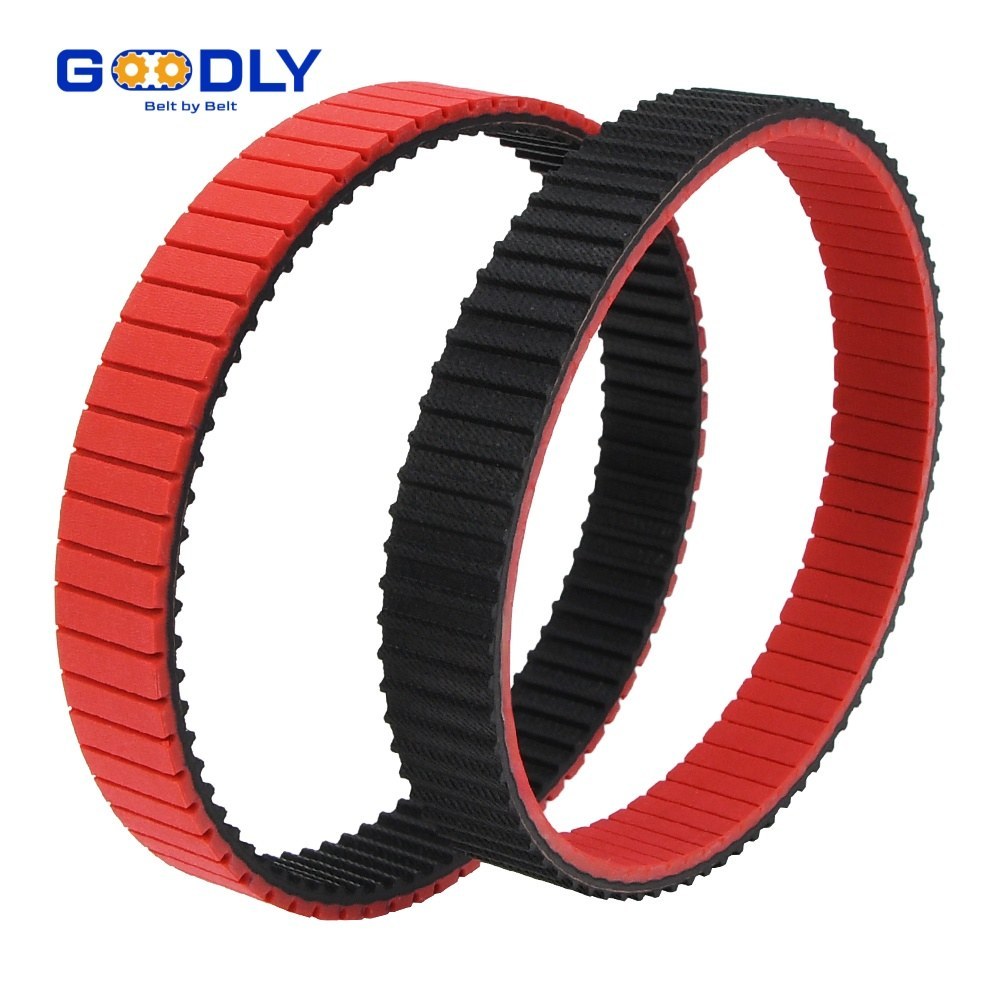
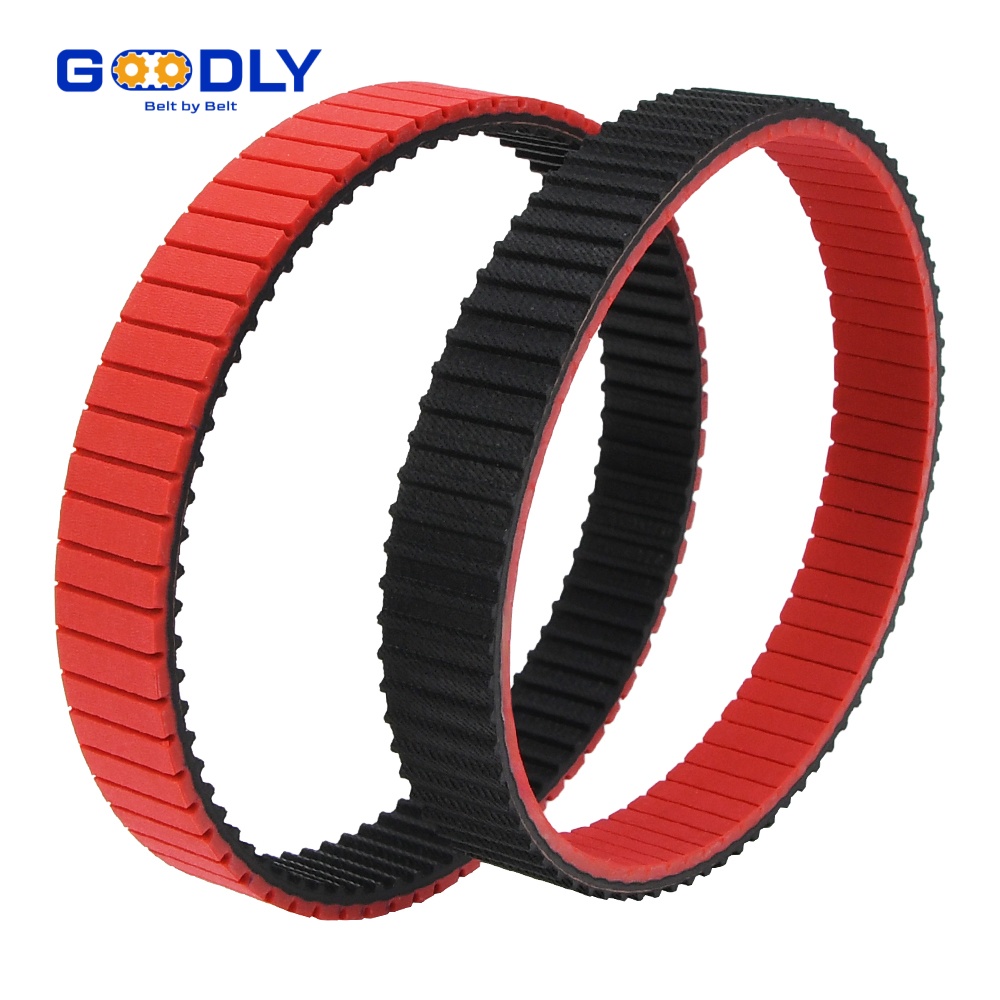
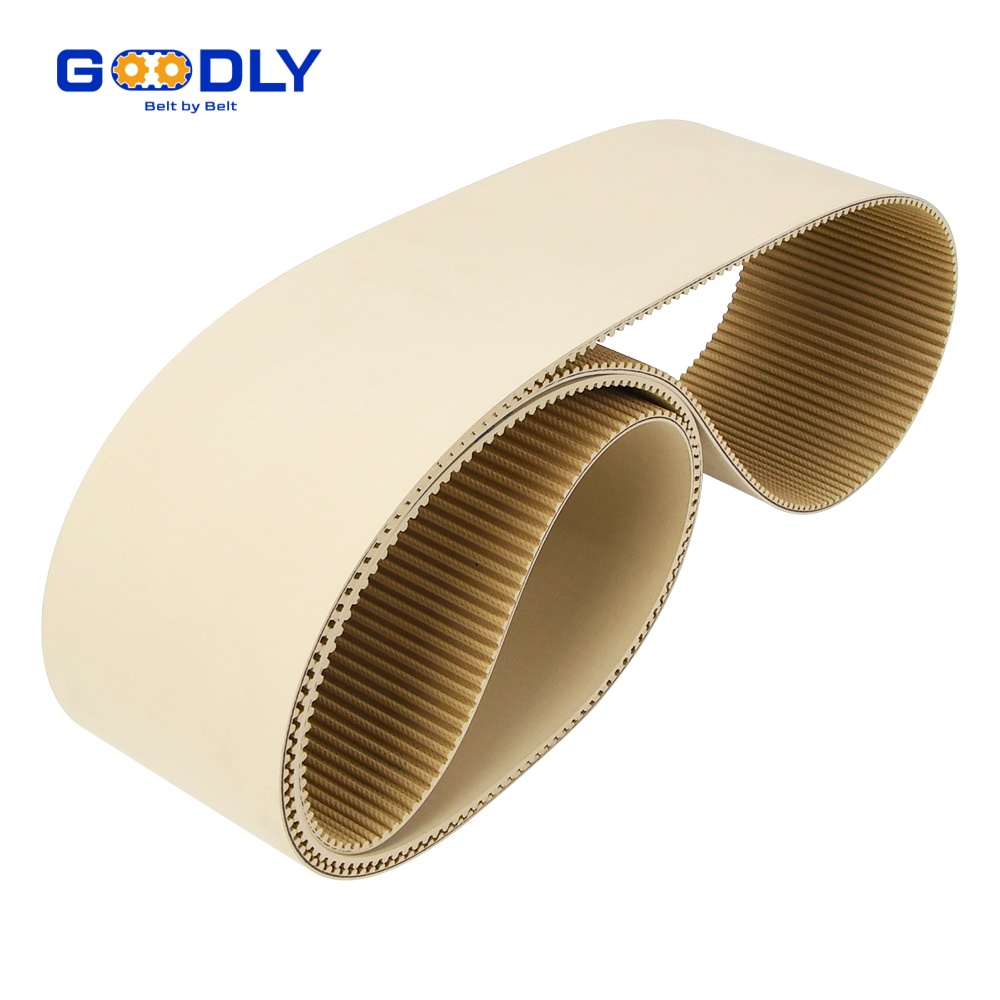
Step inside a packaging line, a pharma filling suite or a parcel sorting hub and the belt landscape changes. The machinery segment runs on constructions the big catalogues treat as specials: vulcanized rubber covers for high-friction feeding, silicone for heat and release, sponge and foam backings for delicate product, anti-static compounds for cleanrooms, machined grooves and cleats for exact product positioning. The industrial timing belt manufacturers that lead here are specialized factories — often mid-size, frequently Asian, always process-owning — because these belts are engineered per application, not picked per catalogue number. Rubber timing belt manufacturers with in-house vulcanizing capacity, for example, can tune cover friction and finish per station, which a pure catalogue model cannot do at all.
| Machinery segment | What the belt actually needs | Where specialized factories win |
|---|---|---|
| Packaging and VFFS | High-friction or coated backs, food-adjacent compounds, fast revisions | Custom coating bonded on the same line that molds the belt |
| Food and pharma | FDA-aligned compounds, anti-static grades, cleanroom-ready surfaces | Material declarations per compound and batch |
| Logistics and sorting | Wide belts, machined profiles, wear-tuned covers | Machining performed in-house at belt width |
| Printing and converting | Precision pitch, low-stretch cords, non-marking surfaces | Pitch consistency held and recorded per belt |
A detailed walk through one such specialized process — from compounding to final inspection — is in our timing belt factory article, and the quality records a buyer should expect from any factory in this tier are covered in the quality control guide.
Timing Belt Manufacturer vs Supplier vs Distributor: Channel Explained
The three channel words in every search result mean different things, and the differences drive price, lead time and what happens when something goes wrong:
| Channel | What you actually get | Best for |
|---|---|---|
| Manufacturer | Engineering access, customization, frozen specs, measurement records, tooling ownership | OEM projects, custom constructions, repeat programmes |
| Distributor | Brand catalogue stock, local availability, straightforward reordering | Standard replacement demand on known machines |
| Trading supplier | Aggregated sourcing across factories; variable depth | Spot purchases where specification risk is acceptable |
Search behavior adds one more wrinkle: queries like “timing belt manufacturers near me” optimize for distance, but for industrial synchronous belts, the nearest source is rarely the deciding variable. A distributor near you stocking catalogue profiles may solve a breakdown today; a factory ten time zones away that owns your drawing solves every revision, tolerance question and repeat order for the life of the machine. Most mature buyers end up using both — distribution for standard spares, factory direct for everything engineered.
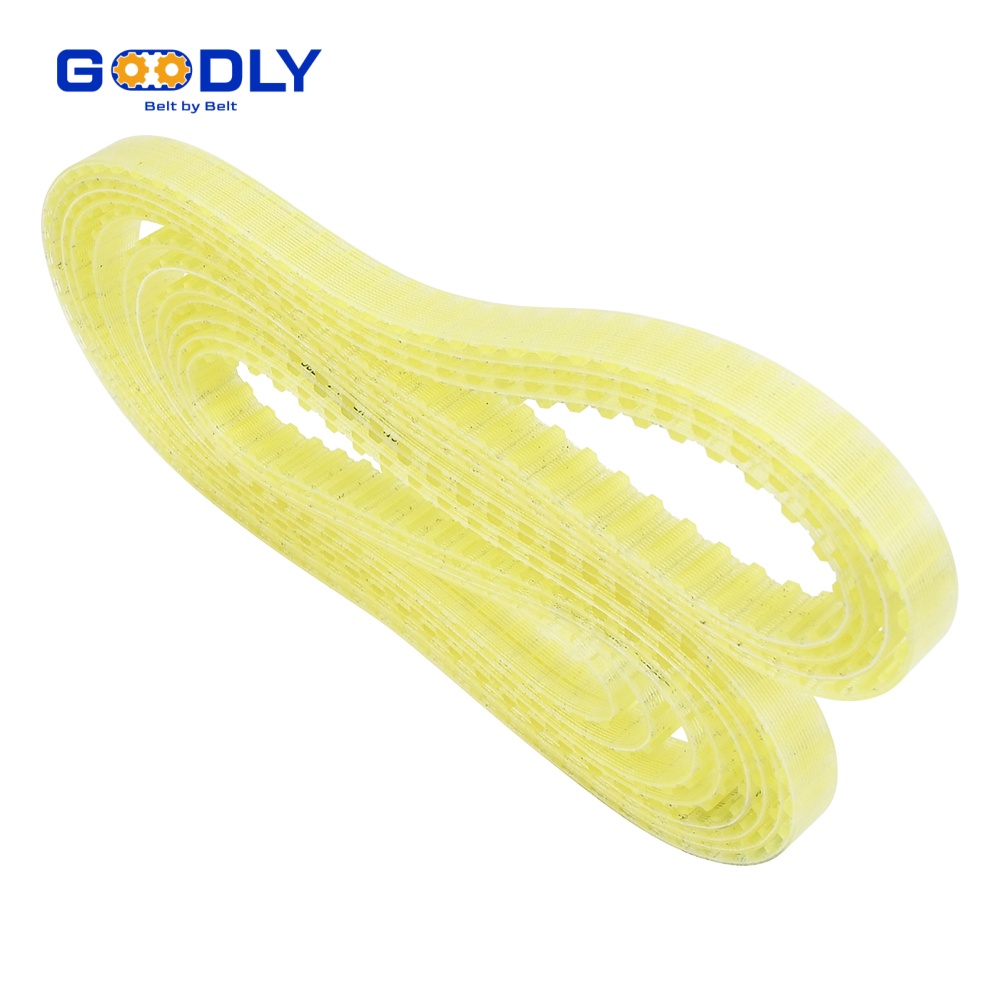
Beyond the Top 10: Why OEMs Choose Specialized Timing Belt Factories
Machine builders who moved sourcing to specialized factories rarely go back, and the reasons are structural rather than price-driven:
- Custom is the default, not a special case. Length, profile, coating and machining are quoted from the drawing in days — the options are laid out in the custom timing belt checklist.
- Engineer-to-engineer speed. A question about tooth-root cracking reaches the person who owns the cure cycle, and the answer arrives with a proposed fix instead of a discount.
- Application constructions without catalogue constraints. Vulcanized covers, foam backings and special machining are standard processes — the coating families are compared in the sponge-coated customization guide and the machining options in the special machining article.
- Right-sized volumes. Prototype quantities of five belts and annual programmes of fifty thousand are served by the same line, under the same frozen specification.
- Specification ownership. Drawings, compounds and tooling stay with one party under NDA — the partnership mechanics are described in the OEM and ODM manufacturing guide.
None of this argues against the global brands on their own ground. It argues for matching the channel to the job: catalogue drives to catalogue suppliers, engineered drives to factories that engineer.
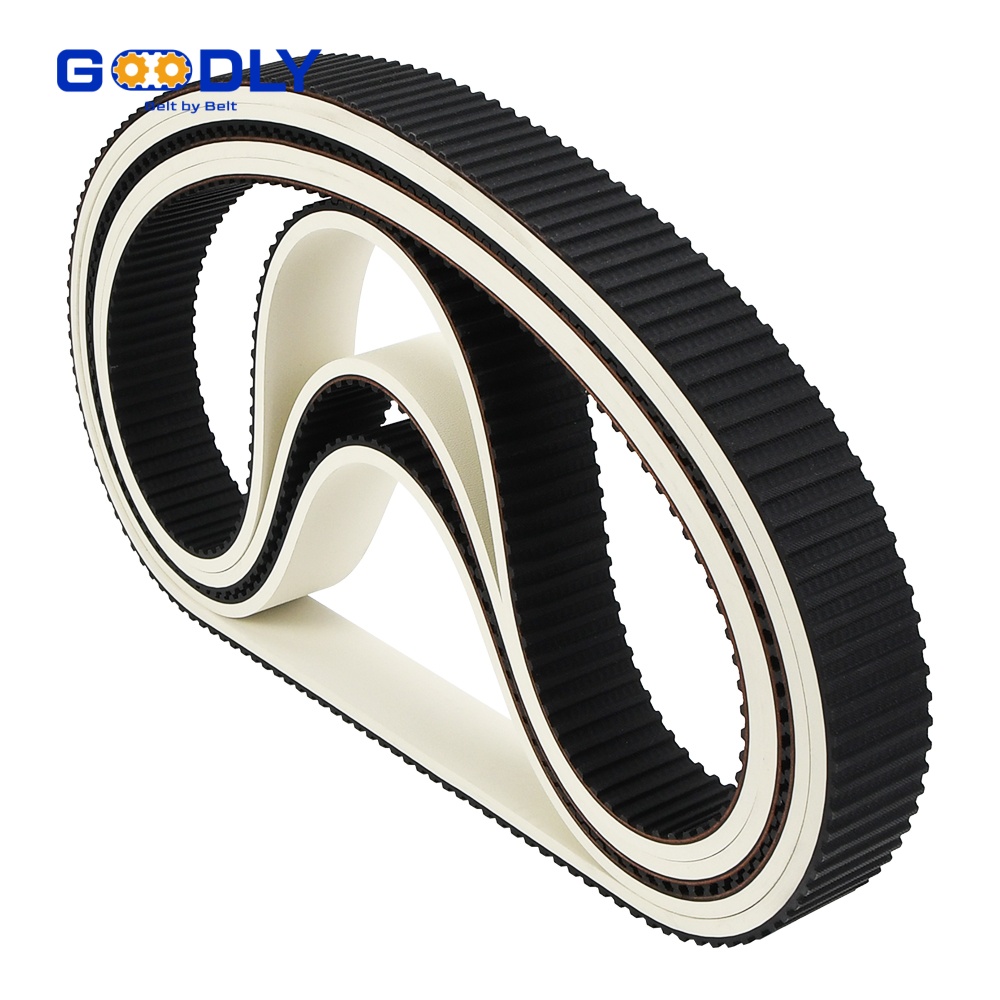
Compare and Get Quotes: GOODLY Timing Belt Manufacturing for Your Project
Whatever shortlist you assemble, score every candidate — brand or factory — on the same five axes: construction range (do they mold, vulcanize, coat and machine in-house?), customization depth (is your drawing a normal enquiry or an exception?), QC transparency (are measurement records, compound declarations and inspection criteria provided unprompted?), lead-time discipline (is the quoted time honored on the third order?), and engineering access (does a technical question reach an engineer?). GOODLY competes on exactly these axes from its own 20,000 m² Guangzhou plant: in-house compounding through inspection, a specialization in vulcanized and coated synchronous belts, 100% pre-dispatch inspection, and engineer-answered enquiries. The timing belt product range shows the constructions, and the about page the equipment and background behind them.
For a closer look at one of the sourcing routes on that shortlist — factory-direct supply from China, with the verification workflow that makes it safe — our China factory-direct sourcing guide covers audits, samples and logistics in detail. Then send the drawing or the old belt’s spec: a quotation with a construction proposal and, where useful, a sample is the fastest way to make any list of ten concrete.
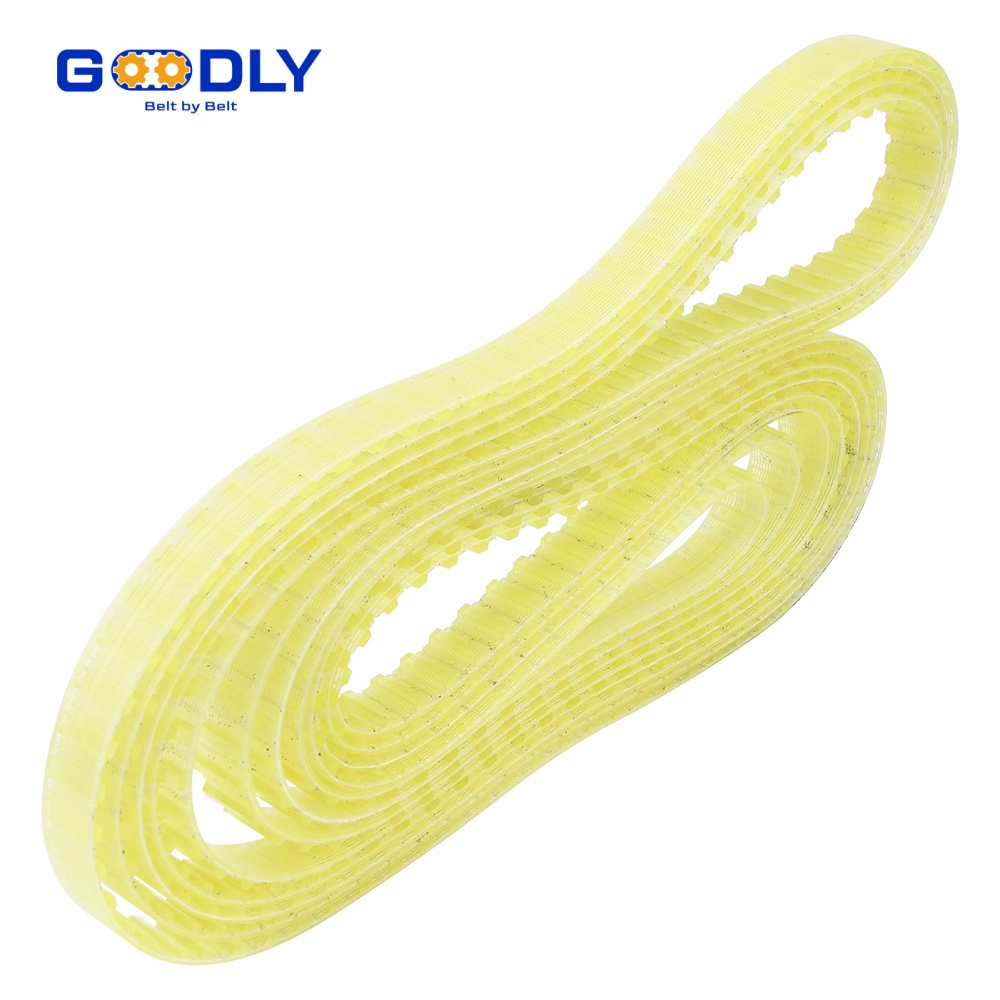
Who are the biggest timing belt manufacturers in 2026?
The global market is anchored by Gates (US), Continental/ContiTech (Germany), Bando and Mitsuboshi (Japan), with deep catalogues and worldwide distribution. Alongside them, a tier of specialized industrial factories — particularly in China — leads the machinery segments where belts are customized with coatings, machining and application compounds. Biggest and best fit are different questions; both tiers belong on a complete shortlist.
Are brand-name timing belts better than those from specialized factories?
They are different models, not different physics. Brands excel at standardized catalogue product with global availability; specialized factories excel at customized, coated and machined constructions with direct engineering access. A quality answer comes from records, not reputation: pitch and thickness measurements, compound declarations and inspection criteria. A specialized factory that provides all three unprompted is manufacturing at the same standard — verify it per the QC guide.
What is the difference between a timing belt manufacturer and a distributor?
A manufacturer molds and finishes the belt and owns the specification — customization, tooling and corrective action happen there. A distributor stocks catalogue product for local availability and simple reordering. Trading suppliers aggregate across factories with variable depth. Standard replacement demand fits distribution; engineered and OEM demand fits the manufacturer.
How do I choose the best timing belt manufacturer for my machine?
Score candidates on five axes: in-house construction range (molding, vulcanizing, coating, machining), customization depth, QC transparency (measurement records and declarations provided unprompted), lead-time discipline across repeat orders, and engineering access. Apply the same scorecard to every candidate including established brands — the axis where a candidate is weak is the one that will surface as your problem later.
Can specialized factories match brand-name quality?
For many industrial applications, yes — when the factory is vertically integrated and inspects properly. The evidence to request is concrete: pitch and thickness measurement records per batch, tensile and adhesion testing per compound, and the inspection criteria applied to machined features. Modern specialized factories holding hundredth-of-a-millimetre tolerances and providing records routinely run for years on OEM lines that once specified only brand catalogue product.
Why do OEMs source from specialized timing belt factories instead of big brands?
Because the machinery segment runs on engineered belts: coated backs for product handling, machined profiles for positioning, application compounds for environment. Specialized factories quote these from a drawing in days, iterate with engineer-to-engineer speed, handle right-sized volumes under one frozen specification, and keep drawings and tooling under NDA. The brand catalogue remains the right channel for standard spares — the two channels coexist in most mature sourcing strategies.
Compare GOODLY Against Your Timing Belt Shortlist
Send your drawing or current belt spec and score GOODLY on the five axes: in-house molding, vulcanizing, coating and machining; customization as standard practice; measurement records with every batch; and engineer-answered enquiries from our own Guangzhou factory.
Get a Comparison Quote