Top Silicone and High-Temperature Timing Belt Manufacturers (2026 Rankings)
- Share
- publisher
- GOODLY Belts
- Issue Time
- Nov 27,2026
Summary
How silicone and high-temperature timing belt manufacturers actually differ in 2026: niche specialists versus full-line groups, heat range and food-grade documentation, supplier selection for food and pharma OEMs, the sample and validation sequence, a material specification table, and GOODLY's FDA-option custom silicone belt manufacturing.
Quick answer
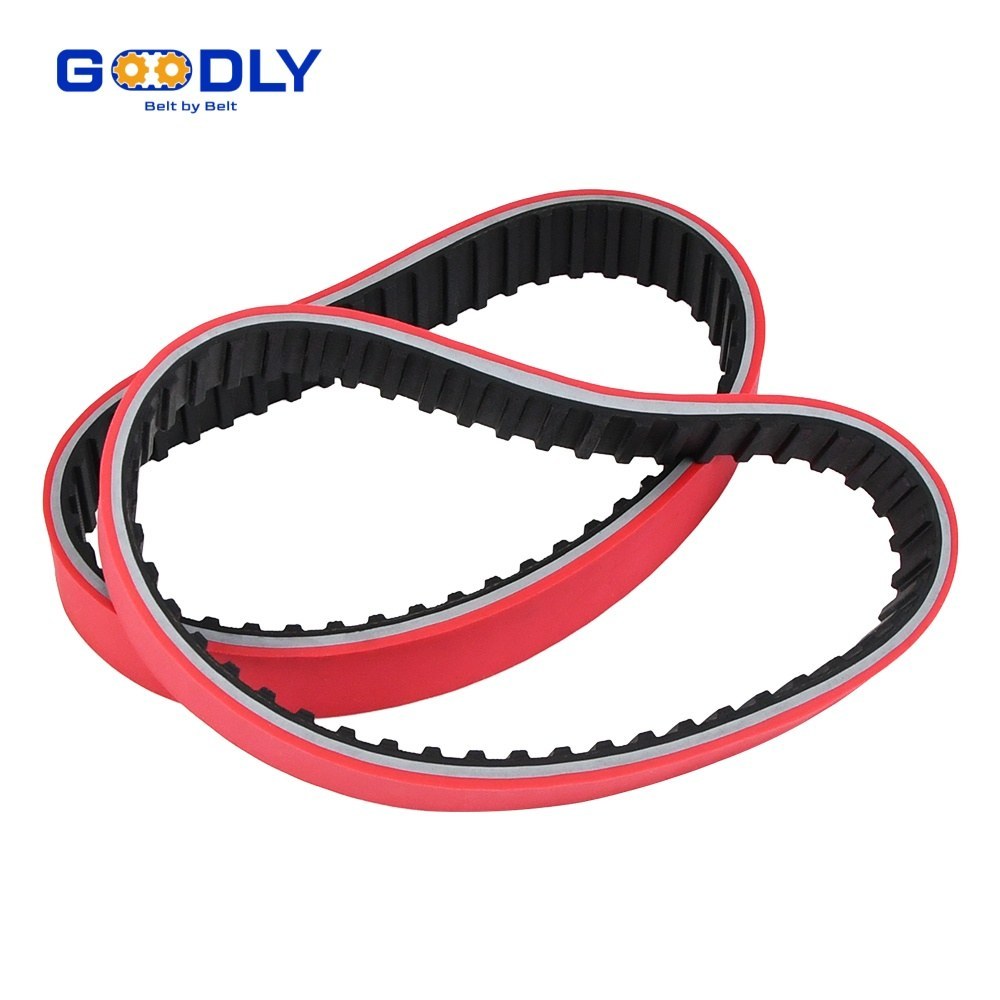
Silicone timing belt manufacturers differ less on catalogue size than on heat range and cleanliness. Ask for the compound’s continuous service temperature, food-contact documentation and tooth tolerance, then confirm the factory molds or vulcanizes the belt itself. Niche silicone specialists usually deliver better heat and food-grade performance than full-line belting groups.
In this article
Silicone is the material machine builders reach for when a drive has to survive heat, washdown or direct food contact — and the pool of silicone timing belt manufacturers that can actually deliver all three is much smaller than a search result suggests. Many suppliers list silicone but buy finished belt from someone else, which is fine until a station needs a different hardness, a wider temperature window or a documented food-contact grade. Because high temperature timing belts are rarely a catalogue purchase, engineering depth ends up mattering more than catalogue size. This guide compares who really makes silicone timing belts, how to read the heat and food-grade claims, what food and pharma OEMs should require, and how to validate a batch before it reaches a hygienic zone.
Who Makes Silicone Timing Belts? Niche Experts vs Full-Line Belt Giants
The market splits into two very different supplier models. Full-line belting groups treat silicone as one line inside a catalogue that spans conveyor, flat and synchronous belts; their strength is availability, documentation and global stock. Niche specialists — usually mid-size factories in Asia and Europe — build silicone, fluorosilicone and silicone vulcanized belts as a core product, which is why they can adjust hardness, color and surface finish without a corporate engineering queue.
| Supplier model | Heat capability | Food-grade documentation | Custom flexibility | Best fit |
|---|---|---|---|---|
| Full-line belting group | Standard silicone grades, catalogue limits | Certificates available, often generic | Limited to catalogue variants | Multi-plant rollouts needing identical parts worldwide |
| Niche silicone specialist | Wide range including fluorosilicone | Compound-level documentation per batch | Hardness, color, backing and profile changes | Food, pharma and high-temperature OEM stations |
| Vulcanized belt specialist | Seamless covers for long belts | Compound-specific declarations | Open lengths, spliced and endless options | Long centre distances and wide belts |
| Trading company or reseller | Whatever a factory offers | Forwarded, hard to trace | None | Small urgent buys only |
Four supplier models for silicone and high-temperature timing belts, compared on the points that decide industrial projects.
One practical consequence: if your drive runs above 150 °C continuously, needs a specific Shore hardness, or must be documented as food contact, the full-line catalogue is unlikely to hold the answer. That is specialist territory. For long belts where a joint is unacceptable, the construction itself changes — the options are set out in our silicone vulcanized timing belt range.
Evaluating Silicone Timing Belt Manufacturers: Heat Range and Food Grades
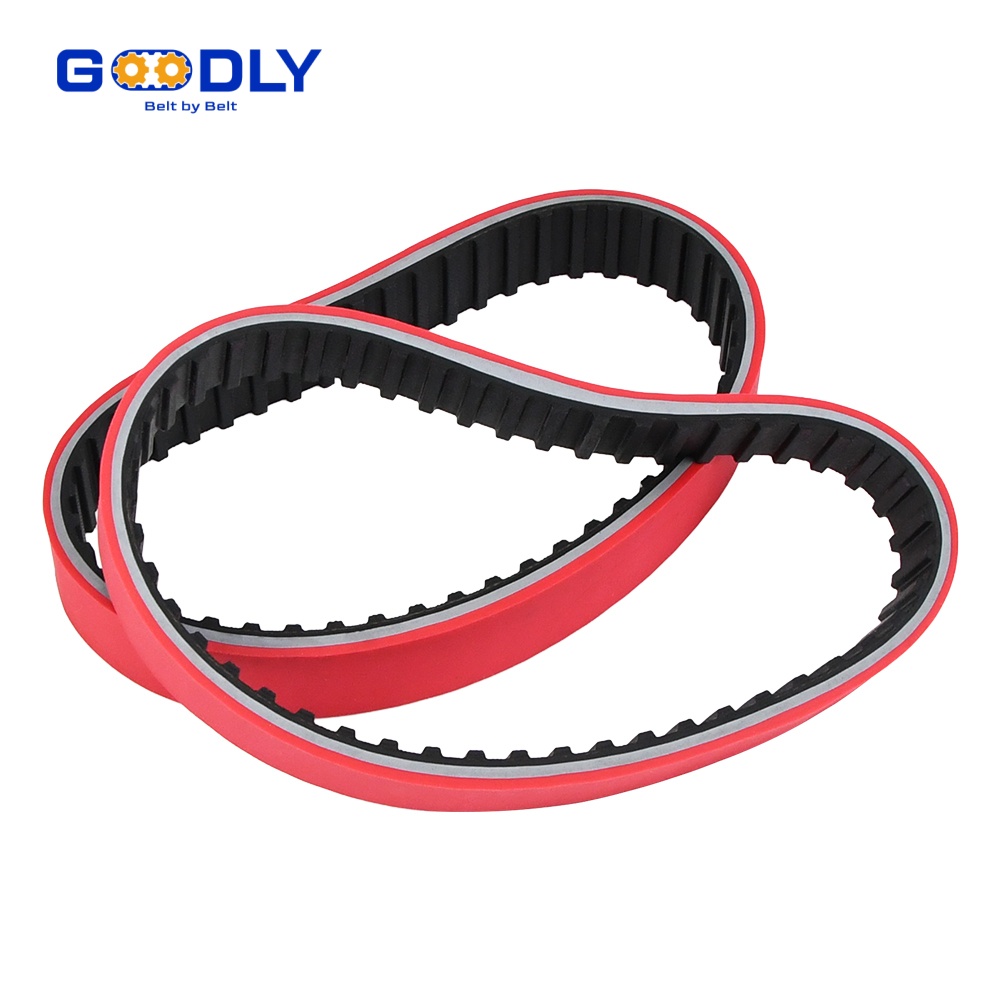
Two numbers decide most silicone specifications, and both are frequently misread. The first is continuous service temperature: a heat resistant timing belt rated to 200 °C continuously is not the same as one that survives a 200 °C peak for twenty minutes. The second is food contact, where “food grade” on a website means nothing without the compound declaration behind it.
| Material | Continuous range | Short peaks | Food contact | Oil and fuel | Relative cost |
|---|---|---|---|---|---|
| Silicone (VMQ) | −60 to +200 °C | up to +230 °C | FDA and EU 10/2011 compliant grades available | Poor | 1.3× |
| Fluorosilicone (FVMQ) | −55 to +200 °C | up to +225 °C | Select grades available | Good | 2.5× |
| EPDM | −40 to +120 °C | up to +140 °C | Select grades available | Moderate | 0.9× |
| Neoprene (CR) | −30 to +100 °C | up to +120 °C | Not typical | Moderate | 0.8× |
| Nitrile (NBR) | −20 to +100 °C | up to +120 °C | Not typical | Excellent | 0.8× |
| Polyurethane (PU) | −20 to +80 °C | up to +90 °C | Select grades available | Good | 1.0× |
Material reference for high-temperature and food-contact timing belts. Values are typical; confirm the compound data sheet for your station.
Read the table as a filter, not a ranking. Silicone wins on temperature and cleanliness and loses on oil; fluorosilicone fixes the oil weakness at roughly twice the price; EPDM is the sensible answer for steam and washdown below 120 °C. If a station combines heat with oil mist, no single compound is comfortable, and the practical answer is usually a machined or coated construction that shields the belt rather than a more exotic polymer.
High-Temperature Timing Belt Manufacturing: Silicone vs Fluorosilicone
Fluorosilicone exists for one reason: silicone’s poor resistance to oils, fuels and some solvents. In a bakery oven a standard silicone belt is the right choice; in a printing or coating line where heat meets solvent mist, fluorosilicone holds its properties far longer. The trade-offs are price, a narrower hardness range and longer lead times, because fewer factories mold it. Ask the timing belt suppliers you shortlist which of the two they actually stock as compound, not as finished belt — the answer tells you whether they can support you on the second order.
Silicone Timing Belt Supplier Selection for Food and Pharma OEMs
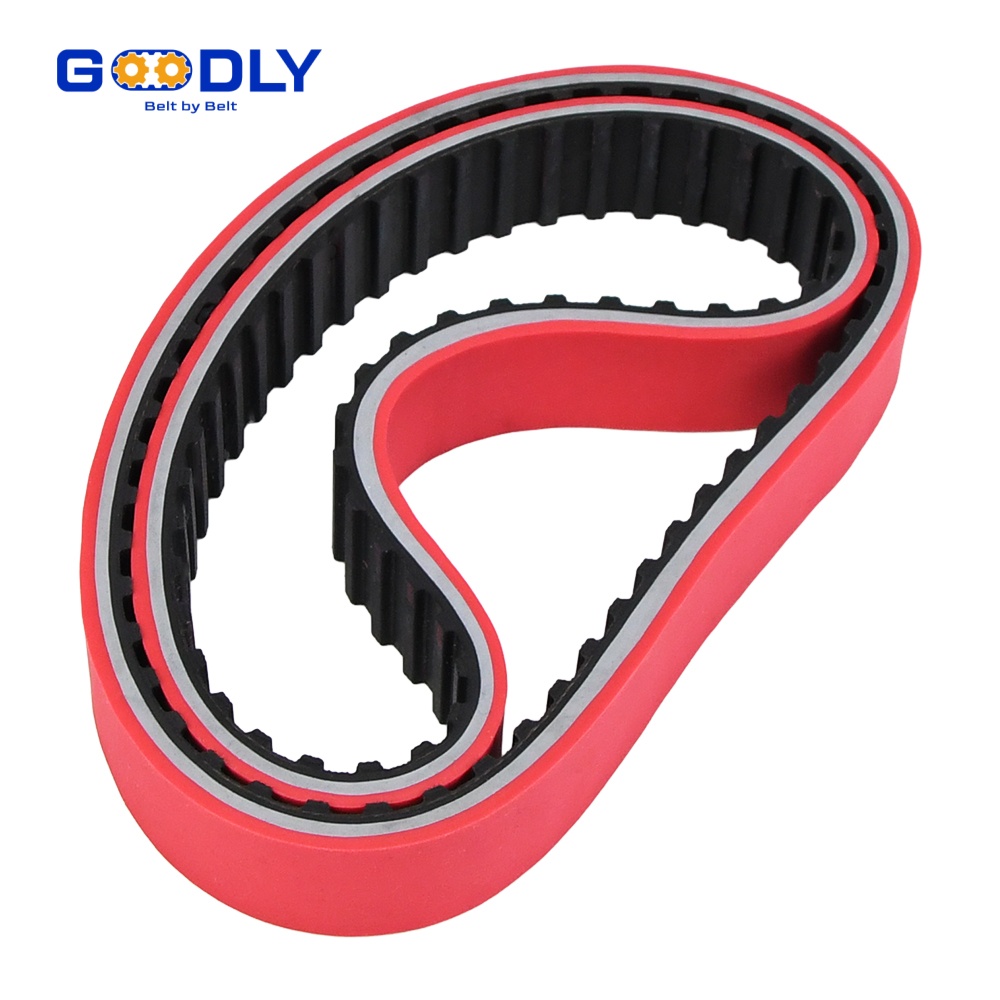
Food and pharmaceutical machines add a documentation layer that general industrial suppliers are not built for. A food grade silicone timing belt is a compound decision before it is a belt decision, so before shortlisting any silicone timing belt supplier for a hygienic zone, require four things:
Compound-level declaration
The declaration must name the compound and its compliance basis, not just the finished belt. Batch traceability should point back to the compound lot.
Color control
Blue and white are common in hygienic zones because contrast makes debris visible. Confirm the color is molded into the compound, not painted on.
Cleanability
A smooth, non-porous back and seamless edges matter more than any certificate. Ask how the belt is finished and whether it is washed before packing.
Validation support
For pharma equipment, the supplier should be able to support cleaning and temperature-cycle validation with consistent compound batches over time.
The application side is worth planning early. In filling and packaging lines the belt often both drives and contacts product, so grip, release and cleanability all sit in one component — the requirements for those stations are covered in our packaging industry transmission belt solutions. In pharmaceutical equipment, anti-static behaviour and cleanroom compatibility usually join the list, as described in the pharmaceutical transmission belt solution.
Ordering Custom Silicone Timing Belts: Samples, Specs and Validation
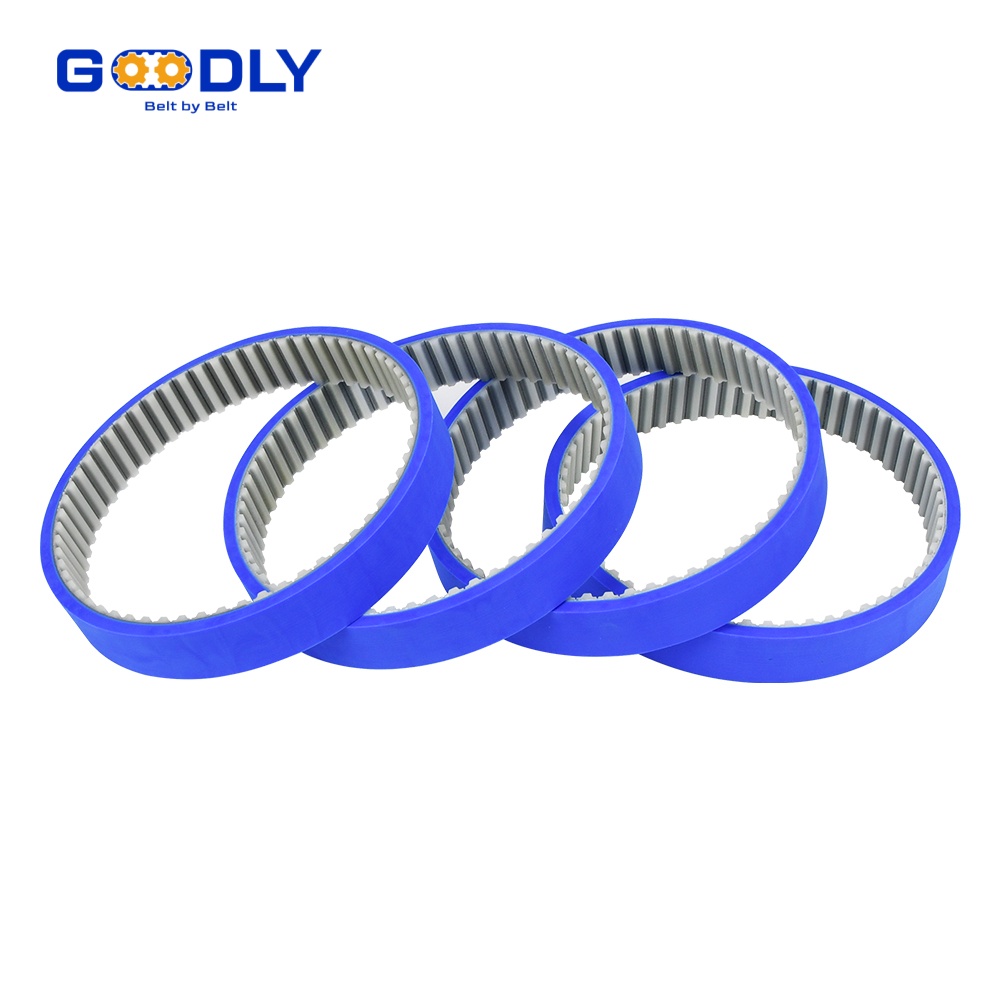
Custom silicone work fails for boring reasons: a missing tolerance, an untested splice, a color that was never approved on a physical sample. The sequence below closes those gaps, and it is the same one we run for every custom project:
1. Define the station, not the belt. Temperature at the belt (not the oven), chemical exposure, washdown frequency, load, speed and pulley diameters. A silicone recommendation built on oven temperature alone is usually wrong.
2. Agree the specification table. Profile, pitch, length, width, thickness, hardness, color, backing and tolerances — written down before sampling, so the sample has something to be measured against.
3. Approve a physical sample. Check fit, tracking, noise and surface finish on the real machine. For food contact, approve the color and finish visually as well.
4. Freeze the batch and validate. Run the approved construction through a production batch and repeat the measurement record. Then keep the drawing and compound code on file for reorders.
Specification reference for silicone and high-temperature timing belts — the values we confirm in writing before a sample is molded:
| Property | Typical requirement | What to confirm in writing |
|---|---|---|
| Hardness | 50–80 Shore A | Measured range per batch and compound code |
| Continuous temperature | Up to +200 °C for silicone | Continuous versus peak rating for the exact compound |
| Pitch tolerance | ±0.1 mm over 10 pitches | Gauge and inspection temperature |
| Thickness tolerance | ±0.2 mm | Whether a backing or coating is included |
| Food contact | FDA and EU 10/2011 grade where required | Declaration naming the compound, plus batch traceability |
| Color | Blue, white, red or transparent | Physical color sample approved before production |
| Backing options | Smooth, fabric, foam or rubber | Bond method and peel strength if a backing is added |
| Splice or endless | Endless preferred; spliced where length demands | Joint strength test and visual criteria |
Silicone timing belt specification reference for custom food, pharma and high-temperature drives.
If the drive also carries product, add the coating decision to the same specification rather than a second project. A food-grade timing belt and its backing should be approved together, because the interface is where most hygienic failures start.
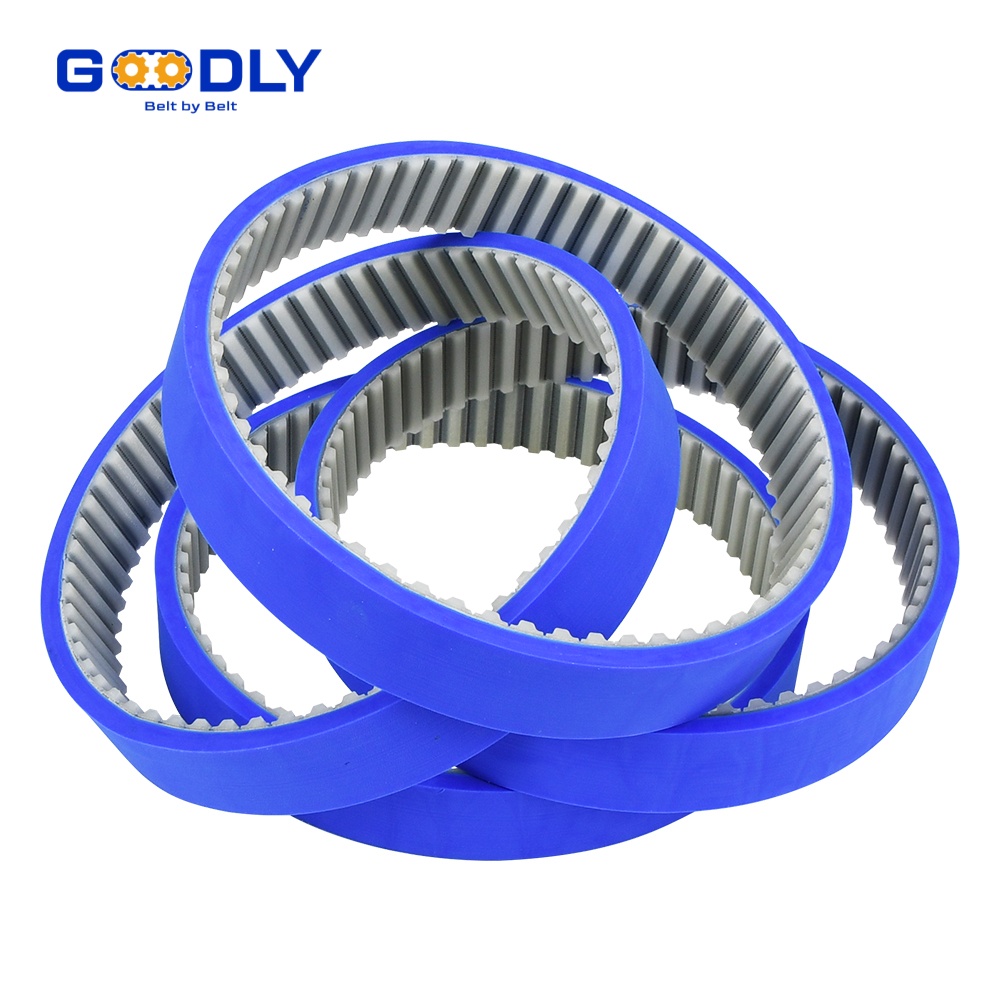
GOODLY Silicone Timing Belt Manufacturing: FDA Options and Custom Colors
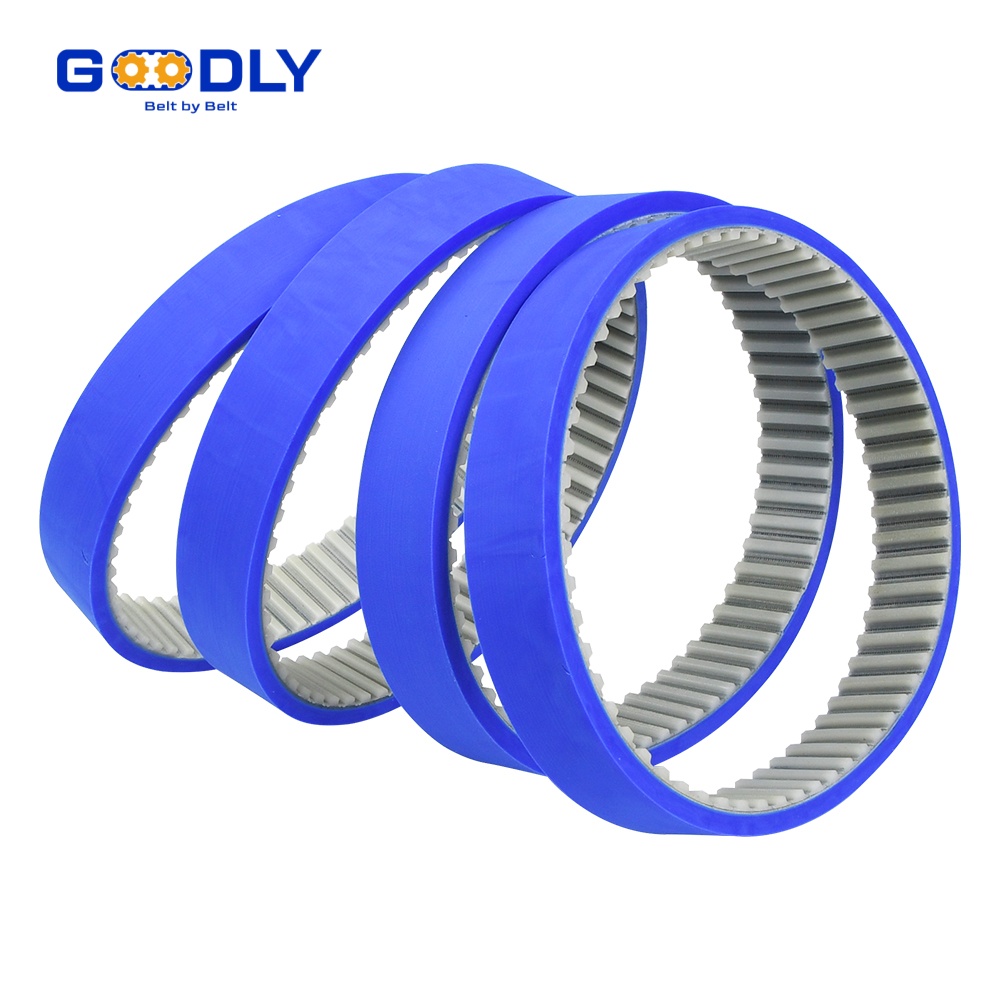
GOODLY molds and vulcanizes silicone timing belts in Guangzhou, with mold design, rubber compounding, vulcanizing and testing under one roof. For silicone work that means three things buyers usually have to source separately: food-contact compounds that comply with FDA 21 CFR 177.2600 and EU 10/2011, custom colors molded into the belt rather than applied, and endless or vulcanized constructions for long centre distances — the process behind the second is described in our silicone vulcanized timing belt guide.
We supply silicone and high-temperature belts to packaging, food processing, pharmaceutical and electronics OEMs, either as catalogue sizes or as a construction matched to a drawing. Partnerships usually start with a sample and a frozen specification; the mechanics of tooling, NDAs and repeat orders are covered in the OEM and ODM manufacturing guide, and the wider material comparison in our silicone timing belt overview and silicone versus rubber comparison.
Tell us the temperature, we will name the compound
Send the station conditions and belt dimensions. We come back with a compound recommendation, hardness and color options, tolerances and a sample plan.
Frequently Asked Questions
What is the maximum temperature for a silicone timing belt?
Standard silicone compounds run continuously to about +200 °C, with short peaks to roughly +230 °C. Above that, or where oil and solvent are present, fluorosilicone or a shielded construction is the practical route. Always confirm continuous and peak ratings separately for the exact compound.
Are silicone timing belts food safe?
Only when the compound is a food-contact grade and the supplier can document it. Ask for a declaration that names the compound and its compliance basis, plus batch traceability. Color and surface finish should be approved on a physical sample, because a porous or painted finish can fail hygiene checks even with the right polymer.
How do silicone timing belts compare with rubber for heat resistance?
Silicone holds roughly 120 °C more continuous heat than standard NBR rubber and stays flexible at low temperature, but it is weaker in oil and has lower tear strength. Rubber wins on torque density and oil resistance; silicone wins on heat, cold and food contact.
Can you make a silicone belt in a custom color or with a backing?
Yes. Blue, white, red and transparent compounds are common, and color is molded into the belt. Smooth, fabric, foam and rubber backings can be bonded to the same construction, with peel strength confirmed on the approved sample.
What is the minimum order for a custom silicone timing belt?
Typically 50–100 pieces per size where tooling exists. A new profile or an unusual width is quoted as a project with a sample batch first, then volume against the frozen specification.
Comparing options and still unsure which compound fits your station? Send the conditions to our team through the GOODLY contact page — we will confirm whether silicone, fluorosilicone or a coated construction is the honest answer. Deeper background sits in silicone vulcanized timing belts and our custom timing belt ordering guide.