Vulcanized Timing Belt Explained: Strength, Process and When You Need One
- Share
- publisher
- GOODLY Belts
- Issue Time
- Oct 15,2026
Summary
Vulcanized timing belts are cured under heat and pressure to bond the tooth, cord and backing into one high-strength body, giving more strength than a simple moulded belt. This guide explains what vulcanisation means, how a vulcanized rubber timing belt differs from a moulded one, when a drive truly needs it, and how silicone vulcanised belts combine heat resistance with strength. Includes a comparison table and volume-production notes.
What Does Vulcanized Timing Belt Mean? Curing Rubber for Higher Strength
Heat, pressure and time turn separate layers into one strong, stable belt body
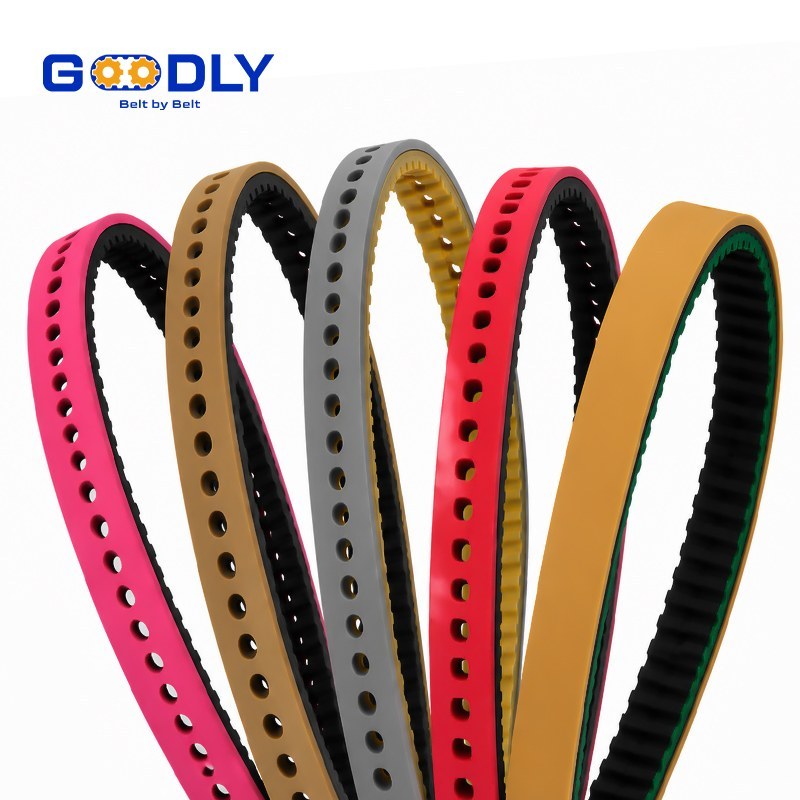
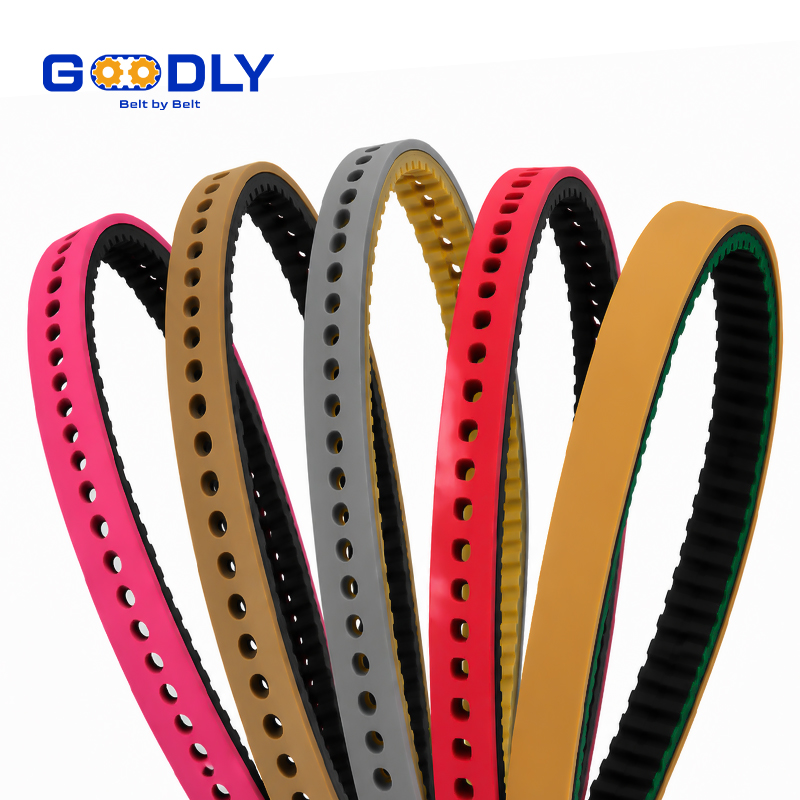
A vulcanized timing belt is a synchronous belt whose rubber compound is cured — vulcanised — under heat and pressure so the tooth, tension cord and backing cross-link into a single strong body. That chemical bond is what separates a vulcanized timing belt from a simple moulded belt, and it is why vulcanised belts resist heat, fatigue and tooth shear better on demanding drives. If your machine runs heavy loads, sees temperature, or must hold registration for a long interval, the vulcanisation process is worth understanding before you specify.
What Does Vulcanized Timing Belt Mean? Curing Rubber for Higher Strength
Vulcanisation is a controlled cure: uncured rubber plus sulphur or peroxide is held at temperature and pressure for a set time, and the polymer chains cross-link. The result is a stiffer, stronger, more heat-stable elastomer that grips the cord and resists creep. In a vulcanized rubber timing belt the cure is what gives the tooth its shear strength and stops the belt from stretching out of registration over its life, which matters most on high-torque, continuous-duty drives.
| Aspect | Vulcanized belt | Moulded / non-vulcanised belt |
|---|---|---|
| Bonding | Cross-linked, chemical | Mechanical / adhesive |
| Tooth shear strength | High | Moderate |
| Heat stability | High | Lower |
| Creep / stretch | Low | Higher over time |
| Best for | Heavy, hot, continuous drives | Light, intermittent drives |
Not every drive needs vulcanisation — but heavy conveying, machine tools and hot processes usually do. The basics are covered in what is a timing belt.
Vulcanized Rubber Timing Belt vs Molded Belt: Construction Differences
Physically, both belts look similar; the difference is in how the layers are joined. A moulded belt relies on adhesion between separately formed layers, which can delaminate under heat and repeated flexing. A vulcanised belt bonds the layers during cure, so the tooth facing, cord and backing behave as one. On a vulcanized rubber timing belt the practical payoff is that the teeth do not tear off under shock and the belt holds its length — the two failure modes that most often take a machine down.
Kevlar-Reinforced Vulcanized Timing Belts for Heavy-Duty Drives
A kevlar reinforced timing belt (aramid cord) adds very high tensile strength at low stretch, and when it is combined with vulcanisation the drive can carry high torque without losing pitch. That combination — vulcanised body plus aramid cord — is what we recommend for crushers, mixers, heavy conveyors and any drive with a high service factor. Compare the range on the Vulcanized Timing Belt product page.
When Your Application Demands a Vulcanized Timing Belt
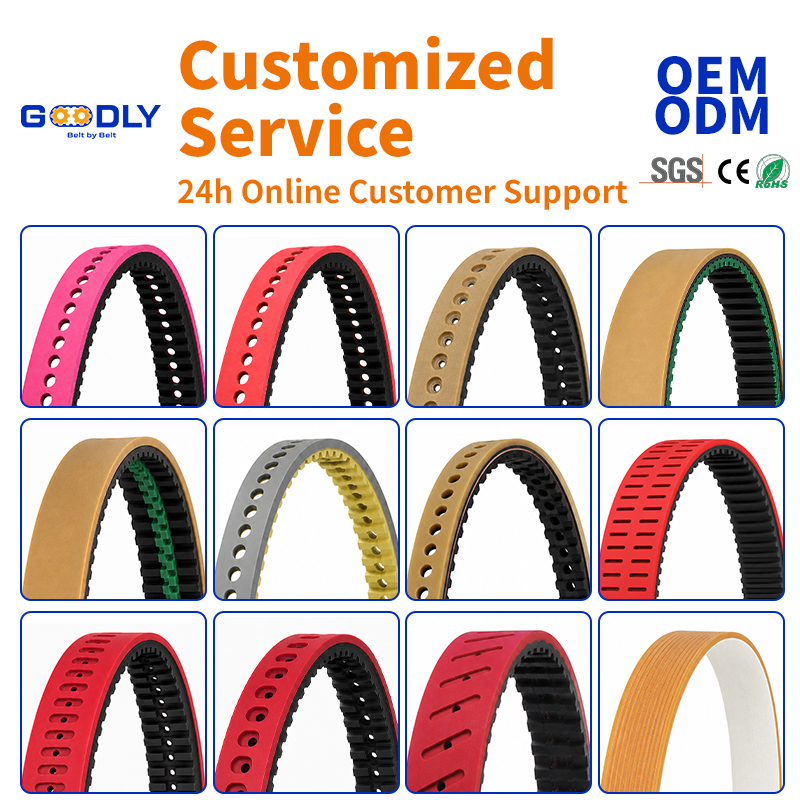
Specify vulcanisation when at least two of these conditions are true: high peak torque, sustained heat, continuous duty, shock loads, or a registration that must not drift between maintenance intervals. Where the drive is light, intermittent and cool, a moulded belt is a perfectly economical choice — there is no benefit in paying for strength you will never use.
High shock / peak torque
Vulcanised teeth resist shear under start-up and jams.
Sustained heat
The cured body resists hardening and creep.
Continuous duty
Holds pitch over long maintenance intervals.
Long centre distances
Aramid cord keeps stretch low.
Heavy conveying
Handles the load without tooth loss.
Critical registration
Little drift means stable indexing.
Silicone Vulcanized Timing Belts: The Best of Heat Resistance and Strength
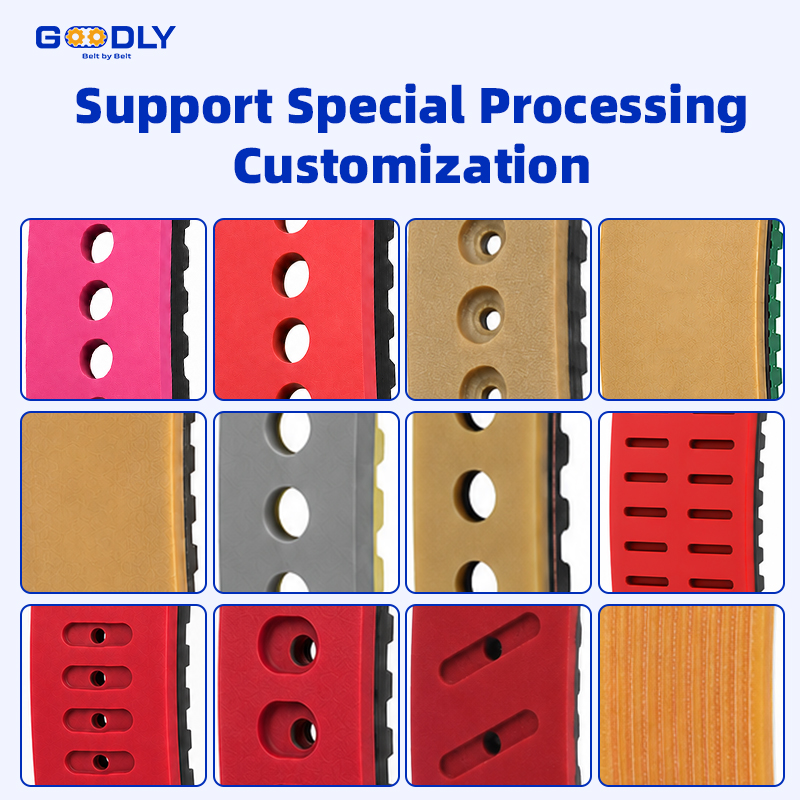
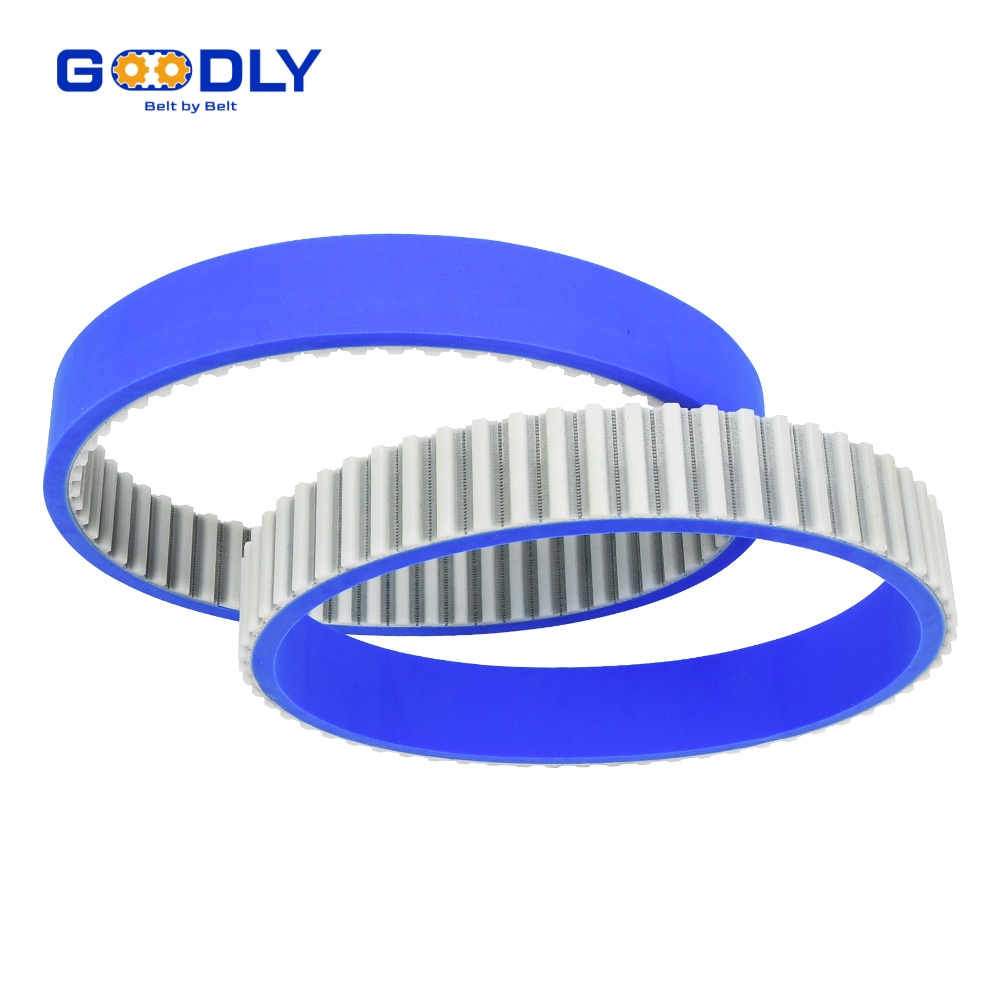
When a drive is both hot and loaded, a silicone vulcanized timing belt is the answer. Vulcanising a silicone surface onto a reinforced body gives the belt the high-temperature, non-stick, food-contact properties of silicone without the low tear strength of a plain silicone belt. In sealing, drying and food-industry drives this is often the only construction that survives the combination of heat and mechanical load. See the Silicone Vulcanized Timing Belt range.
For a deeper look at why vulcanised synchronous belts are specified, our article on everything you should know about vulcanized synchronous belts is a useful companion read.
How GOODLY Produces Precision Vulcanized Timing Belts in Volume
GOODLY controls the vulcanisation process in house: compound mixing, cord placement, cure temperature and time, and finishing. Each batch is measured for pitch and length to a ±0.05 mm band and released with a dimensional report. Because we also run special machining, we can slit, groove and profile a vulcanised belt to your drawing, so an OEM gets one supplier for material strength and mechanical customisation.
Is a vulcanized belt better than a moulded belt?
It is stronger and more heat-stable, so it lasts longer on heavy or hot drives. On light drives a moulded belt is cheaper and perfectly adequate.
What does 'vulcanized' actually mean for a timing belt?
It means the rubber compound has been cured under heat and pressure so its polymer chains cross-link, bonding the tooth, cord and backing into one strong body.
Do you make silicone vulcanised belts?
Yes. GOODLY bonds silicone onto a reinforced body for drives that are both hot and loaded, with food-contact grades available.
Can you vulcanise an open-ended belt on site?
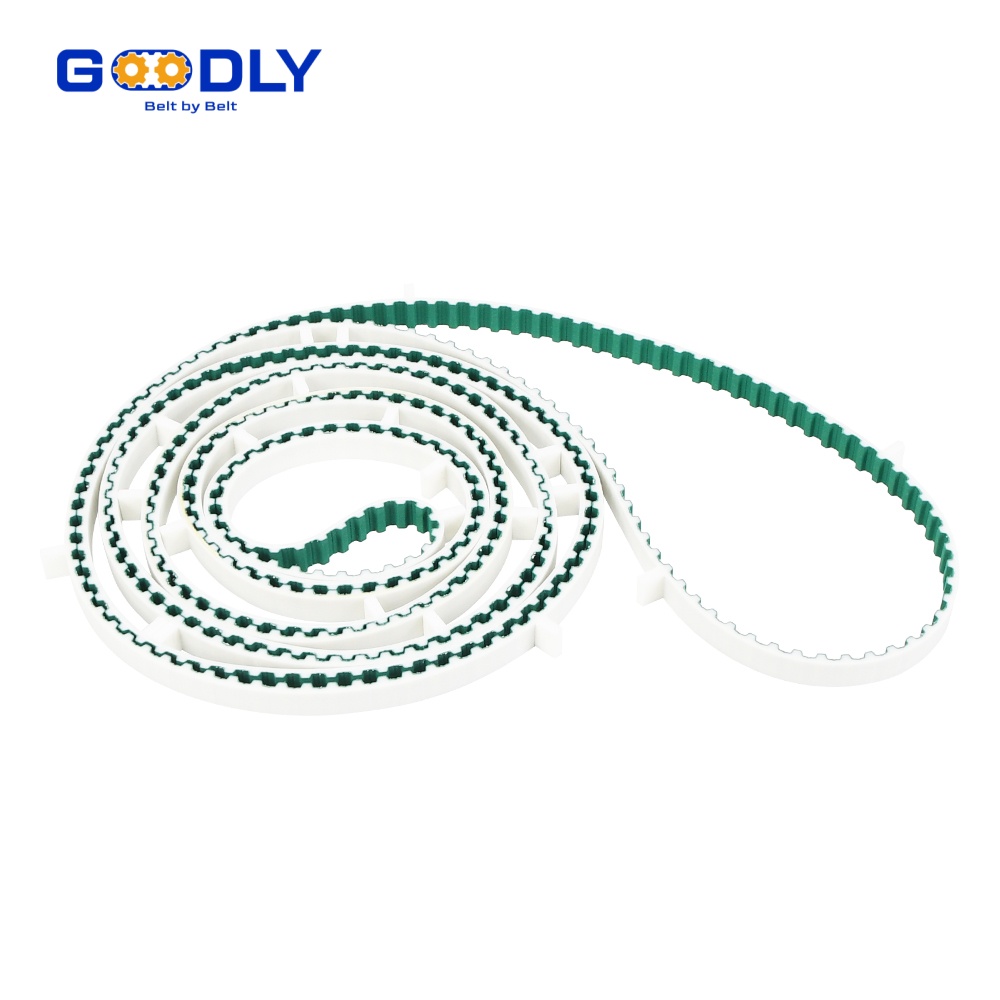
Open-ended belts are typically joined by hot vulcanisation to form a truly endless belt, which is common for long conveyor runs.
Specifying a high-strength drive? Let GOODLY engineer the belt
Send the load, duty cycle and temperature and we will recommend a vulcanised construction with the right cord, confirm ±0.05 mm tolerance and deliver samples in 3–5 days.
Request a Vulcanized Belt QuoteProcess and tolerance figures are typical GOODLY capabilities, confirmed per order.