When to Replace Timing Belts: Lifespan, Intervals and Warning Signs for Industrial Drives
- Share
- publisher
- GOODLY Belts
- Issue Time
- Oct 30,2026
Summary
When to replace a timing belt: real-world lifespan by duty class, calendar versus running-hour replacement intervals, the warning signs (noise, cracking, glazing, tooth wear) that decide the timing, break causes in continuous production, and OEM-matched replacement belts from GOODLY.
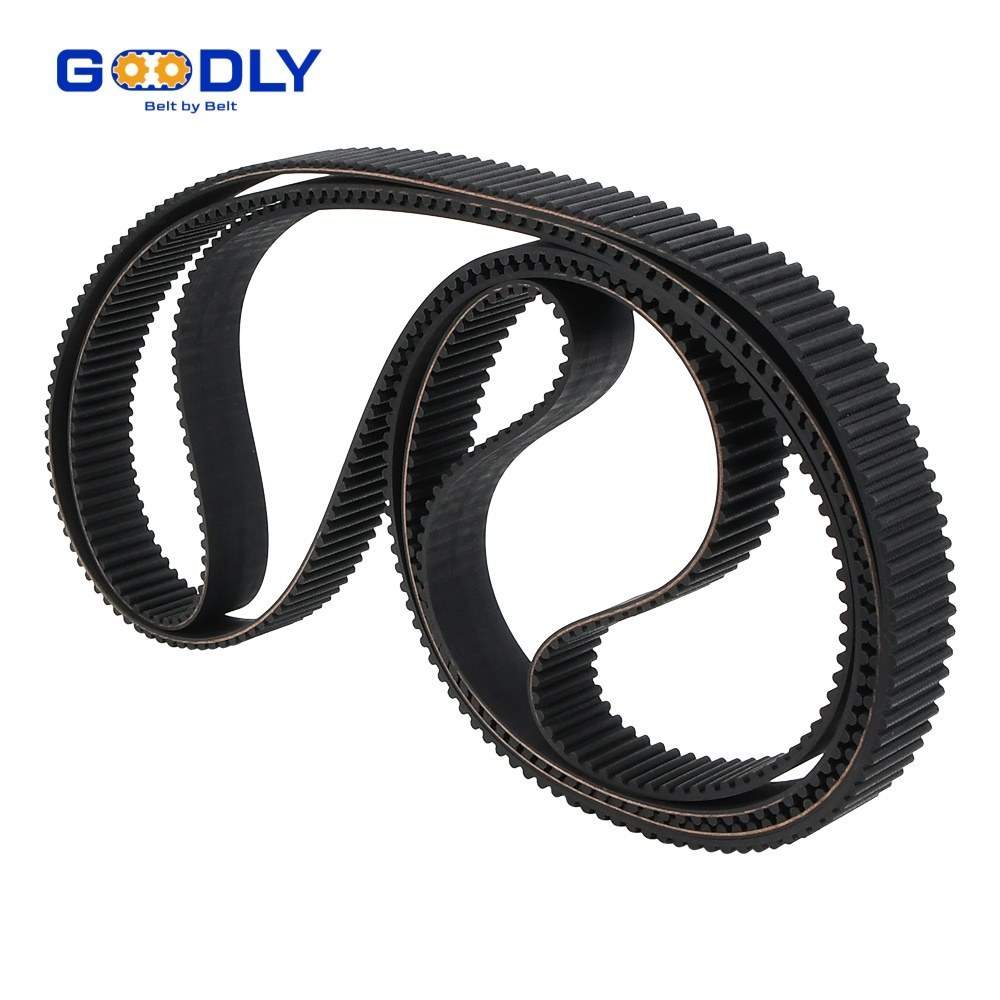
When to Replace Timing Belts: Lifespan, Intervals and Warning Signs for Industrial Drives
Real-world belt life, calendar versus running-hour intervals, and the wear signals that decide the date
The hardest question in belt maintenance is not how to fit a belt, it is knowing when to replace timing belt drives before they decide for you. Replace too early and you throw away good running hours; replace too late and a timing belt break takes the whole line down at the worst possible moment. The answer sits in three places at once: the expected timing belt lifespan for that duty class, a timing belt replacement interval written down rather than remembered, and the physical warning signs that override any calendar. This guide covers all three, plus the failure causes that shorten life in continuous production, so the timing belt replacement decision becomes a scheduled task instead of an incident report.
Timing Belt Lifespan: How Long Do Industrial Timing Belts Really Last?
For quality industrial drives, timing belt lifespan lands between 10,000 and 20,000 running hours — roughly two to four years on a single-shift machine, and twelve to twenty-four months on a three-shift line. Those numbers are averages, not promises: the same belt construction can last twice as long on a lightly loaded packaging indexer as it does on a shock-loaded corrugated stacker. Four variables move the number most: load and shock, pulley condition, tension discipline, and the environment (heat, oil, abrasive dust).
| Duty class | Typical running life | Common construction | Main life limiter |
|---|---|---|---|
| Light indexing, packaging, labelling | 15,000-20,000 h | Rubber or PU, glass or steel cord | Pulley wear, tension drift |
| General conveying and converting | 10,000-15,000 h | PU steel-cord, rubber HTD | Abrasive dust, misalignment |
| Heavy shock load, corrugated, die-cutting | 6,000-10,000 h | Wide rubber HTD, aramid cord | Shock peaks, tooth shear |
| High temperature (over 80 C ambient) | 4,000-8,000 h | Silicone, heat-resistant rubber | Compound hardening, cracking |
| Washdown and chemical contact | 5,000-9,000 h | PU, FDA-grade silicone | Hydrolysis, swelling |
Treat these ranges as planning numbers, not acceptance criteria. The moment a drive has a logged history — hours run, tension readings, wear photos — replace the generic range with that drive's own record. A drive that consistently reaches 18,000 hours should be planned at 15,000; one that fails at 9,000 twice in a row has a specification problem that a new belt will not fix. Our preventive maintenance guide covers how to build that record belt by belt.
Timing Belt Replacement Intervals: Calendar vs Operating Hours
There are three clock types in a timing belt replacement interval, and good programmes use all of them, because each catches what the others miss. Running hours capture actual work; calendar age captures ageing even when the machine is idle; condition catches everything the first two cannot see.
- Running hours. The primary interval for production drives: schedule replacement at 70-80% of the expected life for that duty class. Hour meters, PLC counters or a simple logbook all work — the requirement is that the number exists somewhere other than a fitter's memory.
- Calendar age. Rubber and PU compounds harden and lose elasticity whether or not the belt runs. Any belt older than about 36 months is on borrowed time, even on a machine that runs two shifts a week; this backstop protects standby equipment and seasonal lines.
- Condition-based. The override. If inspection finds cracking, glazing, fray or falling tension, the belt is replaced regardless of the clock — the intervals exist to make you look, not to overrule what you see.
- Coupling with other work. Where a belt sits behind a guard that takes an hour to remove, align its replacement with the annual shutdown or the gearbox service so the access cost is paid once.
Warning Signs a Timing Belt Needs Replacement: Noise, Wear and Cracks
Inspection is where the timing belt replacement decision is actually made. Timing belt noise is usually the first signal operators notice, but it is a symptom with several possible causes, so read it alongside the physical evidence:
- Squeal or chirp on start-up and acceleration. Typically tension loss letting teeth ride up the pulley flanks; re-tension first, then check for tooth wear if it returns.
- A rhythmic tick once per revolution. A hardened or damaged tooth root, or foreign matter embedded in a groove. Any tick is a replace-on-sight signal on a line-stopping drive.
- Fine cracks across the tooth roots. Ageing and flex fatigue, worst on the slack side and on small pulleys. Cracks mean the belt is already past the safe replacement point.
- Glazed, shiny tooth faces. Heat from over-tensioning or sustained overload; the compound has hardened and grip is compromised.
- Frayed or split edges with flange polish lines. Tracking drift from misalignment — fix the alignment or the replacement will fail the same way.
- Teeth leaning in the running direction, or cord lines showing on the back. Advanced wear and structural damage: replace immediately and check the drive for jamming or stall protection.
- Tension that keeps falling between checks. Cord creep or a damaged belt; re-tension once, and if it drifts again, replace.
Timing Belt Failure and Break Causes in Continuous Production
A timing belt break is rarely a single event. Continuous production exposes belts to combinations that shorten life quietly: heat soak from adjacent processes, abrasive paper or corrugated dust, washdown chemicals, and shock loads from jams that the drive absorbs before the torque limiter reacts. Understanding which mechanism is at work explains why the replacement date keeps arriving early.
| Failure cause | How it shows | What prevents it |
|---|---|---|
| Under-tension | Tooth skipping under load, ratcheting, teeth hooked and rounded | Correct tension to spec plus run-in re-check |
| Over-tension | Glazing, edge fray, bearing and shaft failures nearby | Tension measured with a gauge, not by feel |
| Misalignment | One-sided edge wear, flange polish, tracking drift | Square the frame, align pulleys, check flanges |
| Shock and jams | Cord break, sudden length change, belt snapped at a tooth | Torque limiter or slip clutch, jam detection |
| Heat ageing | Hard, cracked compound, brittle teeth | Heat-resistant construction, ventilation, standoff guards |
| Chemical attack | Swelling, softening, delamination of coating | PU or silicone body, correct washdown chemistry |
| Abrasive dust | Tooth wear at the pitch line, belt dust in the guard | Sealed guard, filtered air, dust extraction |
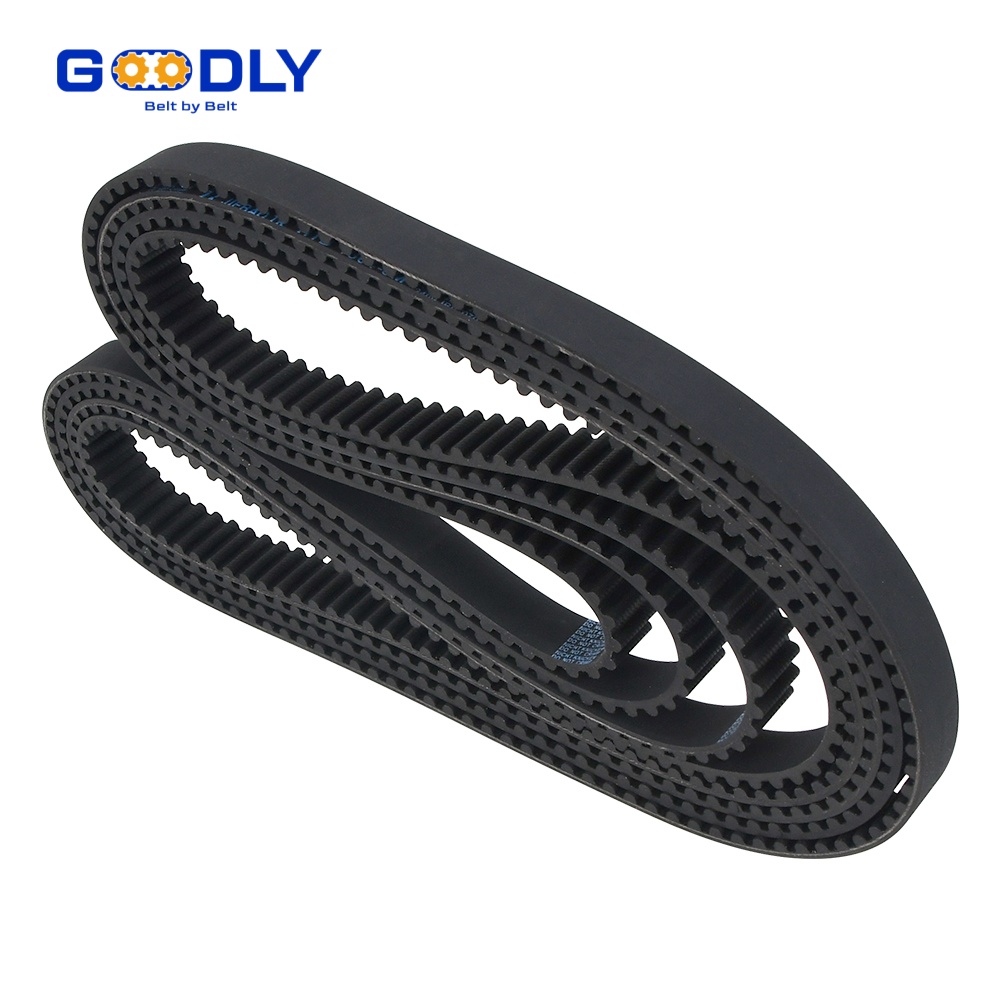
The pattern behind most early replacements is that the belt is treated as the problem when it is the messenger. If a drive consumes a belt every few months, the next belt will do the same unless the tension, alignment, load or environment is corrected — the tooth profiles and pitches guide explains how profile choice itself can be part of that correction.
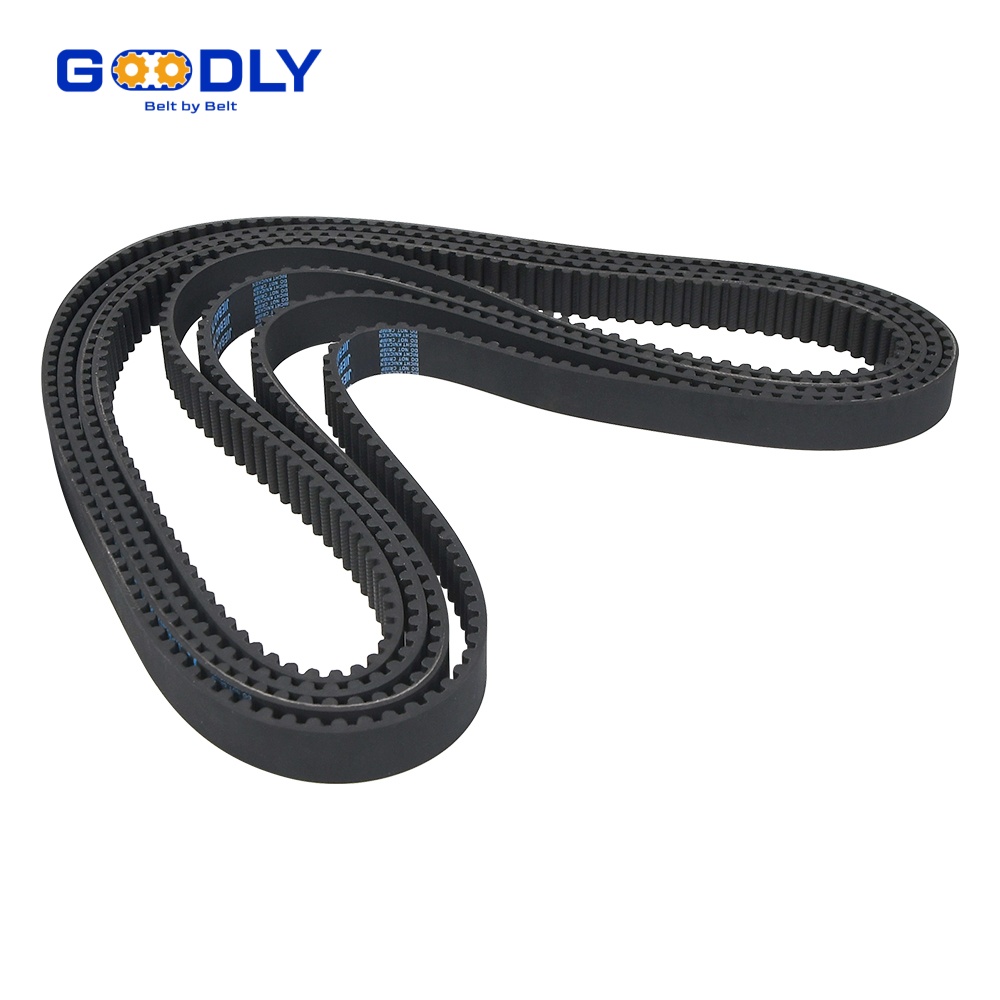
How Often to Replace Timing Belts: Rules for High-Duty Equipment
High-duty equipment — three-shift converting lines, corrugated stackers, die-cutters, 24/7 conveying — compresses every wear mechanism. For these drives, the practical answer to how often to replace timing belt assemblies is: plan at 70% of expected life, inspect monthly, and replace on any structural signal.
- Plan the change before the belt asks for it. Schedule replacement at 70-80% of the expected running hours for the duty class, inside a planned stop.
- Inspect monthly, not annually. Continuous heavy-duty drives earn a monthly stopped visual and a quarterly tension log; the cost is minutes against hours of unplanned stop.
- Replace matched sets together. Where two belts share a drive train, a fresh belt beside a worn one loads the new belt harder and shifts timing on synchronised stations.
- Check the pulleys at every change. Worn pulley teeth accelerate new-belt wear; a hook gauge or a visual against a known-good pulley catches it before it eats the replacement.
- Keep critical spares on site. Two spares for every line-stopping drive, exact code recorded — a 3 a.m. failure should be a shelf pick, not a freight quote, as the sizes and dimensions guide explains for reading belt codes.
- Log the outcome. Record hours achieved, wear pattern and cause. Two replacement cycles turn guesswork into a real interval for that machine.
Replacement Timing Belts That Match OEM Specs: Contact GOODLY
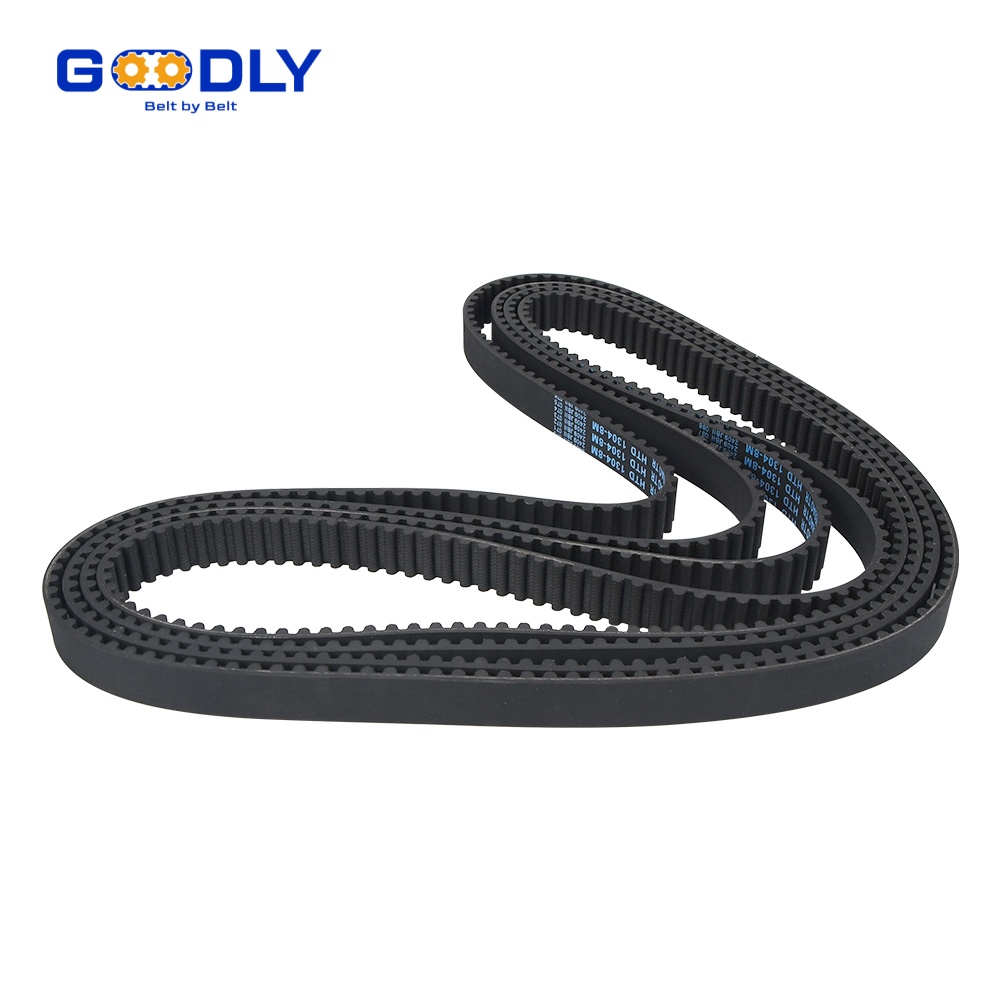
A replacement belt only restores the machine if it matches the original specification in every dimension that matters: pitch and profile, tooth count and pitch length, width, cord type, body compound, and any coating, cleat or special machining. GOODLY manufactures timing belts to OEM drawings as well as standard profiles, so a replacement can be a like-for-like part rather than the nearest catalogue size. Send the belt marking, the machine data plate photo or a worn sample and our engineers confirm the specification before anything is moulded — the background on our plant and quality system is on the about page.
Spec matched, not guessed
Pitch, length, width, cord and compound confirmed against your OEM data or sample.
One plant, full chain
Cord tensioning, moulding and coating in-house for batch-to-batch consistency.
3-5 day prototypes
Custom lengths and widths sampled fast so a stop does not wait on tooling.
Replacement record
Each belt supplied with its code and construction documented for your maintenance log.
How often should industrial timing belts be replaced?
Plan replacement at 70-80% of expected running life for the duty class: roughly 15,000 hours for light indexing, 10,000-12,000 for general conveying, 6,000-8,000 for heavy shock-loaded drives. Add a 36-month calendar backstop for ageing, and let inspection override both if cracks, glazing, fray or falling tension appear earlier.
What are the first warning signs that a timing belt needs replacing?
Noise and appearance change together. A chirp or squeal on acceleration points to tension loss; a rhythmic tick suggests a damaged tooth; fine cracks across the tooth roots, glazed tooth faces, frayed edges with flange polish, or teeth leaning in the running direction all mean the belt is at or past its replacement point. Cord lines visible on the back mean replace immediately.
Can a timing belt break without warning?
Almost never on a mechanically sound drive. Breaks are the end of a progression: tension loss lets teeth ride and hook, cracking weakens the tooth root, then a shock load or a jam finishes the job. The exception is a sudden jam or a foreign object in the guard, which is why jam detection and torque limiting matter on high-duty equipment.
Should I replace just the belt or the pulleys as well?
Replace the belt, then inspect the pulleys. Worn or hooked pulley teeth will shorten the new belt's life dramatically, so pulleys showing tooth wear, polished flanks or damaged flanges should be replaced at the same time. On drives with matched belts, change the pair together so load stays evenly split.
Not Sure Whether to Replace or Re-Specify?
Send GOODLY the belt marking, machine data plate photo or a worn sample. Our engineers confirm the exact replacement specification, advise whether the drive needs a different construction, and quote replacement belts with 3-5 working day prototypes where a custom size is involved.
Request a Replacement Belt Quote