What are the key considerations when selecting and using one-piece vulcanized industrial belts?
- Share
- Issue Time
- Dec 29,2025
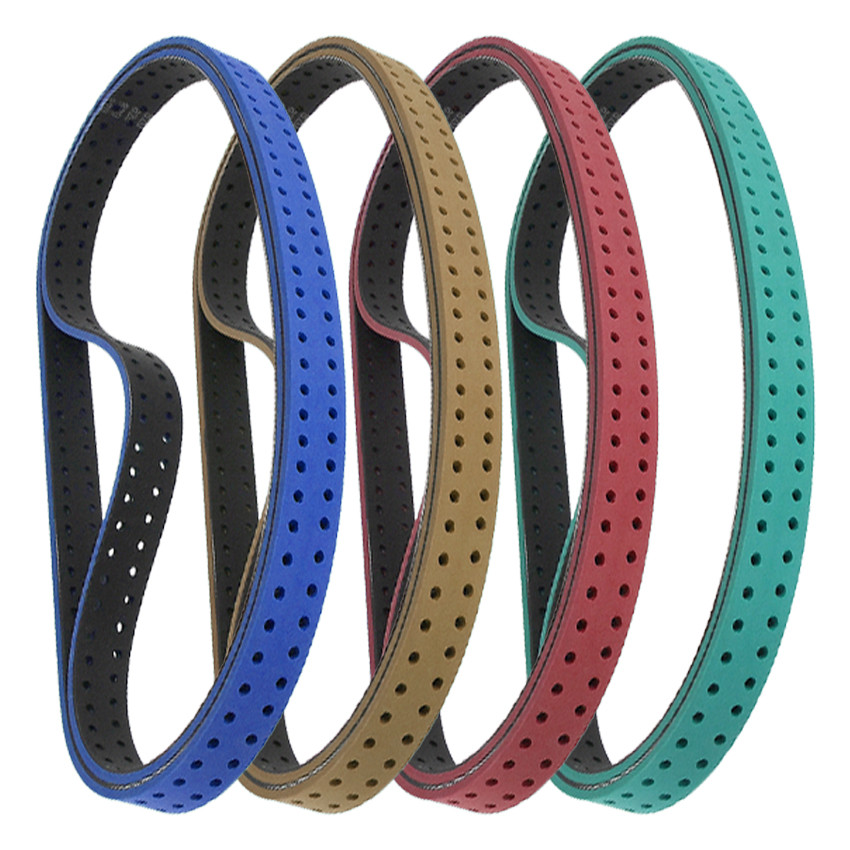
Selecting and using one-piece vulcanized industrial belts effectively requires focusing on key considerations that align the product with your application needs while ensuring proper operation and longevity.
First, for selection, start with matching product specifications to your operational requirements. Consider the load capacity and running speed of your equipment—opt for belts with reinforcement layers like steel cords for heavy-load or high-speed applications, as they offer superior tensile strength and stability. Next, align the belt material with the operating environment: natural rubber belts work well for general-purpose, dry conditions; nitrile rubber excels in oil-resistant scenarios (e.g., automotive or machinery with lubricant exposure); neoprene or EPDM is ideal for high-temperature (up to 120°C for specialized variants) or chemical-exposed environments; and FDA-compliant food-grade rubber is mandatory for food processing to ensure safety. Also, verify dimensional compatibility—ensure the belt’s width, thickness, and length match your pulleys’ specifications to avoid slipping or misalignment. Additionally, prioritize products that meet international standards (e.g., ISO 9856, DIN 22131) and hold relevant certifications (FDA, REACH) to guarantee quality and compliance.
For usage, proper installation is foundational. Ensure driving and driven pulleys are perfectly aligned (misalignment tolerance ≤ 0.5mm/m) to prevent uneven wear and deviation. Clean pulley surfaces thoroughly to remove dust, oil, or debris, as contaminants reduce friction and cause slipping. Tension the belt to the manufacturer’s recommended level—typically a deflection of 1-2% of the belt span under a specified load—avoiding over-tension (which strains bearings) or under-tension (which leads to slipping). After installation, run the equipment idle for 10-15 minutes to check for abnormal noise, vibration, or movement, adjusting as needed.
Regular maintenance is critical to extending service life. Conduct daily visual inspections for signs of wear, cracks, deformation, or loosening—replace damaged belts immediately to avoid equipment downtime. Keep the belt clean using mild cleaners; avoid harsh solvents that degrade the rubber. Monitor tension periodically, as belts naturally relax over time, and adjust accordingly. Control the operating environment: standard belts perform best between -10°C and 80°C, so avoid extreme temperatures, direct sunlight, or contact with sharp objects that could puncture or tear the belt.
Finally, address common issues promptly. If slipping occurs, check tension first (adjust center distance or use a tensioner), clean pulley surfaces, or upgrade to a higher-strength belt if the load exceeds capacity. For deviation, realign pulleys, replace unevenly worn belts, or adjust guide rollers. By integrating these considerations into selection and usage, you can maximize the efficiency, reliability, and lifespan of one-piece vulcanized industrial belts in your operations.