How do vulcanized and spliced belts differ, and how to guarantee quality?
- Share
- Issue Time
- Dec 29,2025
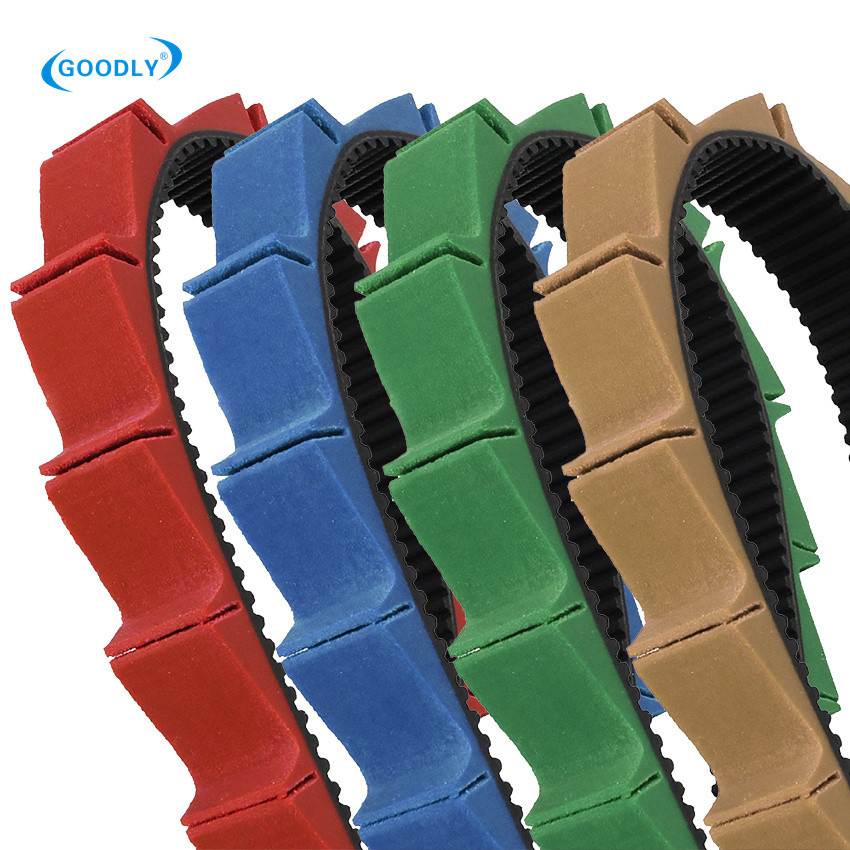
The biggest difference between vulcanized and spliced belts lies in structure and performance, while the quality of vulcanized belts relies on strict production and inspection processes.
DifferencesTraditional spliced belts are assembled by joining separate belt segments, which creates weak joints that are prone to tearing, separation, and uneven tension during operation. Their service life is usually only 1–3 years, and they perform poorly in high-load or high-speed scenarios.One-piece vulcanized belts are molded and cured as a single seamless unit, with no joints at all. This structure enables them to distribute force evenly, boasting 30–50% higher tensile strength than spliced belts. They also have a longer service life (3–8 years), more stable operation, and stronger resistance to harsh conditions like high temperature or chemical corrosion.
Quality Guarantee Measures
Raw Material Screening: High-grade rubber (natural rubber, nitrile rubber, etc.) and reinforcement materials (polyester canvas, steel cords) are tested for tensile strength, elasticity, and compatibility, with unqualified materials rejected upfront.
Precision Vulcanization: The production process uses computerized control to maintain stable temperature (150–180°C), pressure (10–20MPa), and curing time (15–30 minutes), ensuring the rubber and reinforcement layers bond uniformly and tightly.
Strict Finished Product Inspection: Every batch of vulcanized belts undergoes dimensional checks (width, thickness, length) and performance tests (tensile strength, wear resistance) to meet ISO 9856 and DIN 22131 standards. Visual inspections also eliminate products with defects like bubbles or cracks.
Systematic Quality Management: Compliance with ISO 9001:2015 ensures full traceability of each product batch, from raw material procurement to final shipment, maintaining consistent quality standards.