How to maintain vulcanized belts and troubleshoot common issues?
- Share
- Issue Time
- Dec 29,2025
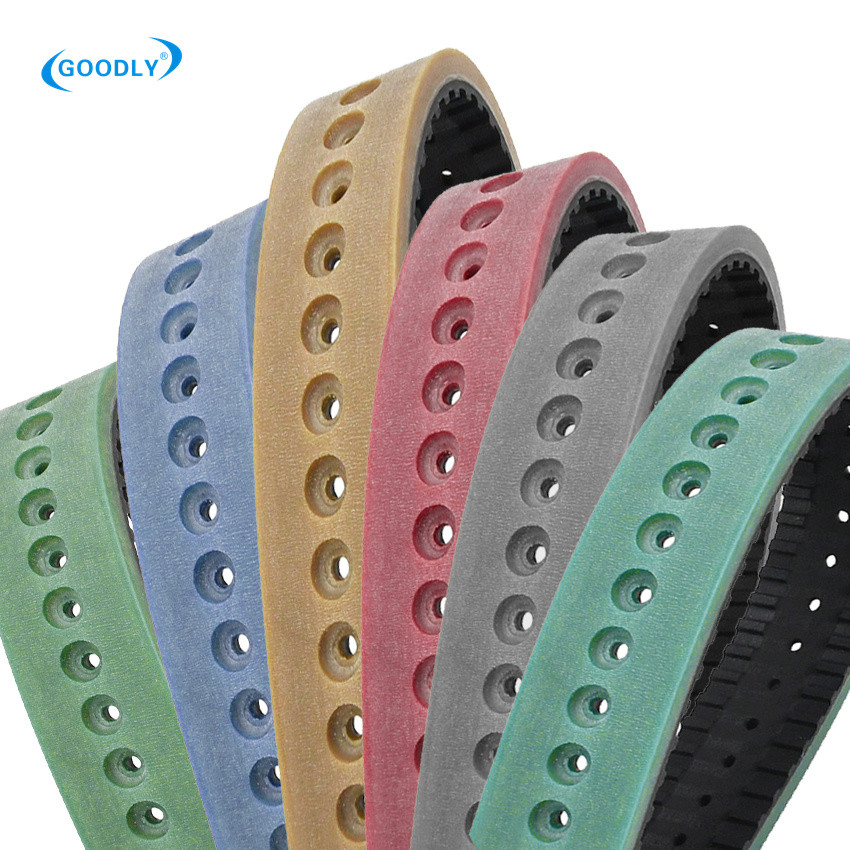
Proper maintenance is key to maximizing the service life of one-piece vulcanized industrial belts, while timely troubleshooting of common issues ensures stable equipment operation.
Daily Maintenance Measures
Regular Inspection: Conduct daily visual checks for signs of wear, cracks, deformation, or delamination on the belt surface and edges. If any damage is found, replace the belt immediately to avoid sudden failure during operation.
Keep Clean: Wipe the belt surface regularly with a soft cloth to remove dust, oil stains, or corrosive substances. Avoid using harsh solvents (such as strong acids or alkalis), as they can degrade the rubber material and weaken the reinforcement layers.
Tension Adjustment: Check belt tension once a week. The ideal tension is that the belt deflects by 1–2% of its span length under a moderate load. Over-tension will strain the belt and pulley bearings, while under-tension will cause slipping and accelerated wear. Adjust the pulley center distance or tensioner to maintain proper tightness.
Environmental Control: Avoid exposing the belt to extreme temperatures (standard belts work best between -10°C and 80°C), direct sunlight, or sharp objects. For belts used in high-temperature or chemical environments, choose specially formulated variants (e.g., EPDM rubber for heat resistance) to ensure durability.
Troubleshooting Common Issues
Belt Slipping
Causes: Insufficient tension, oily or dusty pulley surfaces, overload operation.
Solutions: Adjust the tension to the recommended level; clean pulley surfaces thoroughly to restore friction; reduce equipment load or upgrade to a higher-strength belt if the current one is mismatched.
Belt Deviation
Causes: Misaligned pulleys, uneven belt wear, improper guide roller position.
Solutions: Realign driving and driven pulleys to ensure they are parallel and concentric (misalignment tolerance ≤ 0.5mm/m); replace the belt if it is unevenly worn; adjust the position of guide rollers to correct the belt’s running direction.
Premature Wear or Cracking
Causes: Excessive friction, extreme temperature exposure, poor-quality raw materials.
Solutions: Check if the pulley surface is too rough and polish it if necessary; switch to a temperature-resistant belt variant for harsh environments; verify that the belt complies with international standards (e.g., ISO 9856) to ensure material quality.