How to install and maintain PU timing belts correctly to extend their service life?
- Share
- Issue Time
- Dec 29,2025
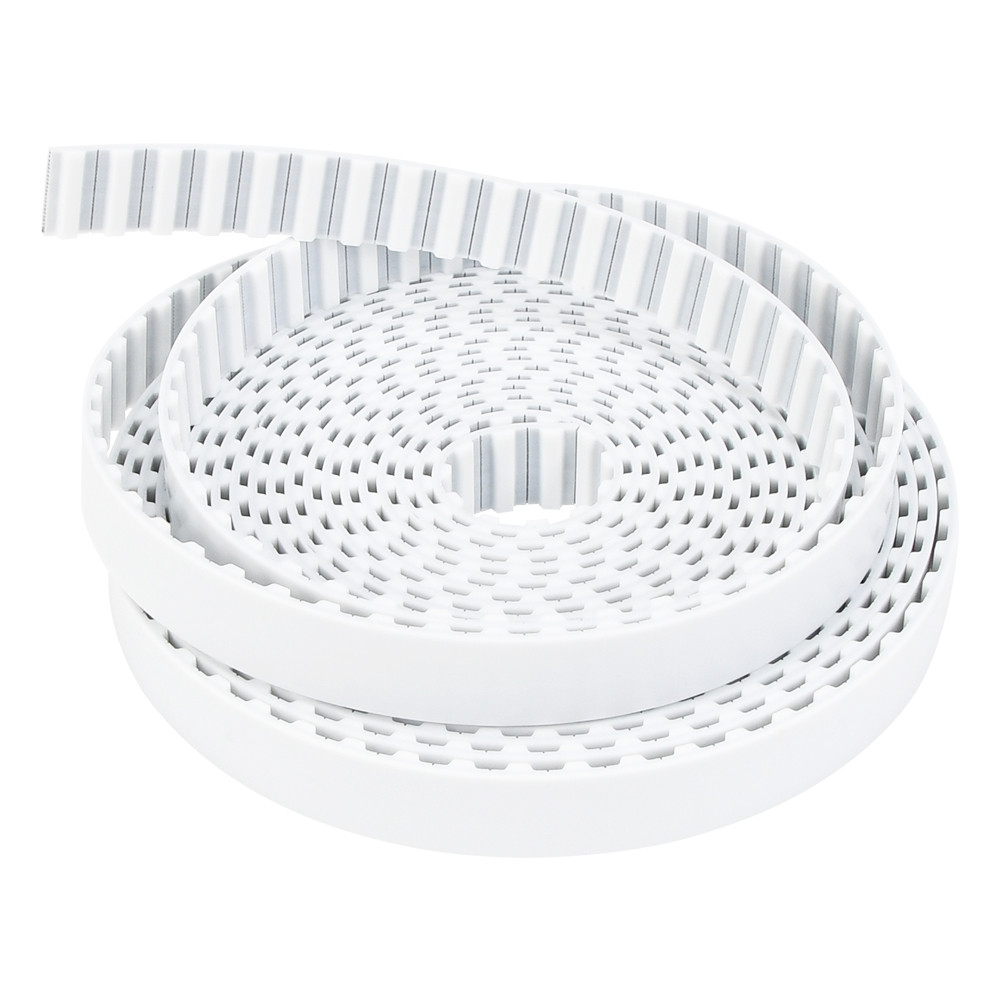
Correct installation and scientific maintenance are the key to maximizing the service life of PU timing belts. The specific operations are as follows:
Standard Installation Steps
Pulley preparation
Ensure that the driving and driven pulleys are aligned concentrically and parallelly; the misalignment tolerance should not exceed 0.1 mm per meter of center distance. If the pulleys are misaligned, it will cause uneven wear of the belt teeth and edges, and even lead to belt detachment. At the same time, clean the pulley surface to remove dust, oil stains and burrs to avoid scratching the belt during meshing.
Belt installation
Loosen the tensioning mechanism or adjust the center distance between the pulleys to expand the space between the pulleys. Install the PU timing belt on the pulley teeth without prying or pulling hard, so as to prevent the belt teeth from being damaged or the belt body from being stretched and deformed. After installation, adjust the center distance or tensioner to achieve the proper tension.
Tension verification
The correct tension standard: press the middle of the belt span with a force of 10–15 N, and the deflection is 1–2% of the span length. Excessive tension will increase the load of the belt and bearings, causing premature fatigue; insufficient tension will lead to tooth jumping and transmission slippage. After adjustment, run the equipment idle for 10–15 minutes, and recheck the tension after the belt is fully fitted.
Daily Maintenance Measures
Regular inspection
Conduct visual inspections once a week: check whether the belt has tooth wear, cracks, delamination or edge damage; check whether the tension is appropriate. If any abnormality is found, replace or adjust the belt in time.
Environmental cleaning
Keep the transmission system clean, and avoid the belt coming into contact with oil, solvents and sharp objects. If the belt is contaminated by oil stains, wipe it clean with a dry cloth in time; do not use water or detergent to clean it, so as to prevent the PU material from being degraded.
Avoid overload operation
Do not exceed the rated load and speed of the belt. Overload operation will cause the belt teeth to shear or the belt body to elongate permanently, which will seriously affect the service life.
Timely replacement
When the belt is found to have obvious wear (tooth thickness is reduced by more than 20%) or elongation (transmission accuracy is reduced), replace it in time. It is recommended to replace the timing pulley at the same time if it is also worn, so as to ensure the meshing effect of the new belt.