How do I choose the right timing belt tooth profile (HTD, STD, T, AT)?

How do I choose the right timing belt tooth profile (HTD, STD, T, AT)?

Short answer: match the tooth profile to your drive first, then confirm pitch, width and belt length. HTD (curvilinear) suits higher torque and quieter runs, STPD/AT profiles suit precision positioning, and classical trapezoidal (T/AT, MXL–XL–L) profiles are common in legacy equipment. Always cross-check the pitch against your existing pulleys before ordering.

Tooth profile: match the pulleys, not the catalog

The profile must mate exactly with your pulley. If you keep the existing pulleys, identify the pitch (for example 5 mm, 8 mm, or 1/2 inch) and the profile family marked on the old belt. If you are free to choose pulleys, select the profile from the torque and speed requirements of the drive.

Profile familyTypical useNotes
HTD (3M/5M/8M/14M)General power transmission, higher torqueCurvilinear teeth, smoother mesh, less vibration
STD / RPP (8M, 14M)Higher precision and load sharingRound-profile variants designed for reduced backlash
T / AT (T5, T10, AT5, AT10)European machinery, positioning drivesAT profiles carry more load than T profiles at the same pitch
Classical inch (MXL, XL, L, H)Legacy US equipmentTrapezoidal teeth; widely used in older machines
Timing belt and pulley meshing on industrial machine
Correct tooth meshing is the first checkpoint of any selection.

Three checks before you order

1. Pitch and profile

Measure or read the pitch of the pulley and confirm the profile family. A wrong pitch will not seat, and a wrong profile will wear quickly.

2. Belt length

Use the pitch length marked on the old belt, or calculate from center distance and pulley diameters. Tolerance is normally a few millimeters.

3. Width by load

Wider belts carry more torque. Size the width from the drive power, speed, and service factor, with a reasonable safety margin.

Material and cord options

  • Body: neoprene rubber or PU; rubber suits most industrial drives, PU suits clean, oily or hygienic environments.
  • Tension cord: glass fiber for standard use, aramid (Kevlar-type) for shock loads and low stretch, steel for high-load PU belts.
  • Cover: nylon fabric reduces friction noise; special covers improve oil or heat resistance in harsh conditions.
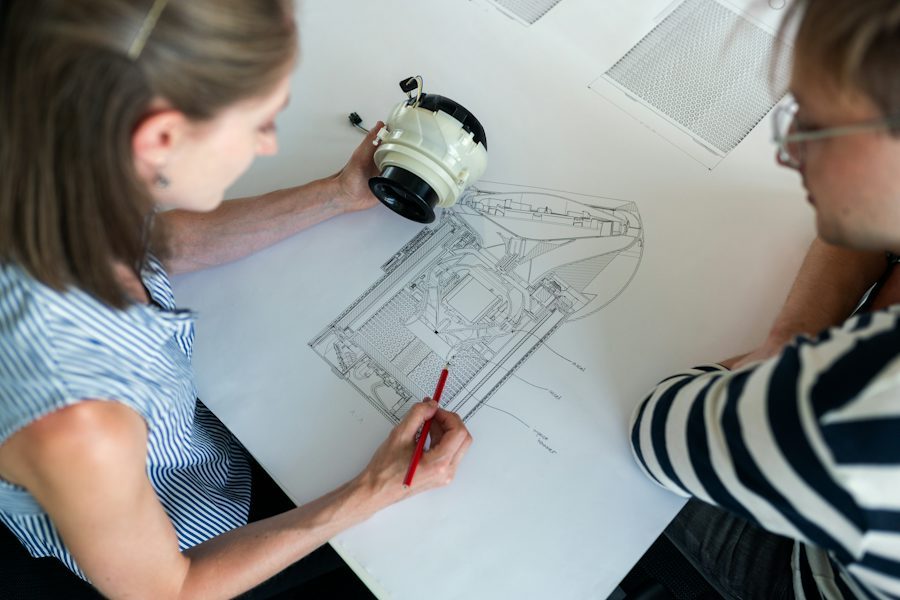
Engineer measuring a timing belt in workshop
Confirm pitch, width and length with actual measurements.
Workshop timing belt production line
Standard profiles are produced with proven tooling and inspection.
If you are replacing a belt from another brand, the profile and pitch are what matter for compatibility — the brand name does not. GOODLY Belts is an independent manufacturer and offers cross-reference sizing for common international profiles.

Not sure which profile fits your machine?

Send us your old belt dimensions or machine data — our engineers will confirm the profile, pitch and width within one working day.

Ask an Engineer
font-family: inherit; color: #333333; line-height: 1.7; font-size: 16px; background: #ffffff; padding: 4px 0 8px 0; } .faq-answer-b1s201 h2 { font-family: inherit !important; font-size: 28px !important; font-weight: 700 !important; line-height: 1.25 !important; color: #002eb9 !important; margin: 34px 0 14px 0 !important; } .faq-answer-b1s201 h3 { font-family: inherit !important; font-size: 20px !important; font-weight: 700 !important; line-height: 1.3 !important; color: #333333 !important; margin: 22px 0 10px 0 !important; } .faq-answer-b1s201 p { margin: 0 0 14px 0; } .faq-answer-b1s201 a { color: #f39f16 !important; text-decoration: none; } .faq-answer-b1s201 .ans-lead { background: #fdf6e9; border-left: 4px solid #f39f16; padding: 18px 22px; border-radius: 6px; margin-bottom: 26px; } .faq-answer-b1s201 .ans-lead p { margin: 0; font-size: 17px; } .faq-answer-b1s201 .ans-fig { margin: 18px 0 26px 0; } .faq-answer-b1s201 .ans-fig img { width: 100%; max-width: 100%; height: auto; border-radius: 8px; display: block; box-shadow: 0 2px 10px rgba(0,0,0,0.08); } .faq-answer-b1s201 .ans-fig figcaption { font-size: 13px; color: #808080; margin-top: 8px; } .faq-answer-b1s201 .ans-grid { display: flex; flex-wrap: wrap; gap: 16px; margin: 18px 0 26px 0; } .faq-answer-b1s201 .ans-card { flex: 1 1 260px; background: #f8f9fb; border: 1px solid #e6e9f0; border-radius: 8px; padding: 18px 20px; transition: transform 0.25s ease, box-shadow 0.25s ease; } .faq-answer-b1s201 .ans-card:hover { transform: translateY(-4px); box-shadow: 0 8px 20px rgba(0,46,185,0.12); } .faq-answer-b1s201 .ans-card h3 { margin: 10px 0 8px 0 !important; } .faq-answer-b1s201 .ans-card p { margin: 0; font-size: 15px; } .faq-answer-b1s201 .ans-card .fa { color: #f39f16; font-size: 22px; } .faq-answer-b1s201 table.ans-table { width: 100%; border-collapse: collapse; margin: 16px 0 26px 0; font-size: 15px; } .faq-answer-b1s201 table.ans-table th { background: #002eb9; color: #ffffff; padding: 12px 14px; text-align: left; } .faq-answer-b1s201 table.ans-table td { border: 1px solid #e6e9f0; padding: 11px 14px; } .faq-answer-b1s201 table.ans-table tr:nth-child(even) td { background: #f8f9fb; } .faq-answer-b1s201 ul.ans-list { padding-left: 20px; margin: 0 0 22px 0; } .faq-answer-b1s201 ul.ans-list li { margin-bottom: 8px; } .faq-answer-b1s201 .ans-note { background: #eef2fc; border-left: 4px solid #002eb9; border-radius: 6px; padding: 16px 20px; margin: 0 0 26px 0; font-size: 15px; } .faq-answer-b1s201 .ans-cta { text-align: center; background: #002eb9; border-radius: 10px; padding: 26px 20px; margin-top: 10px; animation: bs1fade 0.6s ease-out; } .faq-answer-b1s201 .ans-cta h3 { color: #ffffff !important; margin: 0 0 8px 0 !important; } .faq-answer-b1s201 .ans-cta p { color: #dce4ff; margin: 0 0 16px 0; } .faq-answer-b1s201 .ans-btn { display: inline-block; background: #f39f16; color: #ffffff !important; font-size: 14px; font-weight: 700; padding: 12px 30px; border-radius: 24px; transition: background 0.25s ease, transform 0.25s ease; } .faq-answer-b1s201 .ans-btn:hover { background: #d8890e; transform: translateY(-2px); } @keyframes bs1fade { from { opacity: 0; transform: translateY(10px); } to { opacity: 1; transform: translateY(0); } }