Can PU timing belts be perforated for vacuum conveying?
- Share
- Issue Time
- Nov 9,2026
Direct answer: Yes, perforating is a standard option on our PU timing belts. Holes, slots or shaped cutouts are punched or drilled into the belt body after production, so paper, film, labels or small parts can be held by vacuum while the belt indexes them. The belt keeps its toothed drive function, and you keep full control of the hole pattern because it is made to your layout rather than a catalogue pattern.
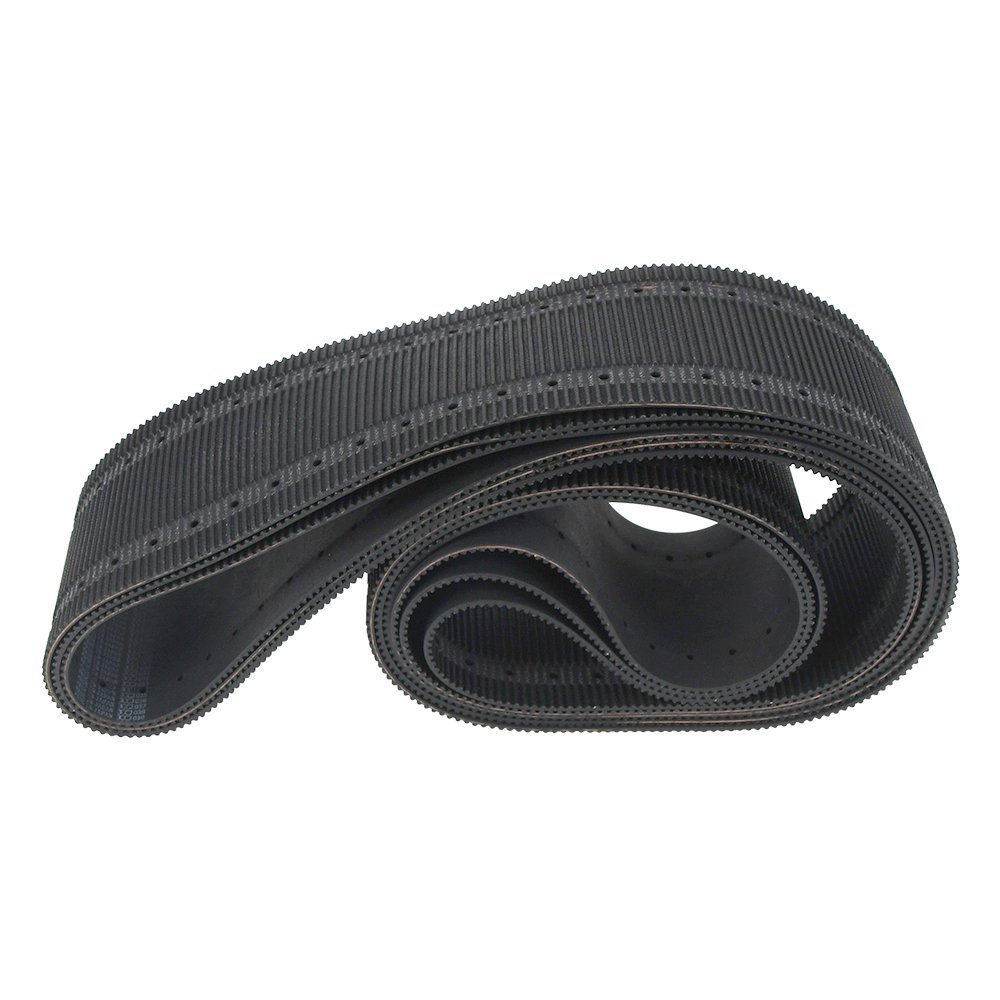
Typical perforation patterns and where they fit
| Pattern | Suited to | Design notes |
|---|---|---|
| Single row of round holes | Paper feed, label pick-up, light film conveying | Lowest impact on belt strength; easy to seal on a vacuum plenum |
| Multiple rows or staggered holes | Wider products needing distributed suction | Check web width between rows so the belt does not weaken |
| Slots or elongated holes | Uneven part sizes, or suction along the belt travel | Slot ends need radiused corners to avoid crack starters |
| Full-width punched pattern at defined stations | Indexing conveyors that grip at fixed positions | Positions must match the machine pitch; give us the pitch drawing |
| Ground teeth plus perforation | Precision indexing with suction, e.g. packaging infeeds | Ground tooth flanks keep engagement smooth under vacuum load |
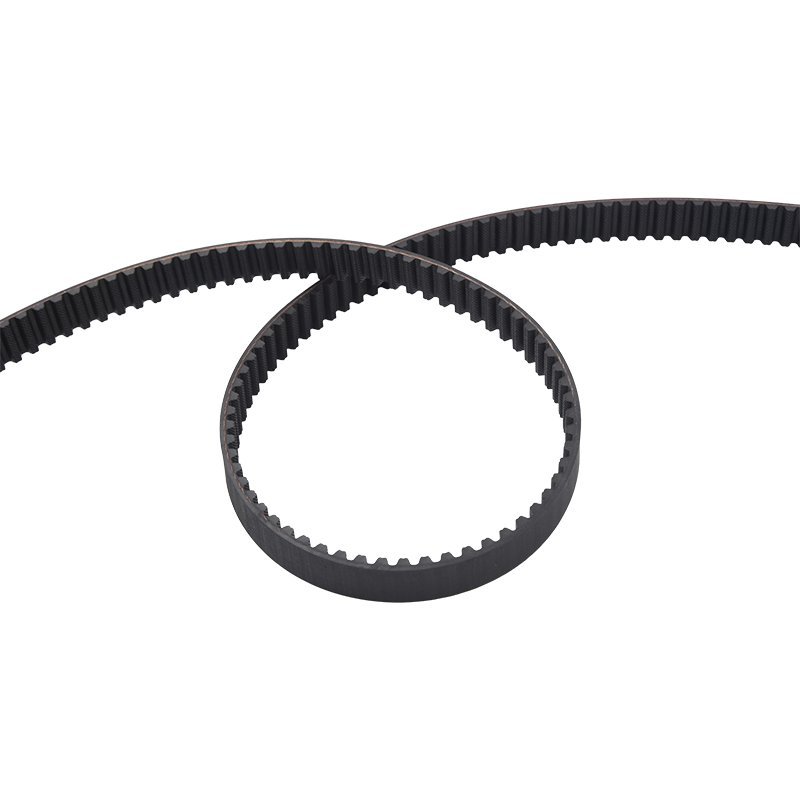
Design limits to respect
- Keep a minimum edge distance, commonly several millimetres depending on hole size, so the belt edge and the cord line stay intact.
- Keep solid web between holes: if the total cut area is too high, the belt loses traction and can bow between pulleys.
- Match hole positions to the vacuum plenum, not the other way round; punching after design keeps the pattern aligned with your table.
- Avoid holes through the tooth zone if the back face runs in a pulley, and avoid them on the cord line if the face does.
- On vacuum applications the belt also flexes through the pulleys every revolution: aggressive cutouts shorten flex life, so use the smallest pattern that does the job.
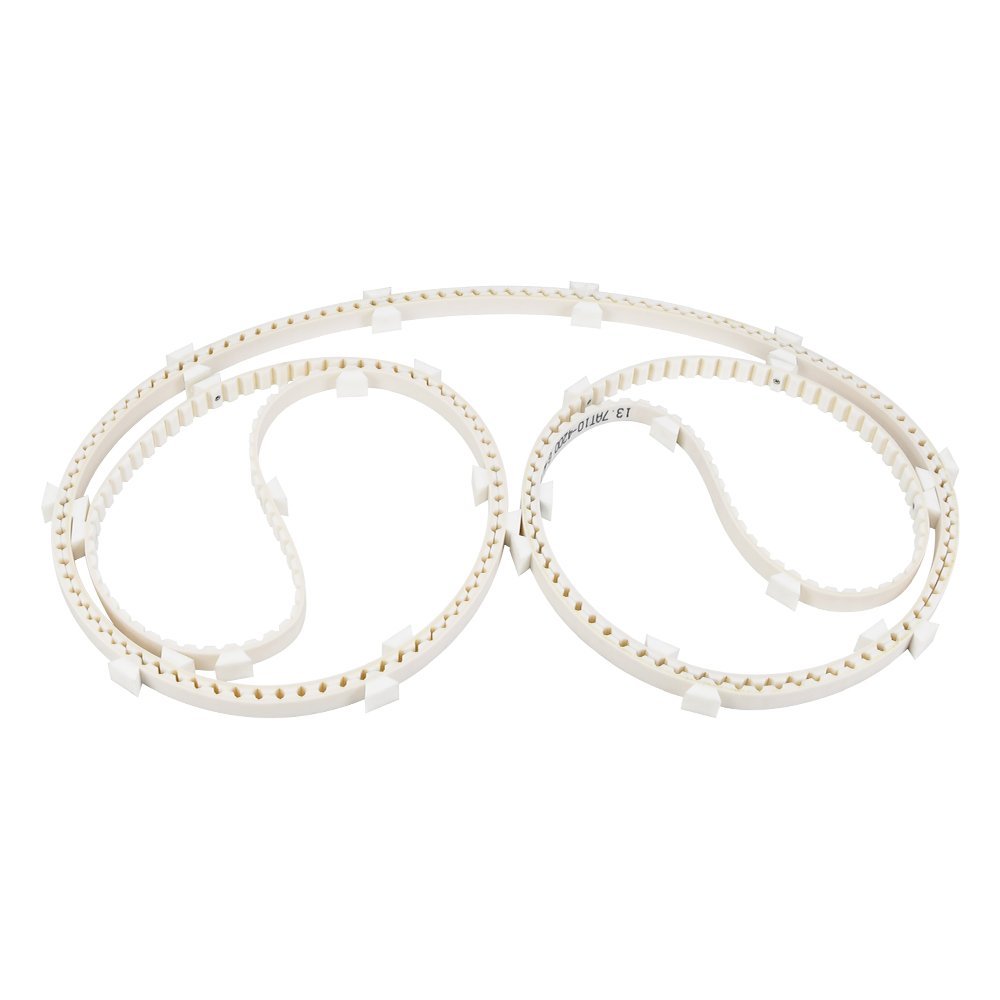
What to send for a perforated belt quote
- Belt marking or dimensions: pitch length, width, pitch and tooth system.
- Hole drawing: diameter or slot size, spacing, rows, and positions measured from a datum such as the belt end or a tooth.
- Vacuum duty: what you convey, the suction area and the holding force you need, so we can sanity-check the pattern.
- Whether the belt must be endless, or an open belt welded to length is acceptable.
- Any sealing or coating on the back face if the vacuum plenum sits against the belt surface.
Hole size, density and position are agreed on a drawing before punching. Because perforation is irreversible, we confirm the layout with you in writing first.
Send your hole pattern
Email sales@goodlybelts.com with the belt marking and a sketch of the holes: diameter, spacing, rows and datum. We will confirm feasibility and edge distances, propose the construction, and return a quote with lead time.
Request a perforated belt quote