T10, AT10, L or 8M: how do I choose between metric and imperial pitches?
- Share
- Issue Time
- Nov 12,2026
Direct answer: Start from the pulley, not from the belt. A timing belt only runs correctly on a pulley cut with the same tooth geometry and pitch, so the pulleys already on the machine decide the family, and the torque and speed decide the size within that family. Metric T and AT profiles suit general industrial drives on metric machines, HTD 3M to 14M and STD profiles carry more load per tooth on compact drives, and inch-pitch MXL, XL, L and H belts remain the standard on older North American equipment. Pitches that look almost identical, such as L at 9.525 mm and T10 at 10 mm, are separate systems and do not interchange.
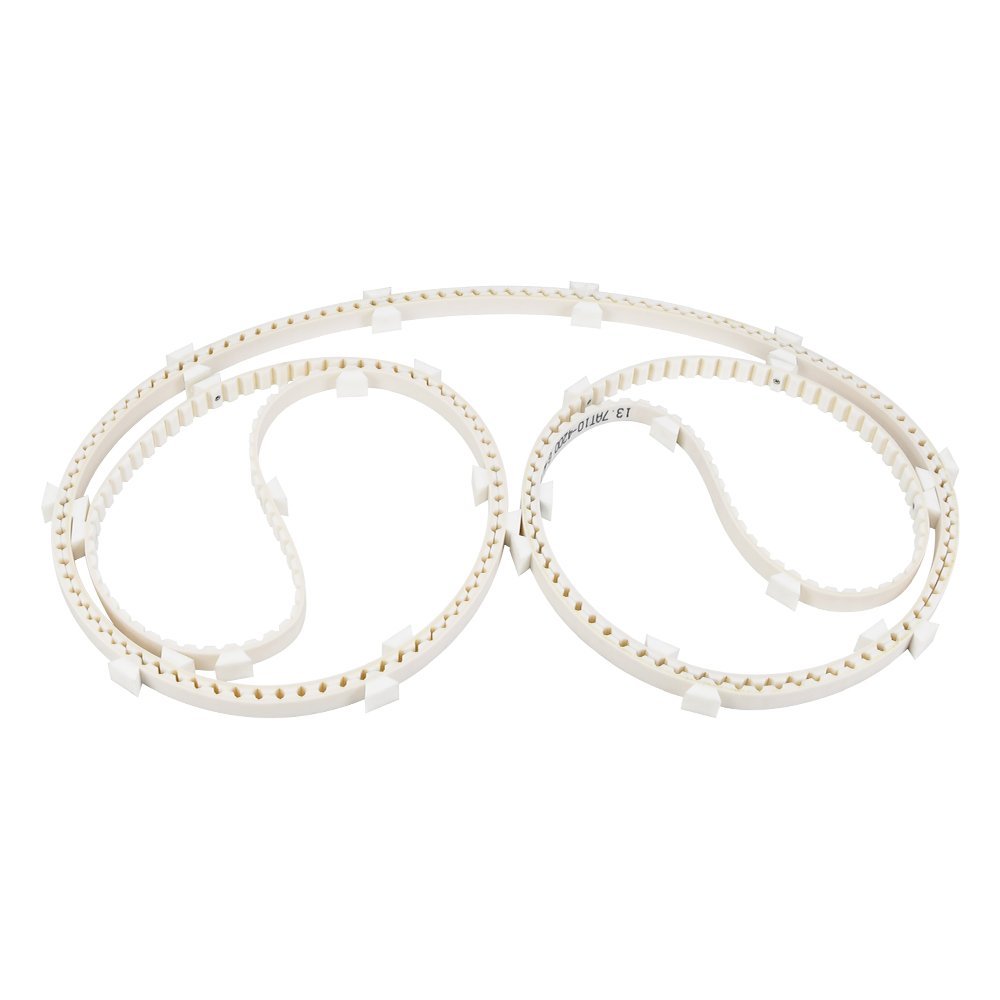
The pitch families at a glance
| Family | Pitch | Tooth shape | Where it fits |
|---|---|---|---|
| MXL | 2.032 mm (0.080 in) | Trapezoidal | Miniature drives, instruments, small lab and office machines |
| XL | 5.08 mm (0.200 in) | Trapezoidal | Light drives, small conveyors, light positioning axes |
| L | 9.525 mm (0.375 in) | Trapezoidal | General light to medium drives on older North American machines |
| H | 12.7 mm (0.500 in) | Trapezoidal | Heavier drives where an inch-pitch system is already in place |
| T5 / T10 | 5 mm / 10 mm | Trapezoidal metric | General industrial drives on European and Asian machines |
| AT5 / AT10 | 5 mm / 10 mm | Modified trapezoid | Higher tooth load than T, positioning and indexing axes |
| 3M / 5M / 8M / 14M | 3 to 14 mm | Curvilinear (HTD type) | Compact drives transmitting high torque for their width |
| S2M to S8M, 14M STD | 2 to 14 mm | Curvilinear (STD type) | Similar role to HTD but a different flank, so a separate pulley family |
Why close pitches still do not interchange
Two families can share a nominal size and still refuse to run together. L pitch is 9.525 mm and T10 is 10 mm: over 100 teeth that is a 47.5 mm difference in pitch length, so a T10 belt cannot sit in an L pulley no matter how the centre distance is adjusted. The same applies inside the metric world, where HTD 8M, STD S8M and the various GT and RPP profiles all use an 8 mm pitch but different tooth flanks. Mixing them wears the belt edge, loads one flank of each tooth and produces noise that sounds like a tension problem.
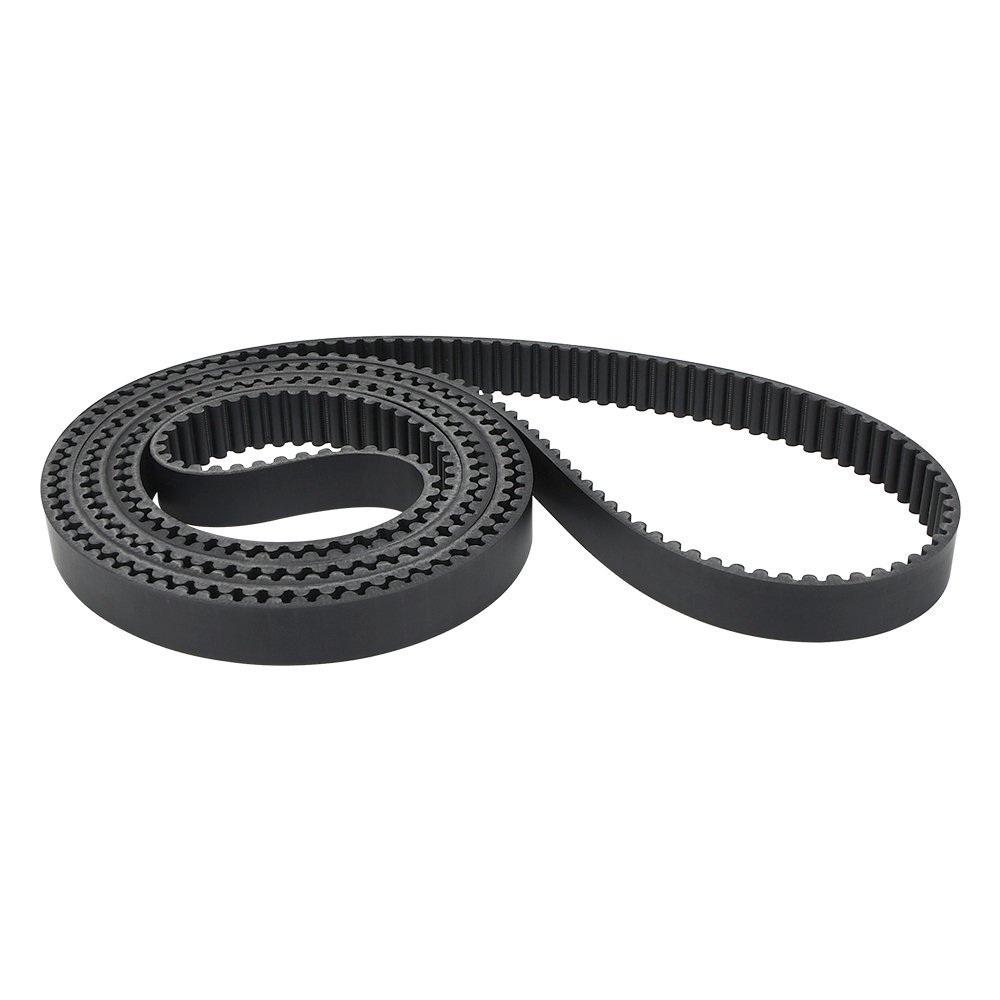
How to identify what is already on the machine
- Read the marking first. A code such as 800-8M-30 means 800 mm pitch length, 8M pitch, 30 mm width, and 320L075 means 32.0 in pitch length, L pitch, 0.75 in width.
- Count the teeth and divide the measured pitch length by the tooth count. That gives the pitch, which points to the family.
- Measure across 10 teeth with a caliper for a quick cross-check before trusting a worn marking.
- Inspect the pulley: count its teeth, measure the outside diameter and look at the flank shape. A worn pulley can accept the wrong belt just enough to confuse the diagnosis.
- Photograph the belt marking and the pulley tooth form when the marking is gone, and send both with the enquiry.
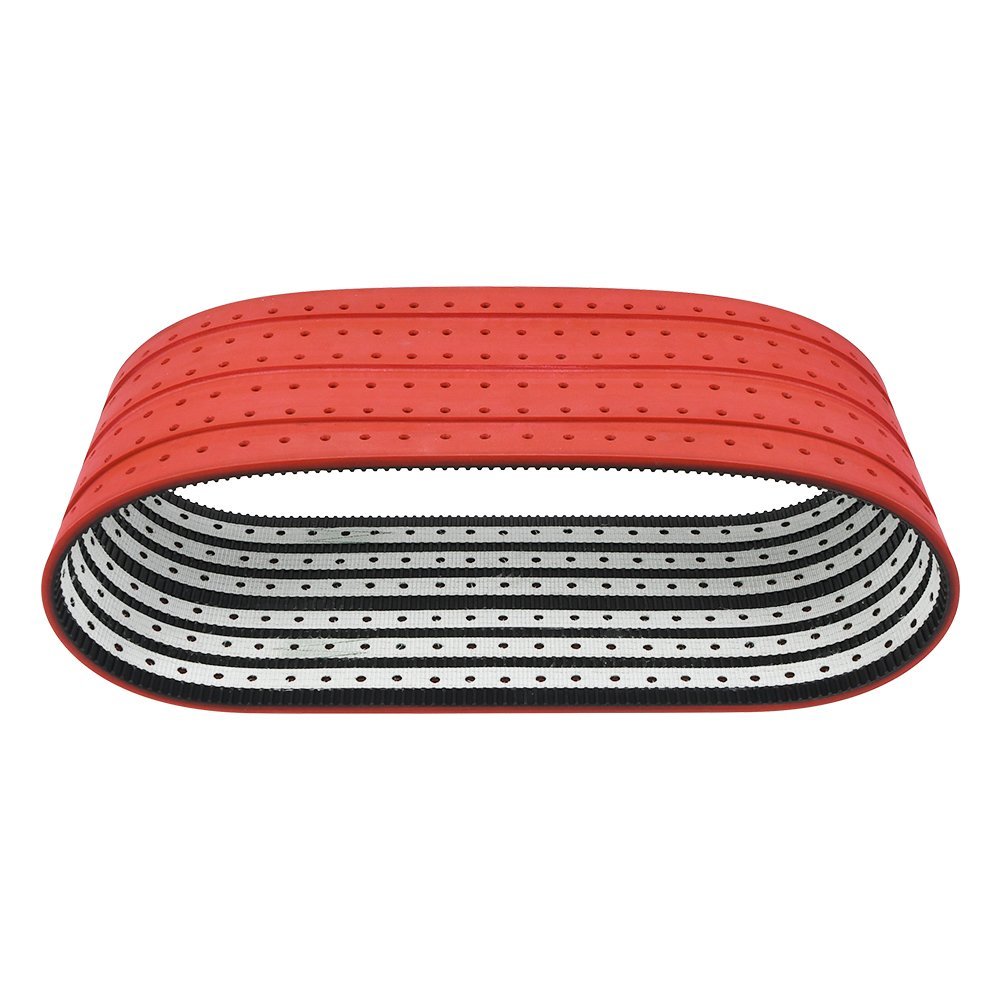
Choosing the size once the family is fixed
- Small pitch handles higher speed quietly; larger pitch handles higher torque without widening the belt.
- Check how many teeth are actually in mesh on the small pulley before accepting a rating. Fewer teeth in mesh means more load per tooth.
- Width is the second lever: doubling the width roughly doubles capacity, while increasing pitch changes speed smoothness and pulley size.
- Respect the minimum pulley tooth count for the family, otherwise the belt bends too tightly and the tooth roots crack.
- Standardize on one family per machine where possible. Mixed families mean more part numbers and more chance of a wrong belt at 2 a.m.
Send the marking or the pulley drawing
Email sales@goodlybelts.com with the belt marking, tooth count, pitch length and width, plus the pulley tooth count and outside diameter. We will confirm the family and quote the matching belt, or the belt and pulley set if the pulleys are worn.
Confirm my pitch family