Why does my PU timing belt jump teeth under load?
- Share
- Issue Time
- Nov 24,2026
Direct answer: A PU timing belt jumps teeth when the teeth cannot carry the load at the engagement it has, so the belt climbs out of the pulley and lands one or more teeth out of phase. It is almost never a sign that the PU compound is too soft. The dominant causes are tension below the correct setting, fewer than about six teeth in mesh on the small pulley, a shock or stall load above the belt rating, worn or wrong-profile pulley teeth, and a belt width that is marginal for the torque. Because a jumped belt usually keeps running, the fault gets blamed on the belt when the drive is the problem.
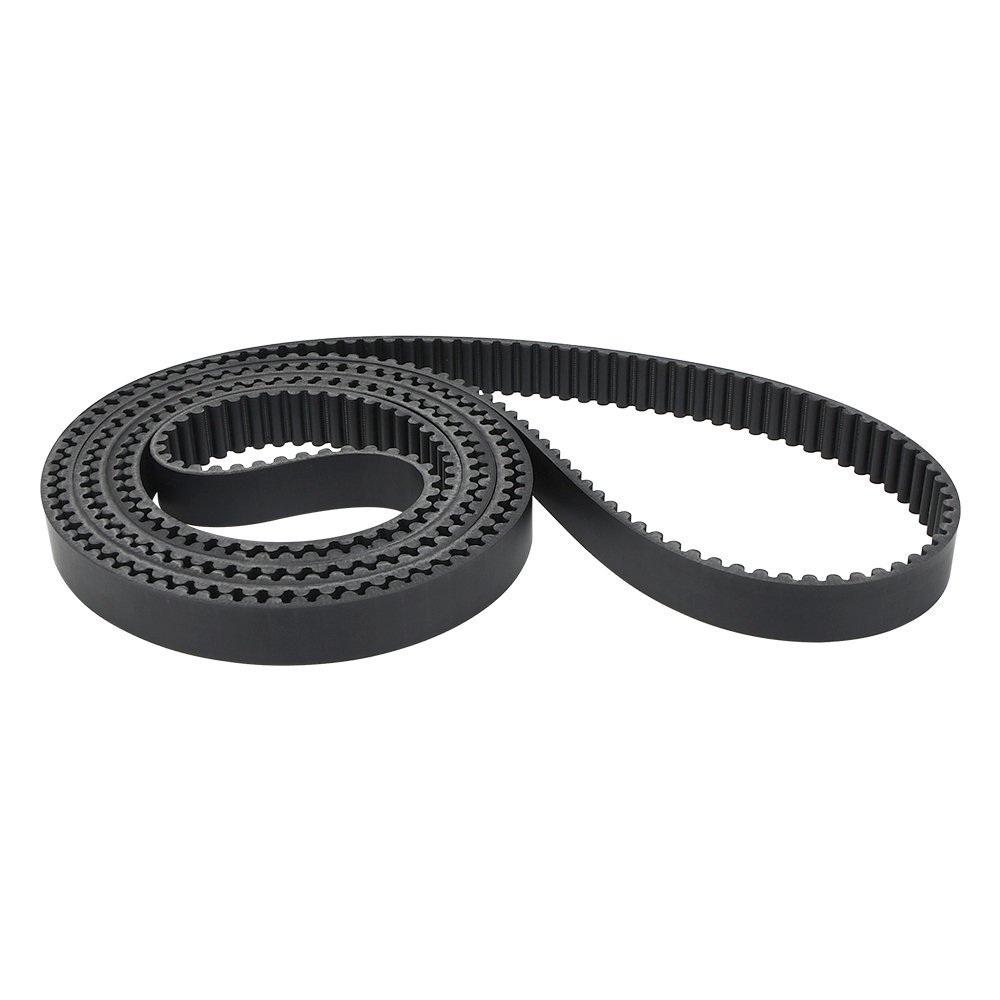
Jump or shear: they look similar and are not
Jump and tooth shear both stop the machine, but they leave different evidence. A jumped belt is intact, often with polished or rounded tooth tips and a line of black dust on the pulley flanges, and it will run again once re-tensioned and re-phased. A sheared belt has teeth torn off at the root and cannot be reused. If the belt is intact but out of phase, work through the drive. If teeth are missing, the load path itself is wrong and a new belt of the same size will fail the same way.
| What you see | Most likely cause | First check |
|---|---|---|
| Belt intact but one or more teeth out of phase | Tension below spec or tension lost after run-in | Span deflection against the drive data, then re-tension |
| Ratcheting only at start, stall or jam | Shock load above the belt rating | Starting torque, soft start or clutch, jam detection |
| Ratcheting on the small pulley only | Too few teeth in mesh or a small pulley below the minimum | Count teeth in mesh, compare with the minimum for the profile |
| Rounded or hooked tooth tips, dust on flanges | Long term marginal engagement, worn pulley teeth | Pulley tooth wear, centre distance, belt width |
| Belt rides up and off the pulley edge | Misalignment or a pulley with a damaged flange | Straight edge across both pulleys, flange condition |
| Fine black paste on the belt and pulley | Abrasion from running loose, plus contamination | Tension history, cleaning, guard condition |
The checks that actually fix it
- Set tension by measured span deflection or by the frequency method, not by feel. PU belts do not stretch much, which makes a loose belt easy to miss.
- Count the teeth in mesh on the small pulley. Six is the working minimum for most profiles, and below that the belt will ratchet long before it reaches its rated load.
- If engagement is short, add an idler to increase wrap, raise the centre distance, or go up one pulley size rather than simply tightening harder.
- Compare the belt width and tooth pitch with the torque and speed. A belt that is one size narrow will run for months and then jump on the first cold morning.
- Inspect pulley teeth with a light and a fingernail. Worn teeth lose the flank that carries the load, and no amount of tension replaces it.
- Remove the shock. A soft start, a torque limiter or a jam sensor costs less than the downtime a repeated jump causes.
When the answer is a different belt
If the drive is correctly tensioned, aligned and clean, and it still ratchets under normal load, the belt is being asked for more than its size allows. At that point the options are a wider belt of the same pitch, a coarser pitch with deeper teeth, or a change of transmission type for that axis. Choosing a harder compound rarely helps: it moves the failure from ratcheting to tooth shear or cord fatigue without adding capacity.
Send the drive details and we will check the sizing
Email sales@goodlybelts.com with the belt size, pulley tooth counts and diameters, centre distance, motor power and speed, and the moment the belt jumps. We will tell you whether tension, engagement or belt size is the limit, and what to change first.
Ask about tooth jump