How do I identify an unmarked timing belt so I can order the right replacement?
- Share
- Issue Time
- Nov 25,2026
Direct answer: Count the teeth and measure the pitch. Lay the belt flat, measure the length across ten tooth crests with a caliper or tape, and divide by ten: that number is the pitch, which points straight to the family, for example 80 mm for HTD 8M, 100 mm for T10 and 95.3 mm for L pitch. Combine the pitch with the top width and the tooth count, and the replacement part number falls out without any marking on the belt.
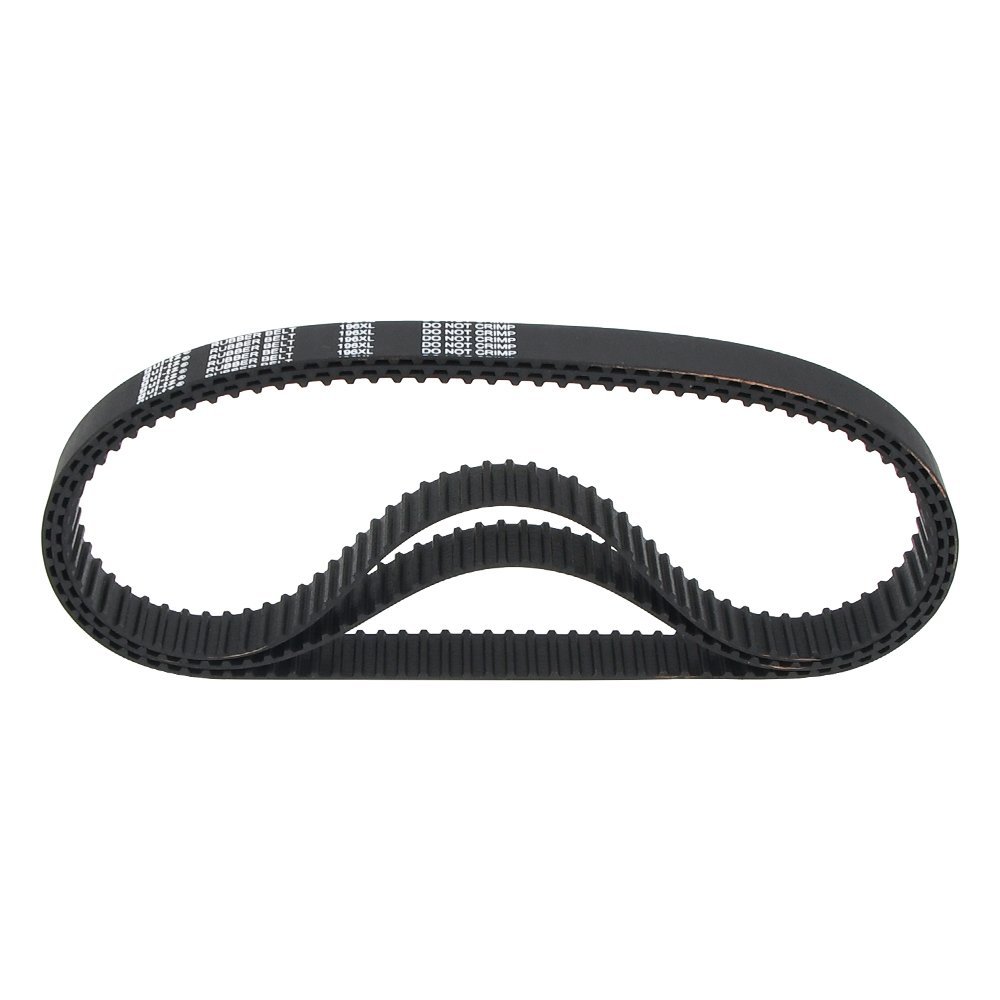
Measure these five things
- Tooth count: mark a tooth, walk a pen around the belt and count. This is the most reliable number on any belt, marked or not.
- Ten-tooth span: lay the belt flat, press it straight and measure from one tooth crest to the tenth crest beyond it, then divide by ten for the pitch.
- Top width: measure across the toothed face. Widths are usually round metric values such as 25 or 30 mm, or fractional inches such as 0.75 in.
- Overall thickness and tooth depth: a caliper measurement helps separate families that share a pitch but differ in construction.
- Tooth shape and cord: curved flanks point to HTD or STD families, flat flanks to T, AT or the inch-pitch families; a cut or broken end may reveal the cord type.
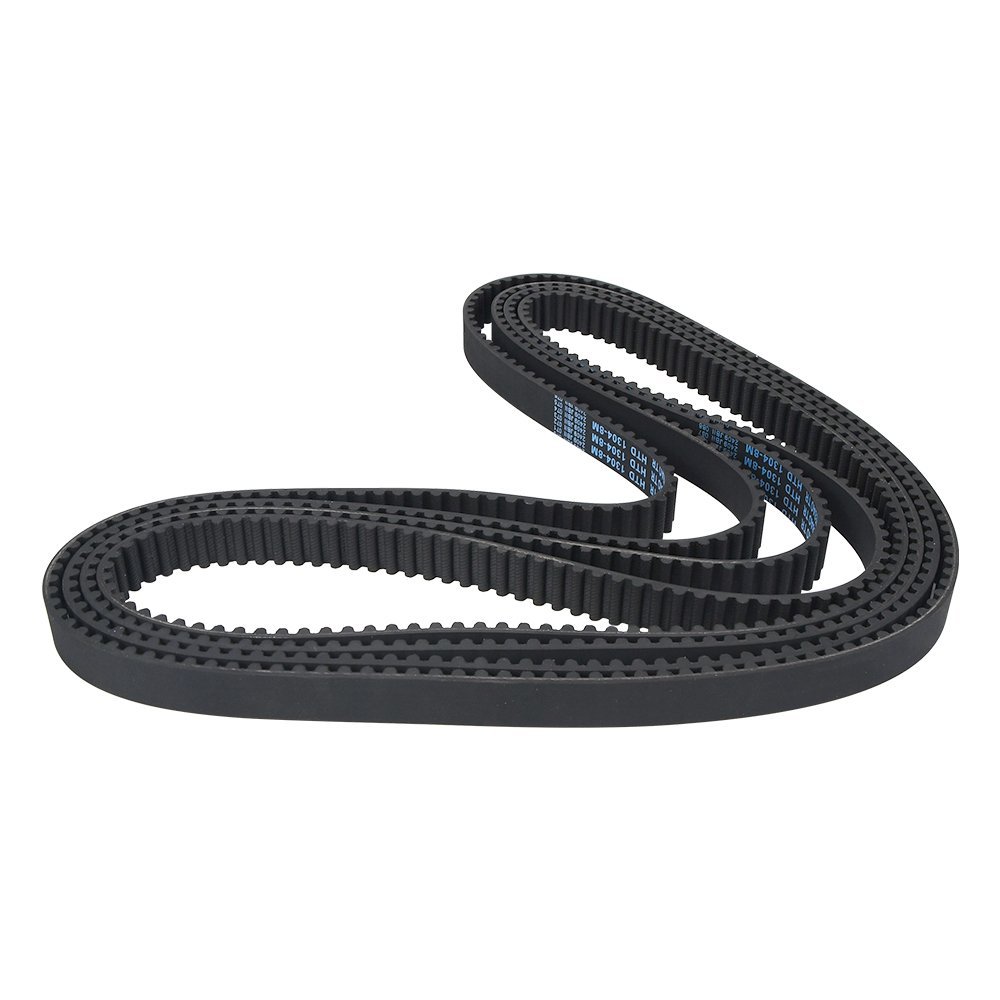
Match the numbers to a family
| Span over 10 teeth | Pitch | Likely family |
|---|---|---|
| 20.3 mm (0.80 in) | 2.032 mm | MXL |
| 50.0 mm | 5 mm | HTD 5M or T5 |
| 50.8 mm (2.00 in) | 5.08 mm | XL |
| 80.0 mm | 8 mm | HTD 8M or STD S8M |
| 95.3 mm (3.75 in) | 9.525 mm | L |
| 100 mm | 10 mm | T10 or AT10 |
| 127 mm (5.00 in) | 12.7 mm | H |
| 140 mm | 14 mm | HTD 14M or STD 14M |
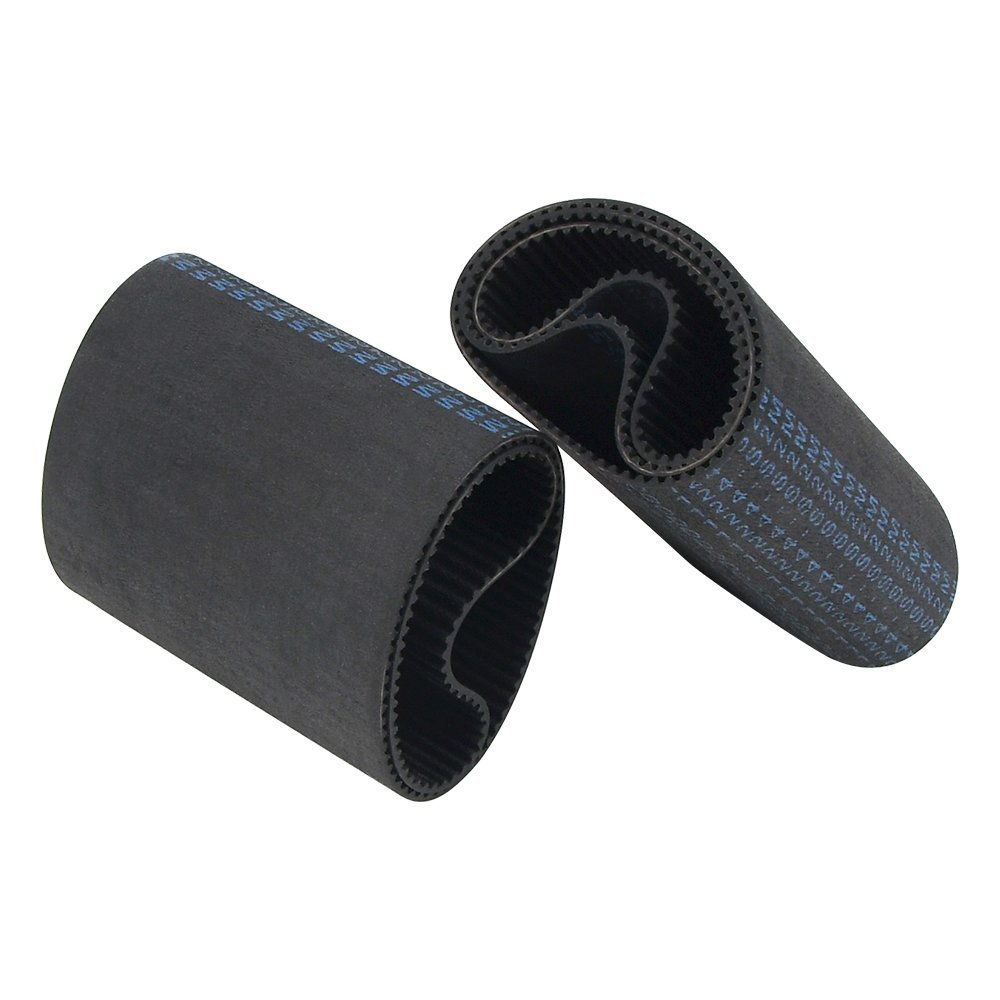
When the numbers sit between families
If the measured pitch lands between two rows, measure again on a straighter section and check the tooth flank shape. Trapezoidal flanks belong to the T, AT, XL, L, H and MXL families, while rounded flanks belong to the HTD, STD and similar curvilinear families. Values that come out in fractional inches point to an inch-pitch belt even when the machine itself is European. Two pitches can be nearly identical, for example L at 9.525 mm and T10 at 10 mm, yet they remain separate systems with separate pulleys.
Information to send with the enquiry
- Photos of the whole belt coiled, a close-up of the teeth and a close-up of any remaining marking area.
- The tooth count, ten-tooth span, top width and thickness from your caliper.
- Photos of both pulleys with their tooth counts, and the outside diameter of the small pulley.
- The machine type and application, which often pins down the family immediately.
- The machine brand or model if known. GOODLY is an independent manufacturer; brand names are used only as cross references to identify the belt system, not as a claim of affiliation.
Send the photos and measurements
Email sales@goodlybelts.com with the tooth count, ten-tooth span, width and pulley photos. We will identify the family, confirm the part number and quote the replacement, with or without the original marking.
Identify my belt